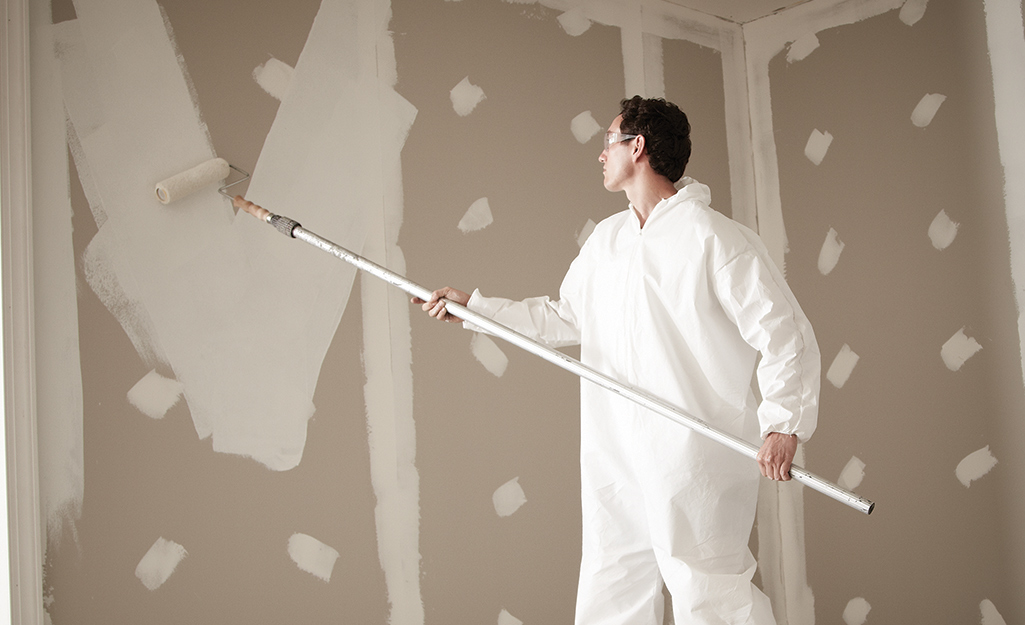
Yes, you need to prime before painting drywall. Primer seals the porous surface of new drywall, evens out the absorption rate between the drywall paper and the joint compound, and gives the paint a smooth, uniform base to stick to. Without primer, paint soaks into the drywall unevenly, creating a blotchy, patchy finish called “flashing” that no amount of extra paint coats will fix. Priming is a critical step whether you are painting brand-new drywall, freshly repaired walls, or surfaces with drywall patches. This article explains why primer matters, which primer to use, the most common mistakes homeowners in Lexington, SC make, and how to get professional-looking results on every drywall painting project.
What Happens If You Don’t Prime Drywall?
If you don’t prime drywall, the paint will absorb unevenly into the surface. New drywall is made from gypsum sandwiched between sheets of heavy paper. That paper is extremely porous. The joint compound used to cover seams and screw holes is also porous, but at a different rate than the paper. When you skip primer and paint directly on bare drywall, the paint gets sucked into some areas faster than others. The result is a splotchy, uneven finish with visible seams, screw holes, and patches.
This problem is called flashing. According to professional painters and drywall finishing experts, flashing happens when joint compound and drywall paper absorb paint at different rates, causing seams to reflect light differently than the rest of the wall. A professional drywall contractor in Upstate New York noted that the number one call he gets is from homeowners who painted their own drywall without primer and then watched every seam show through the moment sunlight hit the wall.
Skipping primer on new drywall also leads to poor paint adhesion. The paint sits on an unsealed surface and can peel, crack, or chip over time. According to The Home Depot, porous wall surfaces like drywall can absorb paint unevenly, and you may end up adding more coats of paint than you planned. A single gallon of drywall primer typically covers 300 to 400 square feet, and it saves you from buying two or three extra gallons of expensive paint.
Homeowners in Lexington, SC who are finishing basements, adding rooms, or renovating older homes with new drywall should always start with primer. It is the single most important step between hanging the drywall and applying the finish coat of paint. Teams that handle drywall repair and painting always prime before painting for exactly this reason.
Does Drywall Have to Be Primed Before Painted?
Yes, drywall has to be primed before it is painted for the best results. This applies to all new, bare drywall and to any areas where fresh joint compound has been applied. Primer is a crucial part of the drywall finishing process. According to industry standards, priming comes after the dried compound is sanded smooth and before the finish coat of paint is applied.
There is one exception. If you are repainting a wall that has already been primed and painted and is in good condition, and you are using a similar color, you may not need a separate primer. According to The Home Depot, primer may not be necessary if the walls are in great shape and the new paint color is similar to the old one. But for new drywall, patched drywall, or major color changes, primer is not optional.
According to the American Coatings Association, the U.S. paint and coatings industry produced approximately 1.36 billion gallons of coatings valued at $34.5 billion in 2024. Primer is a significant part of that market because professionals know it is the foundation of every quality paint job. Skipping it to save a few dollars always costs more in the long run.
Can You Paint Directly Onto Drywall?
No, you should not paint directly onto bare drywall. Bare drywall is too porous to accept paint properly. The drywall paper and the joint compound absorb moisture from the paint at different rates, which causes an uneven finish. According to Fine Homebuilding, the purpose of a drywall primer is to even out the absorption rates of the drywall paper and the joint compound. Without that even base, the mud on seams and screw holes will show through the paint like a sore thumb, even with multiple coats.
Many homeowners in the Lexington, SC area try to save time by skipping primer and going straight to a paint-and-primer-in-one product. While these products work fine over previously painted surfaces, they do not perform as well as a dedicated primer on bare drywall. A dedicated PVA drywall primer or a quality acrylic primer-sealer does a much better job of sealing new drywall and creating a uniform surface for the finish coat.
If you have rooms with fresh sheetrock installation and repair, priming is the step that separates a professional-looking finish from a patchy, amateurish one.
What Happens If You Paint Over Unprimed Drywall?
If you paint over unprimed drywall, you will see flashing, uneven color, visible seams, and poor adhesion. The paint soaks into the porous drywall paper and joint compound at different rates. Areas over the joint compound dry with a different sheen and texture than the rest of the wall. Under natural light, every seam, screw patch, and repair shows through clearly.
According to professional painters on JLC Online, an industry publication for construction professionals, skipping primer is a common and costly mistake. One contractor shared that a homeowner’s painter applied five coats of finish paint without primer on new drywall, and the spackle areas still bled through every coat. The only fix was to go back, prime the entire surface, and repaint. That turned a one-day project into a week-long headache.
According to Angi’s 2024 State of Home Spending Report, 22% of homeowners plan interior painting projects in 2025, making it one of the most common home improvement activities. Many of those projects involve painting new or repaired drywall. Priming first prevents costly rework and guarantees a smooth, even finish. Homeowners near Lake Murray and Red Bank, SC who want flawless walls should never skip this step.
Can I Use Kilz as a Drywall Primer?
Yes, you can use Kilz as a drywall primer. Kilz makes a specific PVA Drywall Primer that is designed for new, uncoated drywall. According to the Kilz product data sheet, their PVA Drywall Primer is a fast-drying, interior water-based primer formulated to seal new drywall and reduce the number of topcoats needed for a uniform, professional finish. It covers approximately 300 to 400 square feet per gallon.
Kilz also makes stain-blocking primers like Kilz 2 and Kilz Original that work on drywall but are designed for different situations. Kilz 2 is a water-based primer with stain-blocking power, good for covering minor stains and providing a solid base on both new and previously painted surfaces. Kilz Original is an oil-based primer that provides the strongest stain blocking and adhesion, best for covering water stains, smoke damage, or heavy discoloration.
For basic new drywall in Lexington, SC homes, the Kilz PVA Drywall Primer or a comparable product from Sherwin-Williams, Benjamin Moore, or Zinsser is all you need. For drywall that has been exposed to water damage, smoke, or stains, step up to a stain-blocking primer like Kilz 2 or Zinsser Bulls Eye 1-2-3. If you are also doing interior painting throughout the house, matching the right primer to each surface saves time and delivers the best results.
Which Kilz Is Best for Drywall?
The best Kilz for new, clean drywall is Kilz PVA Drywall Primer. It is the most affordable option and is made specifically for sealing bare drywall before painting. For drywall with stains, smoke damage, or water marks, Kilz 2 All-Purpose Primer or Kilz Original Oil-Based Primer provides stronger stain-blocking protection.
According to the Kilz product line, their PVA Drywall Primer is designed for use under flat and low-sheen paints only. It should not be used under glossy finishes. If you plan to use a semi-gloss or high-gloss paint on your drywall, such as in a bathroom or kitchen, you need a higher-quality primer like Kilz 2 or an acrylic primer-sealer that is compatible with all sheen levels.
What’s the Difference Between Kilz 2 and Kilz 3?
The difference between Kilz 2 and Kilz 3 is coverage and stain-blocking power. Kilz 2 is a multi-surface latex primer with moderate stain-blocking ability. It works well on new and previously painted drywall, wood, masonry, and other surfaces. Kilz 3 is a premium primer with better adhesion, more hiding power, and superior stain blocking. It also works on a wider range of surfaces and can be used under any sheen of paint.
For most drywall priming jobs in Lexington, SC homes, Kilz 2 is more than enough. Kilz 3 is the better choice when you are dealing with tough stains, strong color changes, or surfaces that need maximum adhesion. Both are water-based, low-odor, and easy to clean up with soap and water.
Is One Coat of Kilz Enough?
Yes, one coat of Kilz is usually enough on new, clean drywall. Most drywall primers, including Kilz PVA and Kilz 2, are formulated to cover in a single coat. According to the Kilz product specifications, one coat of their PVA primer is sufficient for sealing new drywall before painting.
There are a few situations where you may need two coats of primer. If the drywall has heavy stains from water damage or smoke, one coat may not fully block the discoloration. If you are making a drastic color change, going from a very dark wall to a very light color, two coats of primer help create a clean, neutral base. And if the drywall surface is unusually rough or porous, a second coat fills in the texture and creates a smoother finish.
For standard new drywall projects around Columbia, SC and the Lake Murray area, one coat of a quality drywall primer followed by two coats of finish paint is the standard professional approach.
Is It Better to Spray or Roll Primer on New Drywall?
It is better to spray primer on new drywall if you have access to a sprayer, and then back-roll it with a roller for the best results. Spraying is faster and provides more even coverage on large areas of new drywall. Back-rolling works the primer into the surface and prevents drips, runs, and thin spots.
If you do not have a sprayer, rolling primer on with a 3/8-inch to 1/2-inch nap roller works well. A roller pushes the primer into the pores of the drywall paper and creates good adhesion. Use a brush to cut in along edges, corners, and where the walls meet the ceiling. According to The Home Depot, a 9-inch roller with a quality roller cover is the standard tool for applying primer to large wall sections.
Professional house painting teams in Lexington, SC typically spray primer on new drywall for speed and consistency, then back-roll to push the product into the surface. This method delivers the most uniform seal and the smoothest base for the finish coat.
How Many Coats of Paint Can Drywall Take?
Drywall can take as many coats of paint as needed, but the standard is one coat of primer followed by two coats of finish paint. This three-coat system, primer plus two finish coats, is what professional painters use for a durable, even, rich-looking finish on new drywall.
If you skip the primer, you may need three, four, or even five coats of paint to get even coverage, and the result still may not look right. According to a professional painter quoted on JLC Online, without primer, you can keep piling on finish coats, but the seams and patches will keep flashing. Primer solves the problem in one coat, while extra paint coats without primer never fully fix it.
According to Clever Real Estate’s 2024 data, 78% of homeowners who completed renovations went over budget on their last project. Using primer on drywall is one of the easiest ways to stay on budget. A gallon of PVA primer costs far less than an extra gallon or two of premium paint, and it cuts the total number of finish coats needed.
What Are Two Common Mistakes Made During Drywalling?
The two most common mistakes made during drywalling are improper joint finishing and skipping the primer. Both of these mistakes lead to visible seams, flashing, and a poor paint finish that no amount of extra paint can fix.
Improper joint finishing includes not feathering the joint compound wide enough, using the wrong type of mud, and not sanding the surface smooth before priming. According to professional drywall contractors, joints should be feathered at least 12 inches on each side of the seam to create a smooth transition. Rushed sanding or insufficient compound application leaves ridges and depressions that telegraph through paint.
The second mistake, skipping primer, is equally damaging. Drywall paper and joint compound absorb paint at different rates. Without primer to equalize that absorption, every seam and patch shows through the paint. A professional drywall contractor noted that a $30 gallon of primer can save $500 or more in drywall repair costs later. Homeowners in Lexington, SC who are doing residential painting after drywall work should always budget for primer as a non-negotiable part of the project.
What Is the Hardest Wall Color to Paint Over?
The hardest wall color to paint over is red, followed by deep orange, bright yellow, and dark navy. These colors have strong pigments that bleed through standard paint and primer. Covering a red or orange wall with a light color like white or beige often requires two coats of a high-hide primer before you even start with the finish paint.
According to The Home Depot, when painting over a dark-colored wall, a coat or two of primer provides a clean and neutral canvas for a lighter paint color. Tinting the primer toward your finish color helps even more. For extreme color changes, a shellac-based or high-hide primer blocks the old color completely.
Homeowners throughout the Columbia, SC area who are updating rooms from bold accent walls to softer neutrals should plan for extra primer coats. The time spent priming pays off with a clean, streak-free finish that looks like the old color was never there. For help with color changes and exterior painting projects, working with a professional team saves time and prevents costly mistakes.
Why Spray Kilz Over a Drywall Patch?
You spray Kilz over a drywall patch to seal the joint compound and equalize the absorption rate before painting. A drywall patch made with joint compound is more porous than the surrounding painted wall. If you paint directly over the patch without priming, the compound absorbs paint faster, creating a dull, flat spot that stands out under light. This is flashing, and it shows every patch, screw hole, and repair you made.
According to professional painters, priming patches with a product like Kilz, Zinsser Bulls Eye 1-2-3, or a PVA primer before painting is the only reliable way to prevent flashing. A mini roller or spray can of primer on each patched area takes just a few minutes and makes the repair invisible under the finish coat.
For homeowners in the Gilbert, SC and Lexington, SC area who are doing drywall repairs before painting, priming every patched spot is a critical step. Whether you are fixing a single nail hole or repairing an entire wall section, primer makes the difference between a patch that disappears and one that shows through forever.
Can I Put Primer Directly on Drywall?
Yes, you can put primer directly on drywall, and you should. That is exactly what primer is designed for. After the drywall is taped, mudded, and sanded smooth, wipe off the sanding dust with a damp cloth or sponge, let it dry, and then apply your primer directly to the bare drywall surface.
The only prep step before priming is dust removal. Sanding dust left between the primer and the drywall can cause adhesion problems. A quick wipe-down with a damp, not wet, sponge removes the dust and gives the primer a clean surface to bond to. According to professional painting contractors, going over all the walls with a damp sponge clears off the dust effectively.
Once the dust is removed and the surface is dry, apply your PVA drywall primer or acrylic primer-sealer with a roller or sprayer. One coat is usually enough. Let it dry fully, usually 1 to 3 hours depending on the product and ventilation, and then you are ready for your finish coat of paint. Homeowners in Lexington, SC can trust that this simple process, dust removal followed by primer followed by paint, is the same method used by every professional commercial interior painting crew.
How Many Coats of Kilz 2 Should You Apply Over New Drywall?
You should apply one coat of Kilz 2 over new drywall. Kilz 2 is formulated to cover in a single coat on most surfaces, including new drywall, previously painted walls, and patched areas. One coat seals the surface, evens out absorption, and provides a solid base for two coats of finish paint.
If you are covering heavy stains or making an extreme color change, two coats of Kilz 2 may be needed. But for standard new drywall in good condition, one coat is enough. Let it dry for at least two hours before applying your finish paint, as recommended on the product label.
Drywall Primer Comparison
| Feature | PVA Drywall Primer | Acrylic Primer-Sealer (e.g., Kilz 2, Zinsser 1-2-3) | Shellac-Based Primer (e.g., Zinsser BIN) |
|---|---|---|---|
| Best For | New, clean, bare drywall | New drywall, light stains, color changes | Heavy stains, water damage, smoke damage |
| Stain Blocking | None | Moderate | Excellent |
| Adhesion | Good on new drywall | Very good on multiple surfaces | Excellent on all surfaces |
| Coverage per Gallon | 300 to 400 sq ft | 300 to 400 sq ft | 200 to 300 sq ft |
| Dry Time | 30 minutes to 1 hour | 30 minutes to 1 hour | 15 to 45 minutes |
| Cleanup | Water | Water | Denatured alcohol |
| Compatible Topcoats | Flat and low-sheen only | All sheens | All sheens |
| Odor | Low | Low | Strong (requires ventilation) |
Sources: Kilz product data sheets; Zinsser product specifications; The Home Depot primer guide; True Value Hardware primer comparison; Sherwin-Williams primer recommendations
Do You Need to Prime Drywall Before Painting in a Bathroom or Kitchen?
Yes, you absolutely need to prime drywall before painting in a bathroom or kitchen. These rooms have higher moisture levels than other parts of the house. Primer seals the drywall and creates a moisture barrier that helps prevent mold growth, peeling, and water damage behind the paint.
For bathrooms and kitchens, choose an acrylic primer-sealer or a moisture-resistant primer rather than a basic PVA primer. PVA primers are designed for dry interiors and do not hold up as well in high-humidity environments. A product like Kilz 2, Zinsser Bulls Eye 1-2-3, or a bathroom-specific primer provides the moisture resistance these rooms need.
Homes in Lexington, SC experience hot, humid summers that drive indoor moisture levels higher than average. Bathrooms and kitchens in these homes benefit from a quality primer-sealer followed by a mold-resistant or moisture-resistant paint. If you are renovating a bathroom and need both sheetrock repair and painting, primer ties the whole project together for a lasting, clean finish.
Frequently Asked Questions
Can I Skip Primer If I Use Paint and Primer in One?
You should not skip primer on bare, new drywall even if you use a paint-and-primer-in-one product. Paint-and-primer combos work well on previously painted surfaces, but they do not seal raw drywall as effectively as a dedicated primer. A dedicated PVA or acrylic primer evens out the porosity of new drywall far better than any combo product. For the best results in Lexington, SC homes, always use a separate primer coat on new or freshly repaired drywall.
How Long Should Primer Dry Before Painting Drywall in Columbia, SC?
Primer should dry for at least 1 to 3 hours before painting drywall, depending on the product. Most water-based primers like Kilz PVA and Zinsser 1-2-3 are ready for a topcoat in about 1 to 2 hours under normal conditions. In the humid climate around Columbia, SC, allow extra drying time or run a fan or dehumidifier to speed things up. Check the product label for the manufacturer’s recommended recoat time.
Do I Need to Sand Primer Before Painting New Drywall?
Yes, a light sanding of the primer before painting is recommended for the smoothest finish. After the primer dries, lightly sand with 220-grit sandpaper to knock down any roller texture, dust nibs, or raised paper fibers. Wipe the surface with a tack cloth or damp rag to remove the sanding dust before applying your finish coat. This step is especially helpful in rooms with lots of natural light, where imperfections show more easily.
What Primer Should I Use on Repaired Drywall in Lexington, SC?
The primer you should use on repaired drywall in Lexington, SC is an acrylic primer-sealer like Kilz 2, Zinsser Bulls Eye 1-2-3, or Benjamin Moore Fresh Start. These primers seal the joint compound, block light stains, and provide a uniform base for your finish coat. For heavy stains or water damage, step up to a shellac-based primer like Zinsser BIN for maximum stain blocking.
How Much Does a Gallon of Drywall Primer Cover?
A gallon of drywall primer covers approximately 300 to 400 square feet, depending on the porosity of the surface and the application method. According to Kilz, their PVA Drywall Primer covers 300 to 400 square feet per gallon on new drywall. Rough or heavily patched surfaces may reduce coverage. Plan to buy about 10 to 15% extra to account for cuts, corners, and waste.
Is Priming New Drywall Worth the Extra Cost in Lexington, SC?
Yes, priming new drywall is absolutely worth the extra cost. A gallon of PVA drywall primer costs significantly less than a gallon of quality finish paint. By priming first, you seal the drywall so the finish paint covers evenly in just two coats instead of three, four, or five. According to a professional drywall contractor, a $30 gallon of primer can save over $500 in future drywall repairs and repainting costs. For homeowners in Lexington, SC, primer is one of the smartest investments in any painting project.
Should I Prime the Ceiling Drywall Too?
Yes, you should prime the ceiling drywall just like the walls. Ceilings are just as porous as walls and will show flashing, seams, and uneven sheen if not primed. In rooms with overhead lighting, ceiling imperfections are even more visible because light rakes across the surface at a low angle. Prime the ceiling first, then the walls, and you will get a clean, uniform finish throughout the room.
Final Thoughts
Priming drywall before painting is not optional. It is the step that makes everything else work. Primer seals the porous drywall surface, evens out the absorption rate between the paper and the joint compound, and gives your finish paint a smooth, uniform base to bond to. Without it, you get flashing, visible seams, uneven color, poor adhesion, and wasted paint. With it, you get a clean, professional finish that lasts for years.
If you are a homeowner in Lexington, SC, the Lake Murray area, Red Bank, Gilbert, or anywhere around Columbia, and you have a drywall painting project coming up, Soda City Painting handles everything from drywall repair and priming to the final coat of paint. Their team uses the right primers, the right tools, and the right techniques to deliver walls that look flawless under any light. Call (803) 221-0771 or visit their website to schedule your free estimate today.