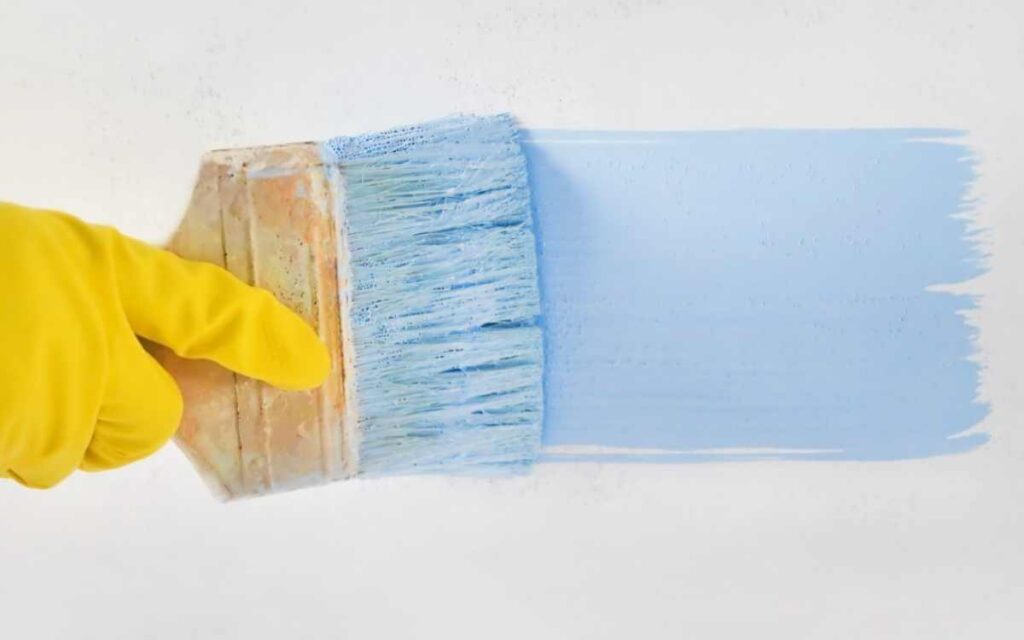
You should wait 2 to 4 hours between coats of water-based latex paint and a full 24 hours between coats of oil-based paint. Rushing this step is one of the most costly mistakes a homeowner can make. Paint that is recoated too soon peels, streaks, and bubbles, turning a simple project into a repair job. This article covers exactly how long to wait based on paint type, finish, surface, and weather conditions, including what can go wrong when you do not wait long enough.
How Long Should You Wait Between Coats of Paint?
You should wait 2 to 4 hours between coats for water-based (latex) paint and 24 hours for oil-based paint. According to VanDerKolk Painting, dry time means the paint feels dry to the touch, but recoat time is when it is actually safe to apply the next layer. These are two very different things, and confusing them is one of the most common painting mistakes homeowners make.
The paint may feel dry in an hour. That does not mean it is ready. Beneath that dry surface, the paint is still soft and vulnerable. Applying a second coat on top of soft, uncured paint traps moisture inside, which leads to peeling, bubbling, and an uneven finish that no amount of extra coats can fix.
Homeowners across Lexington, SC often try to speed up painting projects to finish in a single day. On most rooms that is completely doable with latex paint. The 2 to 4 hour recoat window means you can apply a first coat in the morning and a second coat by early afternoon. With oil-based paint, that same room becomes a two-day job, and that is not negotiable.
Can Painters Do Two Coats in One Day?
Yes, professional painters can do two coats in one day when using water-based latex paint under good conditions. The standard recoat window for latex paint is 2 to 4 hours, which easily fits two coats into a normal workday. According to Dunbar Painting, applying multiple thin coats instead of a single thick one accelerates drying and produces a smoother finish overall.
The key is applying thin, even coats rather than heavy, thick ones. Thick coats take far longer to dry and are much more likely to trap moisture when the second coat is applied too soon. Thin coats dry faster, bond better, and cover more evenly. A professional crew working efficiently on a standard interior space can complete two quality coats of latex paint in a single day with proper timing between applications.
Oil-based paint is different. That product needs a full 24 hours between coats, which makes a two-coat job a two-day process. There is no shortcut for oil-based products. Rushing the recoat time will destroy the finish.
Can You Recoat in 2 Hours?
Yes, you can recoat in 2 hours with most flat or matte water-based latex paints under ideal conditions. According to Tribble Painting, flat matte and eggshell latex paints can be recoated in as little as 1 to 2 hours. Semi-gloss and high-gloss finishes require more time, often 2 to 4 hours, because glossier paints have more binders and take longer to set.
However, the 2-hour window only applies when temperature and humidity cooperate. The ideal painting conditions, according to Angi, are temperatures between 50 and 85 degrees Fahrenheit with moderate humidity. In Lexington and the Lake Murray area, summer humidity regularly climbs above 70%, which slows drying times for every paint product. On a muggy South Carolina afternoon, what would normally take 2 hours may need 3 or 4.
The safest approach is to always check that the first coat is no longer tacky before recoating, regardless of the clock. If you press a finger lightly onto a hidden section of wall and it feels even slightly sticky, it is not ready.
How Soon Can I Do a Second Coat of Paint?
The soonest you can do a second coat of paint is when the first coat has fully passed the tacky stage and is completely dry to the touch with no soft spots. For most water-based flat paints, that is around 1 to 2 hours. For eggshell and satin, plan on 2 hours minimum. For semi-gloss or high-gloss latex finishes, allow 2 to 4 hours. For oil-based paints, wait the full 24 hours without exception.
According to Glidden, paint labels specify the dry and recoat times for that particular product based on extensive testing in controlled environments. Those numbers are not conservative estimates. They are the minimum times needed for the chemistry to work correctly. Ignoring them leads to tacky, uneven surfaces that cost more to repair than the original job.
For trim and door painting specifically, Angi recommends waiting 8 to 12 hours between coats regardless of paint type. Trim paint needs to soak into and harden on the wood surface, which takes more time than wall paint on drywall. Many homeowners paint trim and baseboards with the same timeline as walls and then wonder why the trim looks rough or develops brush marks.
What Happens If You Don’t Wait 4 Hours to Recoat Paint?
If you don’t wait 4 hours to recoat paint, the second coat will drag and lift the first coat, leaving streaks, brush marks, and uneven patches. The two coats will not bond properly, and the overall finish will be weaker. According to Tribble Painting, applying a second coat too soon leads to peeling or lifting where the second coat does not adhere to the first, plus an uneven finish from trapped moisture causing patchy or streaky results, especially with semi-gloss or high-gloss finishes. Surfaces can remain tacky for weeks if a second coat is applied too soon, and in extreme cases the paint color will never cure properly.
The problem goes deeper than looks. According to Newline Painting, paint that has not fully dried forms a weaker bond between layers, meaning the overall paint job will not hold up over time. Chips and peeling start earlier. Scrubbing the wall to clean it becomes a risk. The whole surface underperforms for as long as it is on the wall.
Fixing these problems means sanding the damaged surface down, letting it dry completely, and starting over. The time saved by rushing the recoat almost always leads to far more time spent fixing the consequences. Experienced interior painting crews know this, which is why they never skip proper wait times between coats.
What Happens If I Recoat Too Early?
If you recoat too early, you get streaks, roller marks, peeling, and an inconsistent finish. The first coat gets dragged and pulled by the roller or brush before it has set, which lifts the layer you just applied and mixes it with the second coat. The result is a muddy, uneven surface that shows every stroke mark.
According to Tribble Painting, rushing the recoat can compromise durability so severely that the paint never properly bonds, meaning the job will need to be redone much sooner than expected. Extra costs from fixing these mistakes often include sanding, priming, and repainting entire rooms again from scratch.
Color is also affected. According to VanDerKolk Painting, paint color and sheen continue to develop as the paint dries. Applying a second coat too soon can distort the final color or create an inconsistent sheen across the wall. The color you chose looks different in different parts of the room, which has nothing to do with lighting and everything to do with improper recoat timing.
This is especially true on ceilings. Uneven sheen on a ceiling is very noticeable in raking light. Homeowners in Red Bank and Gilbert who have painted their own ceilings and noticed dull or shiny patches often find the culprit is recoating before the first coat had fully dried.
Do Professional Painters Do Two Coats of Paint?
Yes, professional painters do two coats of paint as the standard for nearly every job. According to Arana Craftsman Painters, two coats of paint is the professional standard because it provides even coverage, full depth of color, and long-lasting durability. The first coat acts as a foundation, and the second coat brings the color to its full potential while sealing the surface against wear.
Professional painters on trade forums like PaintTalk are consistent about this: two coats, always. Multiple experienced contractors on that forum state they will not take a job if the homeowner requests only one coat. As one veteran contractor put it, no paint covers properly in one coat regardless of quality, and that includes premium products labeled as one-coat coverage.
For exterior surfaces, the standard is even firmer. According to Sound Painting Solutions, two coats of exterior paint should always be applied without exception because outdoor surfaces face the elements. A single coat on the exterior simply cannot form the protective barrier needed to handle rain, UV exposure, and temperature swings over time.
Professional-grade exterior painting always follows a two-coat minimum, often over a dedicated primer, to make sure the finish lasts for years rather than months. That is what separates a paint job that holds for 10 years from one that starts peeling in two.
How Many Coats of Paint Are Really Needed?
The number of coats of paint really needed depends on the surface, the color, and the quality of paint being used. For most interior walls being repainted with a similar color, two coats of a quality latex paint over a properly prepped surface deliver the best results. According to a Carnival Custom Painting article, for most interior painting projects, two coats on top of a properly primed surface deliver the best results in terms of coverage, color richness, and durability.
One coat is sometimes enough in limited situations: touching up a wall with the exact same color and sheen in excellent condition, painting a low-traffic or utility space, or using a premium one-coat paint on a smooth, sealed surface. But professional painters rarely rely on one coat even in these scenarios. The risk of uneven coverage and early wear is not worth the time saved.
Three or more coats are needed when covering very dark walls with a light color, painting over reds, yellows, or oranges, or when the substrate is especially porous. According to PaintRite Pros, dark colors can require a minimum of two coats just to start covering, while applying light paint over something dark in pigment may require as many as six coats without proper primer. That is exactly why using a tinted primer before a dramatic color change saves both time and money.
Proper surface prep and priming are what reduce the number of topcoats needed. When the wall is sealed and ready, two good coats of quality paint are enough for nearly every interior project. When that prep is skipped, you end up applying three or four coats and still not getting the result you wanted. For more information on how surface prep affects the full paint process, drywall repair and painting always starts with this step before any color goes on.
Recoat Times by Paint Type: At a Glance
| Paint Type / Finish | Dry to Touch | Safe Recoat Time | Full Cure Time |
|---|---|---|---|
| Flat / Matte Latex | 30 min to 1 hour | 1 to 2 hours | 1 to 2 weeks |
| Eggshell Latex | 1 hour | 2 hours | 1 to 2 weeks |
| Satin Latex | 1 hour | 2 to 4 hours | 1 to 2 weeks |
| Semi-Gloss Latex | 1 to 1.5 hours | 2 to 4 hours | 2 weeks |
| High-Gloss Latex | 1 to 1.5 hours | 2 to 4 hours | 2 to 4 weeks |
| Oil-Based Paint (any sheen) | 2 to 4 hours | 24 hours | Up to 1 month |
| Primer (water-based) | 30 min to 1 hour | 1 to 2 hours | N/A (topcoat goes over) |
| Trim / Wood Paint | 1 to 2 hours | 8 to 12 hours | 2 to 4 weeks |
Sources: VanDerKolk Painting; Tribble Painting; Angi; Newline Painting; Hillis Brothers Painting; Dunbar Painting
Should You Sand Between Coats of Paint?
You should sand between coats of paint only in specific situations, not as a general rule for every project. For standard interior wall painting with latex paint going over latex paint of the same sheen, sanding between coats is not necessary. The second coat bonds to the first without abrasion as long as the first coat is fully dry.
Sanding between coats is the right call when painting trim, cabinets, or furniture where a glass-smooth finish is the goal. A light sand with 220-grit sandpaper knocks down any dust nibs or small imperfections that got trapped in the first coat. It also gives the second coat a slightly better surface to grip. Always wipe off all sanding dust with a tack cloth or slightly damp rag before applying the next coat.
Sanding is also necessary when switching from a higher sheen to a lower sheen on the same surface. For example, painting flat paint over an existing eggshell or satin requires light sanding to give the flatter paint something to bond to. Switching from latex to oil-based also requires sanding the latex coat before the oil-based product will adhere properly.
For deck and fence painting projects, light sanding between coats can make a real difference in how smooth and durable the final finish turns out, especially on weathered wood that has rough grain raised by the first coat of stain or paint.
How Do Professionals Get Smooth Paint?
Professionals get smooth paint by applying thin, even coats, maintaining a wet edge throughout the entire wall, using quality rollers and brushes, and always waiting for the previous coat to fully dry before adding another. According to Dunbar Painting, maintaining proper ventilation to aid solvent evaporation and ensuring adequate airflow shortens drying times and produces a more even surface.
The single biggest difference between a professional finish and a DIY result is the thickness of each coat. Most people apply paint too thickly. Thick coats sag, leave roller stipple, and show lap marks. Experienced painters know that two thin coats always outperform one heavy application for a smooth, uniform result, especially with glossy finishes that reflect every imperfection.
Professionals also cut in edges first, then roll the field of the wall while the cut-in is still slightly wet. This blends the brush and roller marks together rather than leaving a visible line. Once the first coat is fully dry, the second coat is applied the same way. The result is a clean, smooth surface with no visible brush lines, roller texture, or lap marks.
Is It Better to Brush or Roll Paint?
It is better to use both a brush and a roller together rather than choosing one over the other. Brushes are better for cutting in along edges, trim, and corners where a roller cannot reach cleanly. Rollers are better for covering large, flat surfaces quickly with even pressure and consistent texture. Using a brush for the entire wall leaves visible brush strokes. Using only a roller leaves raw edges and missed corners.
According to PaintRite Pros, the proper sequence is to cut in all edges first with a brush, then immediately use a roller to paint the walls in a large W pattern before the cut-in edges fully dry. This blends the two textures together into a seamless finish. The same approach applies to ceilings, trim, and any large surface area. Quality tools matter just as much as technique. Budget rollers shed lint and leave fibers trapped in the paint.
What Is the Hardest Color to Paint Over?
The hardest color to paint over is red. According to Properties Unlimited Group, red is consistently the most difficult wall color to cover because red pigment remains visible under lighter paint and often leaves a warm or pink undertone even after multiple coats. Red is followed by dark blue, dark green, deep purple, and black in terms of covering difficulty.
Bright colors are also notoriously difficult. According to The Decorologist, yellow is one of the hardest paint colors to cover properly because yellow pigment requires multiple coats to achieve opacity and is extremely sensitive to lighting. Orange and vivid pink share the same challenge. These saturated, synthetic pigment colors simply do not hide well under lighter neutrals without help.
The fix for all difficult colors is a dedicated tinted primer. According to Five Star Painting, using a high-quality stain-blocking primer tinted gray or a shade close to the new topcoat color is the right approach for covering dark or saturated colors. The tinted primer reduces the contrast between old and new colors, which dramatically cuts down the number of topcoats needed. Without that primer step, you are just adding extra coats of finish paint and hoping the old color stops bleeding through.
Many homeowners in the Lake Murray and Lexington area who have refreshed older homes have run into exactly this situation, where a bold color from a prior owner keeps showing through no matter how many coats of the new color they apply. The solution is always the same: prime first with the right product.
Is October Too Late to Paint Outside?
No, October is not too late to paint outside in South Carolina. Lexington, SC has a mild climate where October temperatures regularly stay in the 60s and low 70s, which is within the ideal painting range. According to Angi, temperatures between 50 and 85 degrees Fahrenheit are ideal for exterior paint to cure properly, and those conditions are common across the Midlands of South Carolina well into October and sometimes November.
The challenge in October is morning humidity and dew. According to Five Star Painting, the best time to start exterior painting is around 10 a.m., after any morning moisture has evaporated from surfaces. Starting too early on a fall morning means painting onto a slightly damp surface, which compromises adhesion.
The bigger concern for exterior painting timing in the Lexington area is overnight temperatures. According to Hirshfield’s Paint, the air and surface temperatures must not drop below 35 degrees for 36 hours after application for the paint to properly cure. In late October and November in South Carolina, daytime highs may be comfortable, but overnight lows can start approaching that threshold. Always check the overnight forecast before starting an exterior project.
For homeowners in Gilbert or Red Bank planning exterior work in the fall, early to mid-October is a comfortable window for most latex exterior paints. Late October and November require paying closer attention to overnight lows and choosing paint products rated for lower temperature application. Residential painting professionals plan around these temperature windows to make sure the finish cures correctly from day one.
What Is the Best Month to Paint Your House?
The best month to paint your house exterior in Lexington, SC is April through May in the spring or September through October in the fall. According to Peach Painting, early summer and early fall are the best times for exterior painting because rain is at a minimum and temperature fluctuations between day and night are small, giving the paint enough time to dry and cure between cycles.
South Carolina’s summer heat is the main challenge for exterior painting. According to Five Star Painting, at temperatures above 90 degrees Fahrenheit, paint dries too quickly and forms bubbles and blisters. The surface gets so hot that the paint never bonds properly and starts to peel once it cures. The humid months of July and August in Lexington also push humidity levels well above 70%, which extends drying times and increases the risk of a poor finish.
Spring and early fall hit the sweet spot. Temperatures are in the 60s and 70s, humidity is lower than midsummer, and there is enough daylight to complete a full exterior section in a day. For interior painting projects, the month matters far less because indoor environments are climate-controlled. House painting projects that include both interior and exterior work are often scheduled with the exterior in spring or fall and the interior any time the homeowner is ready.
What Exterior Paint Lasts 25 Years?
No exterior paint brand universally guarantees a 25-year finish, but some high-performance exterior paint systems applied correctly over properly primed surfaces can achieve 15 to 25 years of service life. According to Mordor Intelligence, infrastructure and commercial coating systems using zinc-rich primers and polyurethane topcoats can promise a 25-year service life under the right conditions. For residential exterior use, the longest-lasting results come from 100% acrylic latex paints applied over a dedicated exterior primer in two coats.
Paint longevity depends more on preparation and application conditions than on the brand alone. A premium paint applied without primer onto a dirty or cracked surface will fail in 5 years. A mid-range paint applied correctly with proper primer, two full coats, and ideal curing conditions can last 10 to 15 years or more.
According to Sound Painting Solutions, a well-applied exterior paint job can last 6 to 10 years even in a challenging climate. In Lexington, SC, where humidity and summer UV exposure are high, exterior paint that is properly primed, applied in two full coats, and left to fully cure under good conditions performs at the top of its expected lifespan range. Cutting corners on prep or recoat time shortens that lifespan significantly.
Surfaces like porch floors, deck boards, and dock structures face more wear and more moisture exposure than siding. Those surfaces benefit from oil-based porch and floor enamels or specially formulated deck coatings designed for foot traffic and water exposure. For proper results on those surfaces, porch painting always includes the right product selection for the specific substrate and exposure level.
How Long Should It Take to Paint a 12×12 Room?
A 12×12 room should take a professional painter approximately 2 to 4 hours to complete two coats of paint, including the wait time between coats. For a DIYer, the same room typically takes 4 to 6 hours due to slower technique and setup. That estimate covers walls only and assumes the room has been prepped, holes are filled, and surfaces are ready to paint.
The recoat window between the first and second coat of latex paint adds a 2-hour gap to the total. A professional approach is to paint the first coat of all walls, then do trim work or cut-in details while the walls dry, then come back for the second coat. This keeps the job moving without ever applying paint onto an unprepared surface.
Ceilings add time. A standard 12×12 ceiling takes 1 to 2 hours per coat, including cut-in edges. If the ceiling also needs two coats, add that time plus another waiting period. A full room refresh including ceiling, walls, and trim in two coats is typically a full-day project for a single painter working efficiently.
Proper surface prep, including patching nail holes and sanding rough spots, adds time upfront but saves time overall because the paint goes on more evenly and requires fewer touch-ups. When walls need more than basic patching, sheetrock installation and repair is done first so that surfaces are fully smooth and sealed before paint begins.
Frequently Asked Questions
How Long Should You Wait Between Coats of Paint in Lexington, SC’s Humid Climate?
You should wait at least 2 to 4 hours between coats of latex paint in Lexington, SC, but add extra time during humid months when relative humidity climbs above 70%. High humidity slows the evaporation process that allows latex paint to dry properly. On a typical summer afternoon in the Lexington and Lake Murray area, a 2-hour recoat window can stretch to 3 or 4 hours under heavy humidity. Always check that the first coat is no longer tacky to the touch before applying the second coat. For oil-based paint in any weather, the full 24-hour wait between coats applies without exception.
Can Professional Painters Do Two Coats in One Day for a Whole House?
Yes, professional painters can complete two coats in one day for most interior rooms of a house using latex paint. A full two-coat interior repaint of an average home takes a professional crew 1 to 3 days depending on room count, ceiling height, and surface condition. The 2 to 4 hour recoat window for latex paint allows efficient scheduling where the first floor gets its first coat in the morning, the second floor gets its first coat midday, and the crew circles back for second coats in the afternoon. This is one reason professional painters complete jobs faster than DIY projects without sacrificing quality.
What Happens If It Rains After I Paint My Exterior in the Lexington Area?
If it rains before your exterior paint has dried and cured, the finish is compromised. Rain hitting fresh exterior paint before it has dried, typically within the first 2 to 4 hours for latex, washes away binders and pigment and leaves a streaky, blotchy surface. Even after the paint is dry to the touch, a hard rain within the first 24 to 48 hours can cause adhesion issues as the paint has not yet fully cured. Always check a 48-hour weather forecast before starting any exterior painting project in the Lexington, Red Bank, or Gilbert area. South Carolina’s summer afternoon thunderstorms are notoriously hard to predict, which is why spring and fall are safer windows for exterior work.
Should You Sand Between Coats of Interior Wall Paint?
You do not need to sand between coats of interior wall paint when using the same latex product and sheen back-to-back. The second coat bonds to the first without abrasion as long as the surface is fully dry. Sanding between coats is recommended for trim, cabinets, and furniture where a very smooth finish matters. A light sand with 220-grit sandpaper removes any trapped dust or imperfections in the first coat before the second is applied. Always wipe all sanding dust with a slightly damp rag before recoating to prevent the dust from being sealed under the finish.
How Long Does Paint Need to Cure Before You Can Hang Things or Scrub the Walls?
Paint needs 1 to 2 weeks to cure before you can lightly hang items or clean walls with a damp cloth. Full cure for latex paint takes approximately 2 weeks in warm conditions, according to Sharper Impressions Painting. High-gloss and semi-gloss finishes can take up to 4 weeks for full cure, especially in cooler or more humid environments. Scrubbing a newly painted wall before it has fully cured can remove the paint or leave dull marks even on washable finishes. In the Lexington area, where summer humidity slows cure times, giving walls the full 2-week window before any contact or cleaning is the safest approach.
Is It Too Late to Paint Outside in November in South Carolina?
November can still work for exterior painting in South Carolina if daytime temperatures stay above 50 degrees and overnight lows stay above 35 degrees Fahrenheit. Lexington, SC has mild fall weather compared to northern climates, and many paint products rated for lower temperature application can be used well into November. The risk grows as overnight temperatures begin to drop closer to freezing, which can prevent paint from curing properly. A professional painter familiar with South Carolina weather can evaluate conditions and choose the right product for late-season application.
What Are the Most Common Painting Mistakes Homeowners in Lexington Make?
The most common painting mistakes homeowners in Lexington, SC make are recoating too early, skipping primer on bare or patched surfaces, using thick coats instead of thin ones, painting in high humidity without allowing extra dry time, and not waiting for exterior paint to fully cure before rain. Recoating too early is the most frequent and most damaging mistake. It is tempting to apply the second coat as soon as the first looks dry, but that surface-level dryness hides a soft, uncured layer underneath. Waiting the full recommended recoat time on every coat is the single most important step in getting a long-lasting, professional-quality finish.
Final Thoughts
Waiting the right amount of time between coats of paint is not optional. It is the step that determines whether your paint job looks great for years or starts failing within months. For water-based latex paint, the recoat window is 2 to 4 hours depending on sheen and conditions. For oil-based paint, it is 24 hours, full stop. For trim and wood surfaces, give each coat 8 to 12 hours before the next one goes on.
South Carolina’s warm, humid climate adds an extra layer of consideration for every painting project in Lexington, Red Bank, Gilbert, and the Lake Murray area. High summer humidity extends drying times, and afternoon thunderstorms can threaten a fresh exterior coat without warning. Planning around the conditions and using the right products for the season makes the difference between a paint job that holds and one that needs redoing far too soon.
If you want a paint job done right the first time, the team at Soda City Painting knows exactly how to prepare, time, and apply every coat for a finish that lasts. We serve homeowners throughout Lexington, Red Bank, Gilbert, Lake Murray, and surrounding Columbia-area communities. Whether you need a full interior refresh or a two-coat exterior upgrade, we bring the prep work, the timing, and the craftsmanship that produce results you will see for years.
Ready to get started? Reach out today for a free estimate and ask about our current availability. Our interior painting services are available for homes of every size and style across the Lexington area. Call us at (803) 221-0771 or contact us online. Let’s get your next coat on right.