Drywall repair costs an average of $609 for most homeowners in the United States, with a typical range of $295 to $924 depending on the size of the damage, where it is located, and how complex the finish work needs to be, according to HomeAdvisor pricing data for 2025 and 2026. Small holes and minor cracks sit at the low end of that range. Water damage, ceiling repairs, and full panel replacements push costs toward the higher end. This guide breaks down every cost factor, answers the most common questions homeowners ask, and explains what affects the final number so you can budget with confidence and avoid surprises.
How Much Does Drywall Repair Cost on Average?
The average drywall repair cost is $609, and most homeowners spend somewhere between $295 and $924 on a professional repair job, according to HomeAdvisor and Angi data compiled from real homeowner projects. The wide range exists because drywall damage comes in many forms. A small hole from a doorknob costs far less to fix than a section of ceiling damaged by a plumbing leak. The damage size, room location, finish level required, and whether texture matching is needed all affect the final bill.
Per square foot, national data from Nedes Estimating for 2025 places the average drywall repair cost between $1.50 and $3.50. Urban areas with higher labor costs can push that figure to $4.50 per square foot according to CountBricks data. Labor is the largest cost factor by far. According to Nedes Estimating, labor accounts for 65% to 75% of total drywall repair costs in most jobs, which is why the going rate in a local market matters more than the price of the drywall material itself.
Homeowners in Lexington and the surrounding Lexington County area who want a clear, specific number for their project should request an in-person quote, since no published average can account for the exact condition of the wall, the texture, or the finish level of a specific home.
For professional sheetrock installation and repair in Lexington, Red Bank, Gilbert, and the Lake Murray area, Soda City Painting’s sheetrock repair services include everything from small patches to full panel replacement, with seamless texture matching and paint-ready results.
What Is the Labor Cost for Drywall?
The labor cost for drywall repair is typically $60 to $90 per hour for professional contractors, according to Angi. For larger jobs priced by square footage, labor runs $50 to $80 per square foot. Faircloth Drywall, citing multiple salary databases, reports that the median wage for a drywall installer in the United States is $26 per hour. When you factor in the contractor’s overhead costs such as workers’ compensation insurance, general liability insurance, tools, and transportation, the billable rate to the homeowner reflects a much higher figure than the base wage alone.
Most contractors also charge a minimum service fee for small jobs. According to construction cost estimating firm ConstructEstimates, that minimum often ranges from $100 to $250, even if the actual repair takes under an hour. This covers travel time, setup, and cleanup. If you have several small repairs spread around the house, bundling them into one visit is far more cost-effective than calling for each one separately.
How Much Do Contractors Charge per Hour for Drywall?
Contractors charge between $60 and $90 per hour for drywall repair work, according to Angi data from 2026. For specialized work such as textured surfaces, ceiling work, or matching complex finishes, rates may run higher. Fixr.com reports that most drywall repair contractors charge between $70 and $80 per hour for standard jobs. Ceiling repairs are often priced 20% to 40% higher than comparable wall repairs due to the added difficulty, equipment requirements, and physical demand of overhead work, according to Nedes Estimating. Contractors pricing by the hour is most common for jobs with multiple small repairs spread across several rooms. Flat-rate or per-square-foot pricing is more common when the damage is confined to a single wall or panel.
Is It Cheaper to Fix or Replace Drywall?
It is almost always cheaper to fix drywall than to replace it. Repair costs average $295 to $924 for most jobs. Full drywall replacement for a whole wall runs $500 to $1,600 according to HomeAdvisor, which breaks down to roughly $2 to $5.50 per square foot for removal and new installation. For a complete replacement project, Homewyse’s January 2026 cost data puts full drywall replacement at $5.38 to $6.52 per square foot, which includes labor and materials. Repair is almost always the more practical choice unless the drywall has been so severely damaged by water, mold, or impact that the structural integrity is compromised.
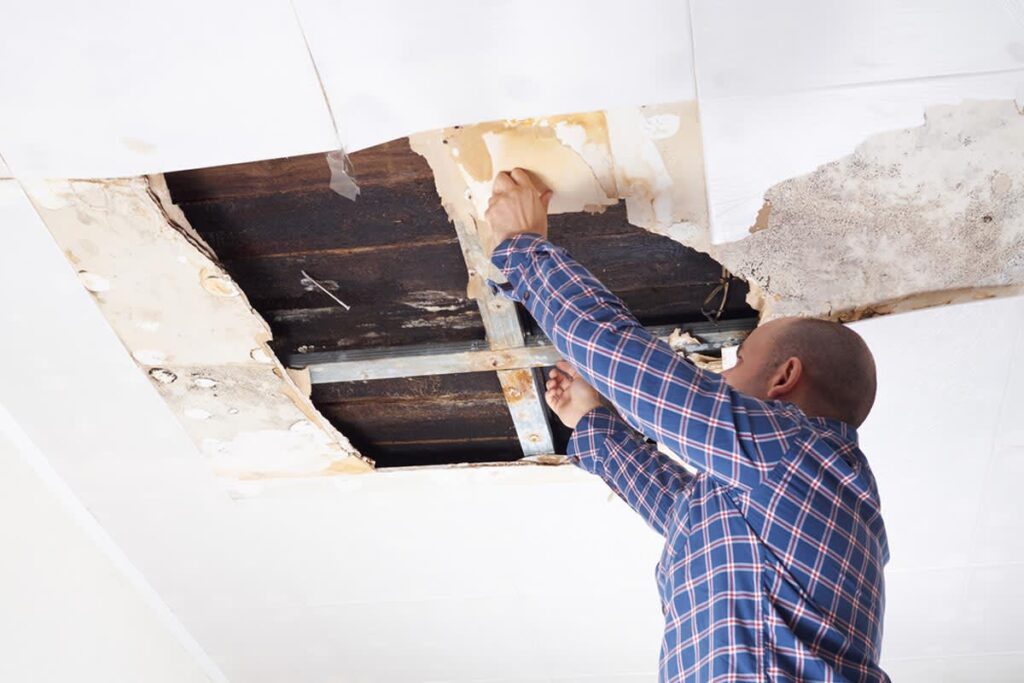
The exception is when water saturation has been so severe that the drywall has gone soft, crumbled, or developed mold behind it. In those cases, repair is not a real option. A professional should assess whether the material can be patched and primed or whether it needs to be cut out and replaced. Catching water damage early almost always results in a smaller, cheaper repair. The average home water damage insurance claim exceeds $12,000 according to Nedes Estimating, which reflects how quickly a minor moisture problem can escalate when left unaddressed in a home.
Homeowners in Lexington who have had a leak, a ceiling drip, or visible wall bubbling should get the damage assessed by a professional before the problem spreads further.
Soda City Painting handles both repair and replacement as part of a broader drywall repair and painting service, which means the wall goes from damaged to painted in one coordinated process rather than two separate contractor visits.
Is a Hole in Drywall Easy to Fix?
Yes, a hole in drywall is easy to fix when it is small, and progressively more involved as it gets larger. Small holes up to about 4 inches across, the kind left by doorknobs, picture anchors, or small impacts, are among the simplest repairs a contractor handles. According to Angi, these typically cost $20 to $120 to repair professionally. A DIY patch kit for the same size hole runs $10 to $30 at a hardware store. The challenge is not the patching itself but the finishing. Getting the joint compound, sanding, and texture blend to disappear into the surrounding wall requires skill and patience. A visible repair in a high-traffic area of a Lexington home is far more noticeable than one tucked in a closet, and many homeowners who attempt DIY patches find the texture match falls short of what they expected.
Large holes measuring 5 inches or more require a different approach. Contractors install a backing piece, cut and attach a new drywall patch, tape and mud the seams in multiple coats, sand between each coat, and then match the existing texture. According to HomeAdvisor, large hole repairs cost between $50 and $200 on average. When those repairs are on the ceiling or in a high-visibility area, costs increase accordingly.
Can I Do Drywall Repair Myself?
Yes, you can do drywall repair yourself for small holes and minor cracks, but the quality of the finish is where most DIY attempts fall short. The physical patch is straightforward. Joint compound, mesh tape, and a putty knife are not hard to use on a small repair. The difficulty is in the finishing process: applying joint compound in thin, even coats, letting each coat dry fully before sanding, feathering the edges so there is no visible bump, and matching the existing wall texture. These steps require practice and a steady hand. According to Sam’s Home Repair, homeowners who have attempted DIY drywall work on more than 50 square feet or on ceilings frequently end up paying a contractor $800 or more to fix the result, on top of the $500 they already spent on materials.
For truly minor repairs, such as a single nail hole or a small dent in a low-visibility spot, DIY is a reasonable approach. For anything involving water damage, ceiling work, matching existing texture, or walls that will be seen up close in a main living area of your Lexington home, professional repair delivers a far cleaner and more durable result.
Can a Handyman Repair Drywall?
Yes, a handyman can repair drywall for smaller, straightforward jobs. Handymen typically handle minor patching, small holes, and basic crack filling. Their labor rates usually run lower than a dedicated drywall contractor, which can make them a practical option for simple spot repairs. The limitation is on more complex work. Matching an existing wall texture, repairing ceiling damage, or blending a large section of new drywall into an older finished wall requires specific drywall finishing skills that not every handyman has developed. A professional drywall contractor brings tools, expertise, and materials specifically suited to getting the finish level right the first time. For repairs in high-visibility rooms or jobs that will need to be painted immediately after, the quality difference between a skilled drywaller and a generalist handyman is often noticeable.
Homeowners in Lexington, Red Bank, and Gilbert who want sheetrock repair handled by professionals with proven experience in texture matching and paint-ready finishing can get a free estimate from the sheetrock repair team at Soda City Painting without any obligation.
How to Estimate a Drywall Repair Job
To estimate a drywall repair job, you start by measuring the damaged area, identifying the type of finish on the existing wall, and determining whether any additional work such as texture matching, priming, or painting will be needed after the repair. The size of the damage is the biggest driver of cost. Small holes up to 4 inches cost the least. Medium holes between 4 and 12 inches require more material and more labor. Large panels or sections over 12 inches require full panel replacement and multiple drying days between mud coats.
Professionals also factor in accessibility. A repair on a standard 8-foot wall costs less to complete than the same repair on a 12-foot ceiling or a vaulted surface that requires staging equipment. According to CountBricks research, ceiling work adds significant cost due to the physical demands and equipment involved. Location within the room matters too. A patch behind a door is less critical to blend perfectly than one in the center of a dining room wall where lighting and sight lines make every imperfection visible.
When getting quotes in the Lexington area, ask whether the estimate includes all coats of joint compound, sanding between coats, texture matching, and priming. A quote that covers only the patch itself may look lower but will require additional costs to reach a paint-ready finish.
How Much Would It Cost to Drywall a 20×20 Room?
Drywalling a full 20×20 room costs roughly $750 to $1,750 for standard residential work based on national installation data from Sam’s Home Repair, which estimates $1.50 to $3.50 per square foot including materials and labor for a complete installation. A 20×20 room with 8-foot ceilings has approximately 480 to 520 square feet of wall surface, plus another 400 square feet of ceiling surface, for a total of roughly 900 square feet of drywall surface area. The final cost depends on ceiling height, room complexity, the finish level required, and local labor rates. According to Faircloth Drywall, quality work in 2026 should be planned at around $2.50 to $2.70 per square foot as a reasonable baseline for experienced professional installation. Vaulted ceilings or rooms with multiple angles can increase labor costs by 25% to 40% above a standard flat-wall room.
Should I Get 1/2 or 5/8 Drywall?
For most interior walls in a standard home, 1/2 inch drywall is the right choice. It is lighter, easier to work with, and appropriate for typical residential wall construction. It is also the most widely used thickness in homes across Lexington and throughout South Carolina. You should choose 5/8 inch drywall when fire resistance or additional soundproofing is needed. Building codes in many areas require 5/8 inch Type X drywall for garages, rooms adjacent to garages, and certain shared walls between units in multi-family buildings. The thicker panel slows the spread of fire, which is why it is standard in these applications. For ceiling installations, 5/8 inch drywall also sags less over time than 1/2 inch when hung on 16-inch or 24-inch framing centers, which makes it a better choice for overhead work in rooms with wider joist spacing. When in doubt, a professional contractor can confirm which thickness is required for your specific application based on the room and local building codes.
Does Insurance Cover Drywall Damage?
Yes, homeowners insurance often covers drywall damage, but only when the cause of the damage is a sudden, accidental event that is listed as a covered peril in your policy. A pipe that bursts unexpectedly, a roof leak from a sudden storm, or a washing machine hose that fails and floods a room are examples of sudden events that typically trigger coverage. Gradual damage from slow leaks, poor maintenance, settling, or general wear and tear is almost always excluded from homeowner policies according to drywall repair cost guides and insurance industry sources.
Before filing a claim, it is worth getting a repair estimate first. If the repair cost is close to or below your deductible, paying out of pocket may be the smarter financial move. Filing a claim affects your insurance history and can lead to higher premiums on renewal. For extensive water damage involving multiple walls or ceilings, where costs can climb well above $1,000, filing a claim is more likely to make financial sense. Always document the damage with photos before any cleanup or repair begins, and contact your adjuster before scheduling repairs when you intend to file.
Many homeowners across Lexington discover drywall damage during or after heavy summer rain events, which are common in South Carolina’s subtropical climate. Ceiling water stains and wall bubbling from roof leaks or plumbing issues are among the most common insurance-related repair calls in the area.
Why Is Drywall Work So Expensive?
Drywall work is expensive primarily because of labor. As noted above, labor represents 65% to 75% of the total cost of most drywall repair and installation jobs. Skilled drywall finishing is a trade that takes real experience to do well. Achieving a smooth, seamless result that disappears after painting requires multiple coats of joint compound, careful sanding between each coat, and texture blending that looks natural in any light. A fast or careless finish shows immediately once the paint goes on.
Material costs have also risen sharply in recent years. Faircloth Drywall, citing Federal Reserve gypsum pricing data, reports that calcined gypsum went from $27 per ton in 2014 to $63 per ton in 2024, a 133% increase over one decade. The construction industry is also facing a significant labor shortage. According to Sam’s Home Repair, the construction sector needed to attract approximately 439,000 new workers in 2025 alone, with projections rising to 499,000 in 2026. Fewer skilled workers competing for more work keeps wages and billing rates elevated across the industry, including for drywall professionals in markets like Lexington and greater Columbia.
How to Tell a Good Drywall Job
A good drywall job is nearly invisible after painting. The clearest sign of quality work is that you cannot see the seams, patches, or repaired areas once the finish coat is applied. Run your hand across the surface. A properly finished wall should feel uniformly flat with no ridges, bumps, or depressions at the seam lines. Look at the wall from a low angle in raking light, where a lamp or window light grazes across the surface. Imperfections that are invisible in flat light become very obvious in raking light, and this is the most reliable way to inspect finished drywall before painting begins.
Texture consistency is another mark of a good job. Repaired areas should blend into the surrounding wall texture so naturally that you cannot locate the patch by eye. Orange peel, knockdown, smooth, and other texture types each require specific tools and techniques to match correctly. Poor texture matching is one of the most common complaints homeowners have after a drywall repair job that looked fine at first but stood out once painted.
Professional sheetrock and drywall work done by experienced crews also uses the right number of mud coats, allows proper drying time between each coat, and finishes with a primer coat before handing the wall off for painting.
Many drywall repair projects in Lexington flow directly into interior painting, and keeping both under one contractor simplifies scheduling and ensures the primer and topcoat are chosen specifically for the repaired surface.
Homeowners who want the full process handled by a single team, from sheetrock patching through primer and final paint coat, can see how that works with professional interior painting services that are built to work alongside drywall repair from start to finish.
Drywall Repair Cost by Damage Type: At a Glance
| Type of Damage | Typical Repair Cost | DIY Possible? | Notes |
|---|---|---|---|
| Small holes (under 4 inches) | $20 to $120 professional; $10 to $30 DIY kit | Yes, for low-visibility spots | Texture matching is the hardest part |
| Large holes (5 inches or more) | $50 to $200 | Difficult without finishing experience | Requires backing, new panel, and multiple mud coats |
| Hairline cracks | $100 to $250 | Yes for very minor cracks | Recurring cracks may signal structural settling |
| Seam and corner cracks | $150 to $350 | Not recommended | May need tape reinforcement to prevent return |
| Water damage repair | $550 to $3,000 or more | No — source must be fixed first | Mold presence adds significant cost |
| Full wall replacement | $500 to $1,600 | Not recommended | Roughly $2 to $5.50 per sq ft per HomeAdvisor |
| Ceiling repair | $220 to $1,300 | No | Labor runs 20 to 40% more than wall work |
| Texture reapplication | About $1 per square foot | Difficult without spray equipment | Required after any visible patch repair |
Sources: HomeAdvisor 2026 drywall repair cost data; Angi homeowner project pricing survey (30,000+ projects); Nedes Estimating national cost analysis 2025; ConstructEstimates 2026 pricing guide; Fixr.com drywall contractor rate data.
Frequently Asked Questions About Drywall Repair Costs
How Do Contractors Charge for a Drywall Job?
Contractors charge for drywall jobs in one of three ways: hourly, per square foot, or as a flat rate. Hourly billing at $60 to $90 per hour is most common for jobs involving multiple small repairs scattered around a home, where the total square footage is unpredictable. Per-square-foot pricing at $50 to $80 per square foot is more common when the damage is confined to one area and the scope is clearly defined. Flat-rate pricing is common for simple, standard jobs like patching a single hole or repairing a few dents. Most contractors also charge a minimum service fee of $100 to $250 to cover the cost of travel, setup, and cleanup even on very small jobs. Always confirm whether a quote includes texture matching and priming, since some contractors price those as separate line items.
Does Homeowners Insurance Cover Drywall Damage in Lexington, SC?
Homeowners insurance in Lexington, South Carolina covers drywall damage when it results from a sudden, covered event such as a burst pipe, a storm-related roof breach, or an accidental appliance overflow. Gradual damage caused by slow leaks, deferred maintenance, or normal wear and tear is not covered under standard homeowner policies. South Carolina’s humid climate means water intrusion from storm events is a common cause of drywall damage in the area, and those events are often covered if the policy includes wind and rain damage protection. Contact your insurer or adjuster before beginning repairs if you plan to file a claim, and document all damage with photos beforehand.
Is It Worth Hiring a Professional for Small Drywall Repairs?
Yes, it is worth hiring a professional for small drywall repairs when the repair is in a visible area, when texture matching is required, or when you want the repair to blend seamlessly before repainting. A DIY patch kit costing $10 to $30 can handle a nail hole, but a patch that looks flat, blotchy, or mismatched in texture will be visible every time you walk by it. Professional repair for a small hole costs $100 to $160 on average including the minimum service fee. That premium buys a result that disappears into the wall. Homeowners who plan to repaint a room after the repair almost always find it worth the added cost to have the wall look right before the paint goes on.
How Long Does Drywall Repair Take?
Drywall repair takes anywhere from a single day to several days depending on the size of the damage and how many coats of joint compound are needed. Small patches and minor crack repairs can be completed in one visit if the compound dries quickly enough for a second coat the same day. Larger repairs involving a full panel replacement or significant water damage require multiple visits to allow each coat of compound to dry fully before sanding and applying the next. Rushing the drying process by applying paint before the compound has cured all the way through leads to cracking and shrinkage that defeats the purpose of the repair. In Lexington during summer months, high indoor humidity can slow drying times, which is something a professional crew will account for during scheduling.
What Causes Drywall Damage Inside Homes?
The causes of drywall damage inside homes include moisture from plumbing leaks and roof intrusions, impact damage from furniture moves or door handles, settling cracks as a house shifts over time, water intrusion from HVAC condensation, and damage from prior renovation work where walls were opened and not fully restored. Moisture is the most serious cause because it can compromise both the drywall and the structure behind it. In Lexington, South Carolina, the warm, humid climate means that undetected moisture has ideal conditions to cause mold growth behind walls before the surface damage becomes visible. Any drywall damage that feels soft, discolored by water staining, or smells musty should be inspected by a professional before repair begins to rule out mold in the wall cavity.
Do Sheetrock Repairs Include Painting?
Sheetrock repairs do not automatically include painting in most contractor quotes. Standard repair scope covers patching, taping, mudding, sanding, and priming the repaired area. Painting the full wall or room is typically a separate scope of work. Some contractors offer spot painting to blend the repair into the surrounding wall, but achieving a perfect color match on a repaired section of an older painted wall is extremely difficult. The most reliable way to get a seamless result is to repaint the full wall after the repair is complete. Many homeowners in Lexington use a sheetrock repair as the natural starting point for a broader room refresh that includes a full repaint once the walls are in solid condition.
When drywall repair is paired with a full interior repaint by the same crew, the result is a room that looks completely renewed without the visible signs of any prior damage.
Homeowners across the Lexington area ready to bundle sheetrock repair with a fresh coat of paint can reach out to the residential painting team at Soda City Painting for a combined estimate that covers both scopes in one visit.
Final Thoughts
Drywall repair costs range from under $100 for a simple small hole to well over $1,000 for water-damaged walls or ceiling sections, with most homeowners landing around $609 for a typical professional repair according to HomeAdvisor and Angi data. The factors that move the number most are the size of the damage, the location of the repair, whether texture matching is required, and local labor rates. Labor alone accounts for 65% to 75% of the total cost on most jobs, which is why getting an in-person estimate from a local professional is always more accurate than relying on national averages.
In Lexington, South Carolina, where hot and humid summers put real stress on interior walls and where quick repairs protect long-term home value, addressing drywall damage early is always less expensive than letting it spread. Whether the job is a single patch, a full wall replacement, or a ceiling repair after a plumbing leak, working with a professional team that handles both drywall and paint means fewer trips, cleaner results, and walls that look like the damage never happened.
Visit Soda City Painting to learn more about what we do and how we serve homeowners across Lexington, Red Bank, Gilbert, and the Lake Murray area. To schedule a free estimate for professional sheetrock installation and repair in Lexington and the surrounding communities, call us or reach out online. We will assess the damage, explain exactly what the repair involves, and give you a clear quote before any work begins.