
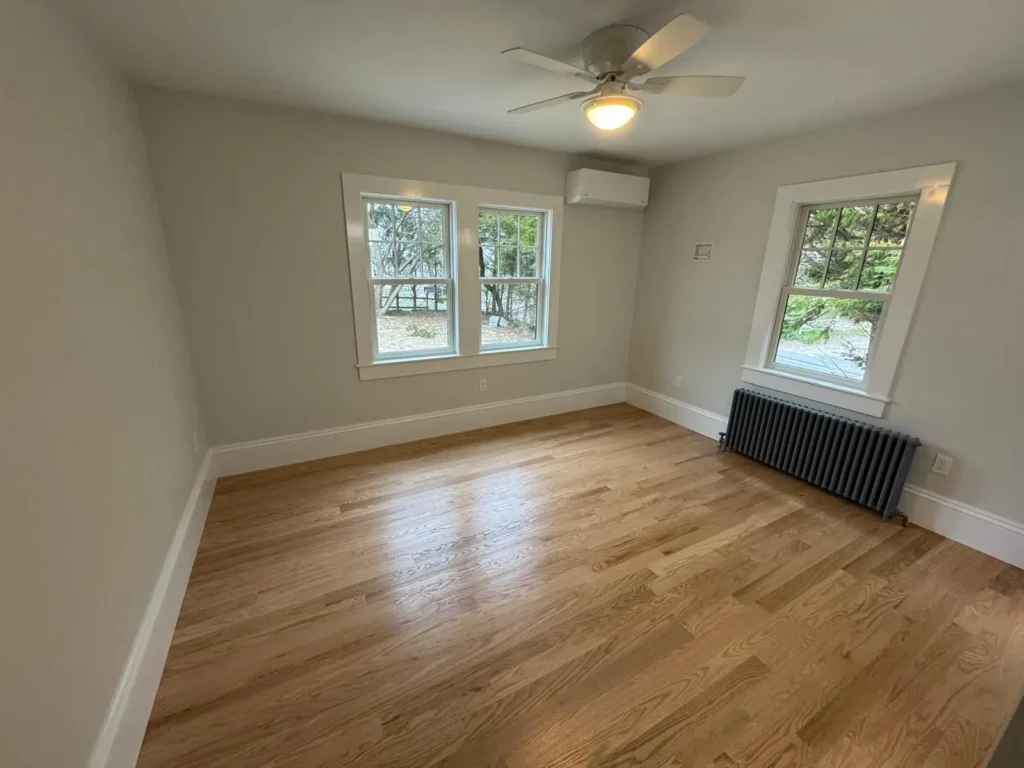
You need about 1 to 2 gallons of paint for a standard room with two coats. One gallon of paint covers approximately 350 to 400 square feet of smooth, primed wall surface, according to Sherwin-Williams. A typical 12×12 bedroom with 8-foot ceilings has roughly 384 square feet of wall area, so two coats will require about 2 gallons after subtracting doors and windows. The exact amount depends on wall texture, paint quality, the number of coats, and whether you are also painting the ceiling and trim. This guide walks homeowners in Lexington, SC, and the surrounding Columbia area through every step of calculating paint needs so you buy the right amount the first time.
Will 1 Gallon of Paint Cover a 12×12 Room?
Yes, 1 gallon of paint will cover a 12×12 room for a single coat. A 12×12 room with 8-foot ceilings has a total wall area of 384 square feet (12 feet x 8 feet x 4 walls). After subtracting one standard door (about 21 square feet) and one window (about 15 square feet), the paintable wall area drops to roughly 348 square feet. According to Sherwin-Williams, one gallon of paint covers 350 to 400 square feet on smooth, primed surfaces. That means one gallon is just enough for one coat.
However, most painting projects need two coats for a solid, even finish. Two coats on a 12×12 room require about 1.75 gallons, according to Southern Painting LLC. Rounding up, you should buy 2 gallons. If you are making a dramatic color change, like going from dark brown to a light gray, you may need a coat of primer plus two coats of paint, which bumps the total closer to 3 gallons.
Homeowners in Lexington, SC, who want to avoid running short should always round up. Having a little extra paint on hand for future touch-ups is a smart move, especially in high-traffic areas like hallways and kids’ rooms.
How Much Paint Do I Need for a 10×10 Room?
You need about 1 to 1.5 gallons of paint for a 10×10 room with two coats. A 10×10 room with 8-foot ceilings has 320 square feet of total wall area before subtracting doors and windows. According to Sherwin-Williams, one gallon of paint covers a 10-by-10 room with one coat, but most projects require at least two coats to achieve full coverage and true color depth.
After subtracting a standard door and window, the paintable area is about 284 square feet. For two coats, that totals roughly 568 square feet of coverage needed. At 350 to 400 square feet per gallon, you will need about 1.5 gallons. Buying 2 gallons gives you enough for both coats plus extra for touch-ups later.
Bathrooms and small bedrooms in homes around the Lake Murray area are often close to this size. If the room is a bathroom, remember that moisture-resistant paint is recommended, and these specialty formulas sometimes have slightly different coverage rates listed on the can.
How Many Gallons of Paint Does It Take to Do a 12×12 Room?
It takes about 2 gallons of paint to do a 12×12 room with two coats on the walls only. According to HomeAdvisor’s paint calculator, a 12×12 room with 8-foot ceilings and one door and one window needs roughly 1.5 gallons for two coats. Rounding up to 2 full gallons accounts for waste, touch-ups, and minor miscalculations.
If you are also painting the ceiling, add about 0.5 gallons. A 12×12 ceiling has 144 square feet, and one coat of flat ceiling paint at 400 square feet per gallon will use just over a third of a gallon. Most pros recommend flat paint for ceilings because it hides imperfections better than sheens with more shine.
Painting the trim, baseboards, and door in the same room adds another 0.5 to 1 gallon depending on how much trim there is. According to The Old Farmer’s Almanac, you can calculate baseboard area by measuring the room’s perimeter, subtracting 3 feet per door, and multiplying by the baseboard height. For a 12×12 room with 6-inch baseboards and two doors, that comes out to roughly 20 square feet of trim surface.
Homeowners tackling interior painting projects in Lexington should buy all paint for a room from the same batch to keep color consistent across every wall.
How Much Will 5 Gallons of Paint Cover?
Five gallons of paint will cover approximately 1,750 to 2,000 square feet of smooth wall surface with one coat. According to HomeAdvisor, 5 gallons provides up to 1,800 square feet of coverage using the standard estimate of 360 square feet per gallon. With two coats, 5 gallons covers about 875 to 1,000 square feet of paintable wall area.
For most homes in the Lexington and Columbia area, 5 gallons is enough to paint two to three average-sized rooms with two coats each. A 5-gallon bucket is also the most cost-effective way to buy paint. According to Bankrate, the average cost of a gallon of paint ranges from $20 to $70, and buying in bulk often saves 10% to 15% compared to buying individual gallons.
Five gallons is a great option when you are painting multiple rooms the same color or doing a whole-house refresh. Keep in mind that textured walls, bare drywall, and major color changes will reduce that coverage amount.
How Many Rooms Will 2 Gallons of Paint Cover?
Two gallons of paint will cover 1 average-sized room with two coats. According to Bankrate, one to two gallons is the average amount of paint needed for a standard room. If you are applying just one coat over a similar existing color, 2 gallons can stretch to cover 2 small rooms like bathrooms or walk-in closets.
The key variable is wall surface area. Two gallons provide 700 to 800 square feet of total coverage. A typical bedroom (about 10×12 feet with 8-foot ceilings) has roughly 350 square feet of paintable wall space. Two coats on that room use up nearly all of your 2 gallons. A small bathroom with 150 square feet of wall space only needs about 1 gallon for two coats, so 2 gallons could handle two bathrooms.
Families in Gilbert and Red Bank who are repainting a single bedroom or a guest bathroom will find that 2 gallons is the sweet spot. Always check the label on your specific paint brand for the exact coverage rate, as it varies between products.
What Is the Average Cost to Paint a 10×10 Room?
The average cost to paint a 10×10 room is $350 to $850 when you hire a professional, according to HomeGuide. This includes labor, paint, primer, tape, drop cloths, and cleanup. Labor accounts for 70% to 85% of the total cost, making it the biggest expense by far. The paint itself is a much smaller piece of the bill.
If you do it yourself, the cost drops to about $100 to $200 for paint and supplies. According to HomeAdvisor, DIY painting supplies like brushes, rollers, tape, trays, and drop cloths cost $200 to $300 total. The paint for a 10×10 room runs $40 to $140 depending on brand and quality. Budget paint costs $20 to $30 per gallon, while premium brands like Sherwin-Williams or Benjamin Moore run $50 to $70 per gallon.
According to the U.S. Bureau of Labor Statistics, the median annual wage for construction painters was $48,660 as of May 2024, which translates to roughly $23 per hour. Professional painting contractors charge more than that base wage to cover insurance, equipment, and overhead.
Homeowners in the Columbia metro area who want professional results without the hassle of DIY can get a free estimate from a local residential painting team to see exactly what their project will cost.
Is It Better to Brush or Roll Paint?
It is better to roll paint on walls and ceilings and to brush paint on trim, edges, and corners. Rollers and brushes serve different purposes, and most painting projects require both tools working together. According to Nash Painting, rollers provide smoother, more even results with less effort than brushes on large flat surfaces. Brushes offer precision and control for detail work that rollers cannot match.
The best approach is to start by “cutting in” with a brush. This means painting a 2-to-3-inch strip along ceiling lines, corners, around outlets, and along trim. Once the edges are done, switch to a roller to fill in the large open areas of the wall. This combination gives you clean lines at the edges and fast, even coverage in the middle.
Roller nap length matters too. A short-nap roller (3/8 inch) works best on smooth drywall. A medium-nap roller (1/2 inch) handles lightly textured surfaces. A long-nap roller (3/4 inch or more) is needed for heavily textured walls like knockdown or orange peel textures common in many homes throughout Lexington and the Columbia area.
According to Rollingdog Tools, rollers absorb more paint than brushes due to their thicker texture, so keep that in mind when estimating how much paint you need. If you plan to spray instead of roll, expect about 20% to 30% more paint usage due to overspray.
Is It Cheaper to Buy a 5 Gallon Bucket of Paint?
Yes, it is cheaper to buy a 5 gallon bucket of paint than five individual gallons. Most paint manufacturers and retailers offer a per-gallon discount when you buy in bulk. A premium gallon of paint that costs $60 individually might cost $250 to $280 for a 5-gallon bucket, saving you $20 to $50 compared to buying five separate cans.
According to Improovy, higher-quality interior paint from brands like Sherwin-Williams or Benjamin Moore runs $50 to $70 per gallon at retail. Budget-friendly brands from stores like Lowe’s or Home Depot cost $30 to $45 per gallon. The 5-gallon option also cuts down on packaging waste and guarantees that all of your paint comes from the same batch, which keeps the color perfectly consistent.
Buying a 5-gallon bucket makes sense when you are painting two or more rooms the same color. If you only need 2 gallons for a single room, stick with individual gallons so you are not storing 3 extra gallons that may go to waste. Leftover paint can last up to 10 years if stored properly in a sealed can at room temperature, but it still takes up space.
Homeowners around the Lake Murray area and Lexington who are planning a multi-room project or a whole-house refresh should consider the bulk option to save money and keep color consistency across every wall.
How Many Gallons of Paint Do I Need for a 10×12 Bedroom?
You need about 2 gallons of paint for a 10×12 bedroom with two coats. A 10×12 room with 8-foot ceilings has 352 square feet of total wall area. Subtracting one door (21 square feet) and one window (15 square feet) leaves about 316 square feet of paintable wall space. Two coats bring the total to 632 square feet of coverage needed.
According to Rodda Paint, the average bedroom requires about 1 gallon of wall paint for a single coat using premium paint. For two coats, 2 gallons gives you solid coverage with a little left over for future touch-ups. According to Decoratly’s paint calculator, a more conservative coverage estimate of 350 square feet per gallon (rather than the optimistic 400 that some manufacturers claim) is more realistic for real-world conditions.
If you are also painting the closet interior, add another half gallon. Most walk-in closets have 200 to 300 square feet of wall area, which requires about 1 gallon for two coats. Standard reach-in closets need much less. Homeowners in Lexington should factor in every surface they plan to paint before heading to the store.
Should I Prime Before Painting a Room?
Yes, you should prime before painting a room in several common situations. Primer is needed when you are painting over bare or new drywall, covering a dark color with a lighter shade, switching from oil-based to latex paint, sealing stains or water marks, or painting a surface with significant repairs. According to Sherwin-Williams, a gallon of primer covers about 200 to 300 square feet, which is enough for a 10×10 or 12×12 room.
Priming helps paint stick better and last longer. According to The Old Farmer’s Almanac, priming improves coverage and often reduces the total amount of paint needed because the primer seals the surface and prevents the topcoat from soaking in unevenly. On bare drywall, which is very porous, skipping primer can mean needing 3 or more coats of paint to get even color.
You can skip a separate primer if you are repainting with a similar color, the walls are in good shape, and you are using a quality paint-and-primer-in-one product. These all-in-one formulas work well for simple repaints but are not a substitute for dedicated primer on problem surfaces.
Homes in the Lexington area with older walls, patched drywall, or heavy staining will benefit from a solid coat of primer before any topcoat goes on. If your walls need patching first, drywall repair and painting services handle both prep and finish work in one project.
What’s the Hardest Color to Paint Over?
The hardest colors to paint over are deep reds, dark blues, bright yellows, and dark greens. These highly pigmented colors bleed through lighter topcoats and require extra coats of primer and paint to fully cover. According to Sherwin-Williams, going from a very dark color to a very light one is one of the most challenging painting scenarios because the old color shows through even after two coats of standard paint.
Red is widely considered the single hardest color to cover. Its warm pigments are aggressive and tend to ghost through even tinted primer. Professional painters often recommend two coats of gray-tinted primer followed by two coats of topcoat when covering deep reds. That adds up to 4 total coats and significantly more paint than a standard repaint.
Bright yellows are also difficult because the pigments are transparent by nature. Covering yellow with a neutral tone can take 3 coats of paint even with primer. On the flip side, painting a dark color over a light one is much easier and may only need two coats with no primer.
If you are covering bold or dark walls in your home, factor in the extra primer and paint when calculating how much you need to buy. For a 12×12 room going from dark red to white, plan on 3 to 4 gallons of primer and paint combined instead of the usual 2.
What Are Common Paint Mistakes That Waste Paint?
Common paint mistakes that waste paint include overloading the roller, skipping primer, buying the wrong amount, not subtracting doors and windows from calculations, and choosing cheap paint that requires extra coats. According to Sherwin-Williams, using the wrong amount of paint on the roller or brush is one of the most frequent errors homeowners make.
Overloading the roller causes drips, splatters, and uneven texture. According to The Painting Pros, you should never dip a brush more than two-thirds of the way into the paint can. For rollers, load evenly by rolling back and forth in the tray until the roller is saturated but not dripping. Multiple thin coats always produce a better result than one thick coat.
Skipping primer is another major paint waster. Without primer, the first coat of paint soaks into bare or damaged walls instead of covering them. This means you need a third or even fourth coat to achieve the same coverage that two coats over primer would have given you.
Buying cheap paint seems like a money saver, but budget paints often cover only 300 to 350 square feet per gallon and require extra coats for full opacity. According to Improovy, premium brands cover better and require less material, often making them cheaper in the long run.
Homeowners across the Columbia and Lexington area can avoid these mistakes by getting a professional paint estimate. A house painting team calculates exact quantities and brings the right tools for a clean, efficient job.
How Long Does It Take a Painter to Paint a 12×12 Room?
It takes a professional painter about 3 to 5 hours to paint a 12×12 room, including prep, two coats, and cleanup. A skilled painter covers about 80 to 120 square feet of flat wall surface per hour after prep is done, according to HomeGuide. A 12×12 room with about 350 square feet of paintable wall area takes roughly 3 to 4 hours of active painting time for two coats, plus 1 to 2 hours for setup, taping, cutting in, and cleanup.
For a DIY homeowner, the same room can take 6 to 10 hours. Inexperience leads to slower cutting in, more time taping, and extra cleanup from drips and splatters. Drying time between coats adds to the overall timeline too. Most latex paints need 2 to 4 hours of drying time between coats, according to Sherwin-Williams, so a two-coat project often stretches across a full day.
Wall condition plays a big role in the timeline. If the room needs patching, sanding, or priming, add 1 to 3 hours. A room with lots of trim, multiple windows, or textured walls also takes longer than a simple rectangular room with smooth drywall.
Is 1 Gallon of Paint Enough for 2 Coats?
No, 1 gallon of paint is not enough for 2 coats on a standard-sized room. One gallon covers 350 to 400 square feet with a single coat. A typical bedroom has 300 to 400 square feet of paintable wall space, so one gallon barely covers one coat. Two coats on the same room require 600 to 800 square feet of coverage, which means you need about 1.5 to 2 gallons.
One gallon is enough for 2 coats only in very small spaces. A small bathroom with 150 square feet of wall area, for example, needs just 300 square feet of total coverage for two coats. One gallon handles that with room to spare. A single accent wall that measures 10 feet wide by 8 feet tall (80 square feet) also falls well within one gallon for two coats.
According to Rodda Paint, one coat of premium paint will cover most surfaces when painting over a similar color. But for color changes, new surfaces, or high-traffic areas, two coats are always recommended. The second coat uses about 30% less paint than the first coat, according to Improovy, because the surface is already sealed.
If you are painting a full room in Lexington and want a lasting, professional-quality finish, plan on at least 2 gallons. Running out of paint mid-project is one of the most frustrating mistakes you can make, especially with custom-mixed colors that are hard to match perfectly in a second batch.
How Much Paint Do I Need for a Whole House Interior?
You need about 10 to 25 gallons of paint for a whole house interior, depending on the home’s size and how many surfaces you are painting. According to the National Association of Home Builders, the average new single-family home in the United States is about 2,200 square feet. A home this size has roughly 5,500 to 7,000 square feet of paintable wall surface, requiring 14 to 20 gallons of wall paint for two coats.
Add 3 to 5 gallons for ceilings and another 2 to 3 gallons for trim, baseboards, and doors if you are painting those too. According to KILZ, one gallon of primer covers 250 to 350 square feet. If the home needs full priming, plan on 8 to 12 additional gallons of primer. According to HomeAdvisor, the average cost of paint ranges from $20 to $70 per gallon, so paint costs alone for a full house can range from $200 to $1,400 before labor.
For homeowners in the Lexington and Columbia area planning a full interior painting project, getting a professional estimate is the most accurate way to determine exactly how much paint is needed. A pro measures actual wall surface area, ceiling height, and trim footage to calculate the precise amount.
Paint Needed by Room Size (Two Coats, Walls Only)
| Room Size | Wall Area (Sq Ft) | After Doors/Windows | Gallons Needed (2 Coats) |
|---|---|---|---|
| 8×10 (Small Bedroom) | 288 | ~252 | 1.5 |
| 10×10 (Bathroom/Office) | 320 | ~284 | 1.5 – 2 |
| 10×12 (Standard Bedroom) | 352 | ~316 | 2 |
| 12×12 (Master Bedroom) | 384 | ~348 | 2 |
| 12×15 (Living Room) | 432 | ~381 | 2 – 2.5 |
| 15×20 (Large Living Room) | 560 | ~494 | 3 |
| 20×20 (Open Concept) | 640 | ~574 | 3 – 3.5 |
Sources: Sherwin-Williams (350-400 sq ft per gallon coverage), The Old Farmer’s Almanac (door = 21 sq ft, window = 15 sq ft deductions), HomeAdvisor paint calculator. Assumes 8-foot ceilings, 1 door and 1 window per room. Larger rooms may have more openings.
How Do You Calculate Paint for a Room Step by Step?
You calculate paint for a room by measuring the walls, subtracting doors and windows, and dividing by the paint’s coverage rate. Here is the step-by-step process that professional painters and paint manufacturers recommend.
First, measure the length of each wall in feet. Add all the wall lengths together to get the room’s perimeter. For a 12×15 room, that is 12 + 15 + 12 + 15 = 54 feet. Second, measure the ceiling height. Most rooms in homes across the Lexington area have standard 8-foot ceilings, though some newer builds and older homes have 9 or 10-foot ceilings.
Third, multiply the perimeter by the ceiling height. For our 12×15 example, that is 54 x 8 = 432 square feet of total wall area. Fourth, subtract the area of doors and windows. A standard door is about 21 square feet (3 x 7 feet). A standard window is about 15 square feet (3 x 5 feet). If the room has 2 doors and 2 windows, subtract 72 square feet (42 + 30). That leaves 360 square feet of paintable wall surface.
Fifth, divide the paintable area by the paint’s coverage rate. Most paints cover 350 to 400 square feet per gallon. At 350 square feet per gallon, you need about 1.03 gallons for one coat. For two coats, double it: about 2.06 gallons. Round up to 2.5 or buy 3 gallons if you want extra for touch-ups.
According to The Old Farmer’s Almanac, adding 10% extra to your total is a good rule of thumb to account for waste, spills, and future touch-ups. If your home needs wall repairs before painting, sheetrock install and repair should be completed before you measure and buy paint.
Does Wall Texture Affect How Much Paint I Need?
Yes, wall texture significantly affects how much paint you need. Textured walls have more surface area than smooth walls because of their peaks, valleys, and ridges. According to Clare Paint, textured surfaces like knockdown, orange peel, or popcorn textures need about 20% more paint than smooth drywall. Some heavily textured walls can require up to 30% more, according to PAINTZONE.
Smooth drywall in good condition gets the best coverage at roughly 400 square feet per gallon. Lightly textured walls drop to about 350 square feet per gallon. Heavily textured surfaces like stucco or brick can absorb so much paint that coverage falls to 250 to 300 square feet per gallon.
New, bare drywall is also extremely porous and soaks up paint like a sponge. According to PaintRite Pros, fresh drywall should be primed with at least two coats of quality primer before applying topcoat paint. Without primer, bare drywall can absorb three full coats of paint before the color looks even.
Many homes in the Lexington and Columbia area have lightly textured walls, which is typical for residential construction in South Carolina. If you are not sure what texture your walls have, run your hand across the surface. If it feels bumpy or rough, plan on buying 20% more paint than the smooth-wall calculation suggests.
What Paint Finish Should I Choose for Each Room?
The paint finish you should choose depends on the room’s purpose and traffic level. Each finish has a different sheen level that affects both appearance and durability. Choosing the right finish also impacts how much paint you need, because higher-gloss finishes sometimes require more coats for even coverage.
Flat and Matte Finish
Flat paint has no shine and is the best choice for ceilings and low-traffic rooms like formal dining rooms and adult bedrooms. It hides imperfections, nail pops, and minor surface flaws better than any other finish. The downside is that flat paint is harder to clean and shows scuffs easily. According to HomeAdvisor, flat and matte finishes require fewer coats than glossier options because they mask imperfections rather than highlighting them.
Eggshell Finish
Eggshell has a very slight sheen and is a popular choice for living rooms, bedrooms, and hallways. It is more washable than flat paint while still doing a decent job of hiding minor wall imperfections. This is the most commonly used interior finish in homes across the Lexington area.
Satin Finish
Satin offers a soft, velvety sheen and is great for high-traffic areas like hallways, kids’ rooms, and family rooms. It cleans up easily and resists moisture better than eggshell. According to HomeAdvisor, you can expect to pay about $2 more per gallon for each step up in gloss level.
Semi-Gloss and Gloss Finish
Semi-gloss and gloss finishes are ideal for kitchens, bathrooms, trim, doors, and baseboards. They resist moisture, stains, and fingerprints and wipe clean with a damp cloth. The trade-off is that high-gloss finishes show every imperfection on the wall surface, so thorough prep work is critical. Many homes in the Red Bank and Gilbert communities use semi-gloss in kitchens and bathrooms for long-lasting durability.
If you are painting different surfaces in different finishes within the same room, label your cans carefully. Accidentally applying semi-gloss to a wall meant for eggshell is a mistake you will not notice until the paint dries, and by then it is too late.
Homeowners who also want to freshen up outdoor living areas can pair their interior project with porch painting for a complete home refresh.
How Do Professional Painters Estimate Paint Quantities?
Professional painters estimate paint quantities by measuring actual wall surface area, not floor square footage. They calculate the height and length of every wall, subtract doors, windows, and built-ins, and factor in ceiling height, wall texture, paint quality, and the number of coats needed. This method is far more accurate than the quick estimates most homeowners use.
According to Improovy, pros recommend dividing total wall area by 350 (not 400) square feet per gallon for a more realistic estimate. They then multiply by 1.7 for two coats instead of simply doubling, because the second coat requires about 30% less paint than the first coat. This saves money and reduces waste.
Professional painters also account for trim separately. According to Southern Painting LLC, trim and doors typically require a separate paint type (usually semi-gloss) and a separate quantity calculation. About 40 linear feet of baseboard trim can be covered with one gallon for two coats.
A professional crew also factors in paint quality. Premium paints from Sherwin-Williams or Benjamin Moore have higher pigment loads and cover more surface per gallon than budget brands. According to Improovy, using a higher-quality paint can mean the difference between two coats and three coats, which changes the total amount of paint needed.
For a precise, no-guesswork estimate, homeowners in the Lexington area can contact a commercial or residential interior painting team for a free, in-person quote.
Is It Cheaper to DIY or Hire Professional Painters?
It is cheaper to DIY in terms of out-of-pocket cost, but hiring professional painters often delivers better value for the money. According to HomeAdvisor, DIY painting saves $1,700 to $1,800 per project because supplies like brushes, rollers, tape, and drop cloths cost only $200 to $300. The paint for a single room runs $40 to $140 depending on brand and quality.
However, DIY projects take much longer and often produce uneven results. According to HomeGuide, labor makes up 70% to 85% of a professional painting bill, but that money buys speed, precision, and a finish that lasts. A professional crew can paint a room in a single day that might take a homeowner an entire weekend. They also know exactly how much paint to buy, which reduces waste.
According to Angi, interior painting delivers an average return on investment of 107%. That ROI assumes a professional-quality finish. A sloppy DIY job with visible roller marks, drips, and uneven edges will not deliver the same value, especially if you are painting before selling your home.
For homeowners in Lexington, SC, who value their time and want a flawless result, hiring a local painting professional is the smarter investment. If your home also has outdoor projects, bundling deck, dock, and fence painting with interior work can save on setup fees.
Frequently Asked Questions
How Much Paint Do I Need for a Bathroom in Lexington, SC?
You need about 1 gallon of paint for a standard bathroom with two coats. Most bathrooms have 150 to 200 square feet of paintable wall space after subtracting the tub surround, vanity mirror, and window. One gallon at 350 to 400 square feet per coat covers a small bathroom with room to spare for two coats. Use semi-gloss or satin finish for moisture resistance, which is especially important in the humid climate around Lexington and the Lake Murray area.
Can I Use One Gallon of Paint for Two Coats on an Accent Wall?
Yes, you can use one gallon of paint for two coats on a single accent wall. A typical accent wall measures about 10 to 14 feet wide and 8 feet tall, giving you 80 to 112 square feet of surface area. Two coats require 160 to 224 square feet of coverage, which is well within one gallon’s capacity of 350 to 400 square feet. You will have plenty of leftover paint for future touch-ups.
How Do I Store Leftover Paint So It Lasts?
You store leftover paint by sealing the can tightly, placing plastic wrap under the lid before hammering it shut, and storing it in a cool, dry place away from extreme heat or cold. According to industry guidelines, properly stored latex paint can last up to 10 years. Do not store paint in garages or sheds where temperatures swing between extremes, as freezing and thawing ruins latex paint. Homes in the Columbia area with climate-controlled storage spaces are ideal for keeping leftover paint fresh.
How Much Primer Do I Need for a Room?
You need about 1 to 1.5 gallons of primer for a standard room. According to Sherwin-Williams, a gallon of primer covers approximately 200 to 300 square feet. A 12×12 room with 348 square feet of paintable wall space requires slightly more than 1 gallon for a single coat of primer. Two coats of primer on bare drywall or over dark colors will need about 2 to 2.5 gallons.
Does the Type of Paint Affect How Many Gallons I Need?
Yes, the type of paint affects how many gallons you need. Premium paints with higher pigment concentrations cover more surface per gallon and often require fewer coats. According to Improovy, higher-quality paints from brands like Sherwin-Williams and Benjamin Moore cover about 400 square feet per gallon, while budget brands may only cover 300 to 350 square feet. Choosing quality paint can mean needing 2 gallons instead of 3 for the same room, which often makes premium paint the better value.
What Happens If I Run Out of Paint Halfway Through a Room?
If you run out of paint halfway through a room, you risk visible color differences between paint batches. Custom-mixed colors are especially hard to match perfectly in a second batch. Even standard colors from the same brand can have slight tone variations between cans mixed on different days. This is why professionals always recommend buying 10% more than your calculation shows. Homeowners in Red Bank and Gilbert should buy all their paint at once to avoid this problem.
Should I Paint My Ceiling the Same Color as My Walls?
You should paint your ceiling white or a shade lighter than your walls for most rooms. White ceilings reflect the most light and make rooms feel taller and more open. According to HomeAdvisor, ceiling paint is typically a flat finish because it hides imperfections and does not reflect light in distracting ways. The exception is small rooms like bathrooms or powder rooms in Lexington homes, where painting the ceiling the same color as the walls can create a cozy, wrapped-in feel.
Final Thoughts
Calculating how much paint you need for a room comes down to simple math. Measure your walls, subtract doors and windows, and divide by the coverage rate on the paint can. One gallon covers 350 to 400 square feet with one coat. Most rooms need 2 gallons for two coats. A whole house can require 10 to 25 gallons depending on size. Always add 10% extra, buy from the same batch, and choose a quality paint that covers well in fewer coats.
The right amount of paint prevents wasted money, mid-project store runs, and frustrating color mismatches. Whether you are refreshing a single bedroom or tackling every room in the house, accurate measurements and a little planning go a long way. For homeowners in Lexington, SC, and the surrounding communities of Columbia, Red Bank, Gilbert, and Lake Murray, Soda City Painting takes the guesswork out of every project.
Ready to transform your home with a fresh coat of paint? Call (803) 221-0771 or visit the interior painting services page to request your free estimate today. From one room to the whole house, the right painting team makes all the difference.