You should repaint your house exterior every 5 to 10 years on average, but the right timeline depends on your siding material, paint quality, local climate, and how well the previous job was prepared. In Lexington, SC and the surrounding Lake Murray area, South Carolina’s heat, humidity, and UV intensity push most homes toward the lower end of that range. This guide answers every key question about repainting frequency, the best products, the best timing, and how to make each paint job last as long as possible.
How Often Should You Repaint Your House Exterior?
You should repaint your house exterior every 5 to 10 years as a general baseline. According to Picazzo Painting Corp, most homes need a repaint every 5 to 7 years on average, and high-quality paints like Sherwin-Williams Emerald or Benjamin Moore Aura can push that to 10 to 12 years when properly applied. The surface material your home is built with changes everything. Wood siding needs the most frequent attention. Fiber cement and stucco last longer between repaints. Brick painted surfaces last the longest of all.
In South Carolina’s climate, where humidity regularly runs high and summer temperatures push well above 90 degrees Fahrenheit for months at a time, professional painters recommend doing a thorough exterior inspection every two years. According to industry professionals on PaintTalk.com, homeowners who power wash their exterior every two years and address minor peeling, caulk gaps, or touch-up areas as they appear can push a full repaint out to 10 years, even in demanding climates like ours.
How Long Should an Exterior House Painting Last?
An exterior house painting should last between 5 and 10 years when professionally applied with proper surface preparation, a quality primer, and a premium acrylic latex topcoat. According to CertaPro Painters, most professionally applied exterior paint jobs fall within this range, with climate, surface material, and prep quality being the biggest variables. Budget paint applied without thorough prep can fail in as few as 3 years. Premium paint on a properly prepared surface in a mild climate can hold up for 12 years or longer.
The table below shows realistic repainting timelines for the most common siding materials found on homes in the Lexington, SC, Red Bank, Gilbert, and Lake Murray communities.
| Siding Material | Average Repaint Interval | Key Factors That Shorten Lifespan |
|---|---|---|
| Wood Siding | 3 to 7 years | Moisture absorption, UV, expansion/contraction |
| Fiber Cement (Hardie Board) | 10 to 15 years | Caulk failure, surface prep quality |
| Stucco | 5 to 10 years | Cracking, moisture absorption, age |
| Vinyl Siding | Up to 10 years | Chalking, adhesion, paint compatibility |
| Aluminum Siding | 5 to 10 years | Oxidation, chalking, primer compatibility |
| Brick (painted) | 8 to 17 years | Moisture in mortar, trapped humidity |
Sources: A New Leaf Painting, Painting Plus, Allstate Waterproofing, CertaPro Painters, Desert Winds Painting
Can I Just Paint Over Old Exterior Paint?
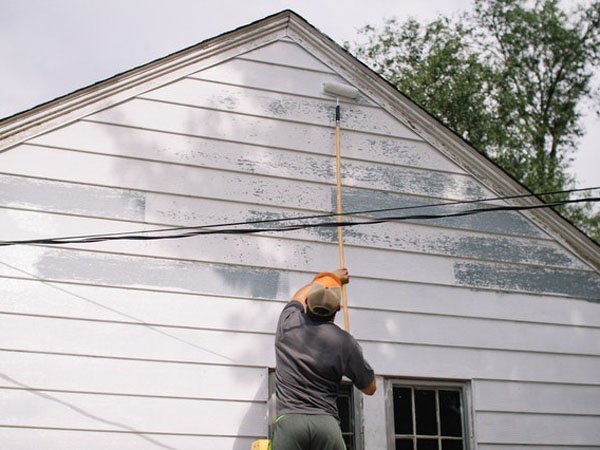
Yes, you can paint over old exterior paint, but only if the existing paint is sound, firmly bonded to the surface, clean, and free of peeling, bubbling, or chalking. According to Picazzo Painting Corp, the quality of the previous paint job is one of the most significant factors in how long the new coat will last. If the existing paint is chalky, peeling at the edges, or has lost its bond to the siding, painting directly over it gives the new coat a weak foundation. The new paint will fail at every spot where the old coat was already failing, often within the first season.
Proper prep before repainting over old exterior paint includes power washing to remove dirt, mold, and chalk, scraping all loose sections, sanding rough edges smooth, filling caulk gaps, and priming bare spots before the topcoat goes on. According to industry guidance from Sherwin-Williams, addressing caulk failure around windows and doors and cleaning gutters so water does not run down siding are two of the most important steps before any repaint begins.
Homes in the Lexington area with older wood siding often carry four or more layers of paint from past repaints. When those accumulated layers become unstable, scraping back to bare wood or a stable surface is the right call before any new paint is applied. This is especially common in older neighborhoods near Shandon, Forest Acres, and the historic corridors along Sunset Boulevard.
What Exterior Paint Lasts 25 Years?
No standard exterior latex or acrylic paint lasts 25 years under normal outdoor conditions. Specialty elastomeric coatings and ceramic-based coating systems are sometimes marketed with extended warranties of 10 to 25 years, but standard premium paints from major brands like Sherwin-Williams and Benjamin Moore realistically last 8 to 12 years under optimal conditions. According to J. Brown Painting’s comparison of premium paint lines, Sherwin-Williams Emerald exterior paint can last up to 10 to 12 years, and some homeowners report strong performance beyond 12 years when the prep and application were done correctly. Benjamin Moore Aura Exterior performs similarly, with strong color retention and resistance to peeling in harsh conditions.
The closest thing to a 25-year exterior coating in today’s market is an elastomeric paint system, which stretches and bridges small cracks as surfaces expand and contract. These coatings are much thicker than standard paint and are used on stucco, concrete block, and masonry. According to Triangle Pro Painting’s research on southeastern painting intervals, elastomeric coatings can extend painting intervals to 10 to 12 years in high-moisture areas near lakes, rivers, and wooded lots where standard paint fails faster.
What Is the Best Longest Lasting Exterior House Paint?
The best longest lasting exterior house paint options are Sherwin-Williams Emerald, Sherwin-Williams Duration, Benjamin Moore Aura Exterior, and Benjamin Moore Regal Select Exterior. These premium lines consistently receive the highest ratings for color retention, fade resistance, adhesion, and resistance to peeling and blistering in humid southeastern climates like South Carolina’s.
According to J. Brown Painting’s detailed comparison, Sherwin-Williams Duration is designed for longevity and lasts 8 to 10 years outdoors. Emerald, their ultra-premium line, performs even better, with some homeowners reporting strong results after 12 years. Benjamin Moore Aura Exterior lasts 10 to 12 years with minimal maintenance and is praised for withstanding UV damage and resisting peeling, according to the same source.
For homes in the Lexington, SC area with high humidity exposure or lakeside properties along Lake Murray, both brands also make mildewcide-enhanced formulations specifically designed to resist the mold and algae growth that humid southeastern summers promote. According to Triangle Pro Painting, premium acrylic latex paints with added mildewcides can extend repainting intervals by 2 to 3 years compared to standard formulations. That difference adds up to real savings over the life of a home.
Is Benjamin Moore Better Than Sherwin Williams for Exterior Paint?
Neither Benjamin Moore nor Sherwin-Williams is objectively better for exterior paint. Both brands produce premium products that perform at the highest level when properly applied. According to SD Custom Painting’s comparison, premium lines from both brands last 5 to 7 years on exterior surfaces when correctly applied, and lifespan depends more on surface prep and application than brand choice. Benjamin Moore’s Aura line uses proprietary Gennex Color Technology and Color Lock Technology to permanently bind pigments to the resin for superior fade resistance, according to Ring’s End Supply. Sherwin-Williams counters with Ceramic Microspheres in the Emerald line that improve durability, crack resistance, and even insulation value. Both are excellent choices and the decision often comes down to availability, personal preference, and what your painting contractor works with regularly.
What Brand of Paint Do Most Professional Painters Use?
Most professional painters use either Sherwin-Williams or Benjamin Moore, with the choice often depending on regional availability and the specific project requirements. According to Improovy’s painter comparison, over 50% of professional painters chose Benjamin Moore’s Regal Select as their favorite interior wall paint. For exterior work, Sherwin-Williams SuperPaint is widely recommended by professionals as the best balance of price and quality. Both brands are used extensively by professional contractors across Lexington, SC and the Columbia metro area, and both deliver consistent, high-quality results when the surface is properly prepped before application.
For homes near Red Bank and along the Lake Murray shoreline, where moisture and shade create conditions that accelerate mildew growth, professional painters typically opt for premium lines with built-in mildewcide additives regardless of brand.
What Is the Best Time of Year to Paint the Outside of a House?
The best time of year to paint the outside of a house in South Carolina is spring and fall, specifically April through May and September through October. According to Angi’s exterior painting guidance, spring and fall offer the most stable temperatures for paint adhesion and long-term durability. The ideal temperature range for exterior painting is between 50 and 85 degrees Fahrenheit, with relative humidity between 40% and 70%. Lexington, SC summers regularly push past 95 degrees Fahrenheit with humidity well above 80%, which creates conditions that cause paint to dry too fast on the surface, preventing it from bonding fully to the substrate underneath.
Fall is often the better of the two windows in South Carolina because the air is drier than spring and temperatures stay stable through October and often into early November. This gives paint the calm, moderate conditions it needs to cure fully without the interference of summer thunderstorms or late-season heat spikes.
Is October Too Late to Paint Outside?
No, October is not too late to paint outside in Lexington, SC and the surrounding area. South Carolina’s mild fall climate keeps temperatures well above the 50-degree minimum through most of October and often into November. According to exterior painting guidance from Angi, the real concern is not the calendar month but the daily conditions. As long as temperatures stay between 50 and 85 degrees, rain is not expected for 48 hours after application, and humidity is below 85%, exterior painting in October produces excellent results. Many professional painters in the Lexington area actually prefer October because it avoids the summer humidity peak while still offering plenty of dry, warm days to complete large projects.
When Not to Paint the Exterior?
You should not paint the exterior when rain is forecast within 48 hours, when temperatures are below 50 or above 90 degrees Fahrenheit, when relative humidity exceeds 85%, when the surface is wet from rain or morning dew, or when it is too windy for controlled application. According to Anderson Painting NC’s exterior weather guidance, painting in high wind conditions causes overspray problems and uneven application, and rain hitting fresh paint weakens adhesion and leads to peeling once the surface dries. In Lexington, SC, the peak summer months of July and August are generally the worst time for exterior painting because of the combination of extreme heat and high afternoon humidity.
Which Day Is Good for Painting a House?
The best day for painting a house exterior is a dry, overcast day with moderate temperatures between 60 and 80 degrees Fahrenheit, relative humidity between 40% and 70%, light winds, and no rain in the forecast for at least 48 hours. Overcast conditions are often ideal because they eliminate direct sun, which causes paint to dry too fast on the surface before it bonds fully. According to CET Painting, applying paint in direct sunlight can result in uneven application and premature surface drying that leads to cracking. In Lexington and the Lake Murray area, mid-morning after dew has fully evaporated is often the best window for starting an exterior paint session.
How Many Coats of Paint Does the Outside of a House Need?
The outside of a house needs a minimum of two coats of exterior paint for proper protection and color coverage, in addition to a primer coat on bare or repaired surfaces. According to Absolute Painters, professional painters almost always apply two coats of exterior paint, and the result is a paint job that lasts significantly longer than a single coat. A single coat may look fine at first but provides less film thickness, which means moisture penetration and UV degradation begin working through the coating faster.
For darker colors over lighter ones, or lighter colors over dark ones, three coats may be needed to achieve full, even color coverage. According to exterior painting professionals at Fine Homebuilding, using an airless sprayer allows professionals to apply two properly thick coats in a fraction of the time it takes with a brush and roller, which is one reason professional paint jobs tend to outlast DIY work. The spray application gets paint into every groove and crevice on textured surfaces, while back-rolling on wood siding helps the paint penetrate the wood grain rather than just sitting on top.
For homes across the Lexington area with fiber cement siding, smooth lap siding, or cedar shingles, two full coats over a quality primer is the standard that delivers a durable, weather-tight finish.
Is Spray Painting Better Than Brushing for Exterior Painting?
Spray painting is faster and often produces a smoother finish than brushing, but brushing and rolling give better control and penetration on textured surfaces. According to Fine Homebuilding’s detailed comparison of the two methods, spray painting is dramatically faster on large wall areas, but requires significant setup time for masking off windows, trim, landscaping, and neighboring surfaces to prevent overspray. In the hands of a skilled professional, spray painting leaves a blemish-free finish without roller marks. In the hands of someone without experience, overspray damage to windows, roofs, concrete, and neighboring properties is a real risk.
Most professional exterior painters combine both methods. Large flat wall areas are sprayed for speed and smoothness. Trim, doors, and windows are brushed by hand for precision. On wood siding specifically, professional painters often spray one coat and back-roll it immediately, which combines the speed of spraying with the penetration benefit of rolling, pushing paint deeper into the wood grain. According to Absolute Painters, painting an exterior with a brush and roller can take two to three times longer than using a sprayer, which is why professional labor costs reflect the method used.
What Exterior Paint Color Fades the Fastest?
The exterior paint color that fades the fastest is red, followed by bright yellow, vibrant orange, and deep blue. According to Southern Painting, red fades faster than any other exterior color because of how its specific organic pigments interact with UV light, often shifting to a washed-out pink or brown tone within a few years. According to Florida Paints’ technical data on color lightfastness, organic pigments used in reds, yellows, and vivid blues are significantly more susceptible to UV-driven color fade than inorganic pigments used in whites, tans, and earth tones.
In South Carolina, where UV intensity is high and south-facing walls get direct sun exposure for much of the day, the fading timeline for bold colors is compressed compared to northern states. According to Sensational Color’s analysis of exterior paint longevity, surfaces with southern exposure receive the most UV light and show the most significant color fade over time, which is directly relevant for homeowners in Lexington and the surrounding Columbia area.
What Color Makes a House Look Expensive?
Colors that make a house look expensive on the exterior are deep charcoals, warm whites, soft sage greens, muted navy blues, and rich earthy tones like clay, slate, and warm greige. These shades have strong visual depth and read as sophisticated and intentional rather than dated. According to exterior color trend research compiled by paint industry experts, neutral and muted palettes consistently outperform bold primary colors in perceived home value. A crisp white or soft off-white with contrasting dark trim is one of the most timeless combinations for elevating curb appeal across all architectural styles. For homeowners near Lake Murray and in the higher-end residential communities of Lexington, deep charcoal and warm gray exteriors with bright white trim have become especially popular for their clean, modern appearance.
How Long Will Sherwin-Williams Exterior Paint Last?
Sherwin-Williams exterior paint lasts 5 to 12 years depending on the product line, surface type, climate, and prep quality. SuperPaint, their widely used mid-tier product, typically lasts 5 to 7 years on average according to Improovy’s comparison. Duration, their premium line, is designed for 8 to 10 years outdoors. Emerald, their top-of-the-line product, can last 10 to 12 years or more with proper surface preparation. According to SD Custom Painting’s 2026 comparison of the two major brands, lifespan depends more on surface prep and application quality than brand choice, and both Sherwin-Williams and Benjamin Moore premium lines perform comparably in real-world exterior conditions.
For homes in South Carolina, Sherwin-Williams Duration and Emerald are both well-regarded for their performance in hot, humid southeastern climates. Their resistance to cracking and fading in high-UV conditions makes them appropriate choices for south-facing and west-facing walls that receive the most intense sun exposure in the Lexington area.
Keeping up with exterior painting on a proper schedule not only protects the siding, trim, and wood details of your home but also prevents the more expensive repairs that follow when moisture gets behind a failed paint film and begins damaging the structure underneath.
What Are the Signs Your House Exterior Needs Repainting?
The signs that your house exterior needs repainting are peeling or flaking paint, visible cracking or bubbling, chalking (a powdery residue when you wipe the surface), faded or uneven color, mold or mildew growth on the surface, bare wood showing through, caulk pulling away from windows or trim, and paint that has not been refreshed in more than 7 years. According to Angi, bubbling and peeling paint mean the current coat has run its course and needs a refresh as soon as possible. Waiting too long after these warning signs appear allows moisture to enter the substrate, which turns a routine repaint into a more expensive job that may involve wood repair or sheetrock work as well.
Chalking is especially relevant in South Carolina. It happens when UV rays break down the paint’s binders over time, leaving a powdery residue. When you run your hand across the siding and it comes away chalky white or colored, the paint’s protective properties are already compromised. At that point, a repaint is not cosmetic, it is protective maintenance.
Homeowners who notice significant surface wear, peeling paint near the base of walls or under windows, or discoloration from mildew should address those issues before they escalate. Full house painting services that include thorough prep and primer work address these problems correctly from the start.
Does a New Exterior Paint Job Increase Home Value?
Yes, a new exterior paint job increases home value. A freshly painted exterior is one of the most visible and cost-effective improvements a homeowner can make before selling. Real estate professionals consistently rank exterior appearance among the top factors in first impressions for buyers. According to Nelson Exteriors, an exterior repaint is one of the most efficient ways to create a great first impression on prospective buyers and potentially negotiate a better offer. A well-maintained paint job signals that the home has been cared for, which reduces buyer concern about deferred maintenance and underlying issues.
For homeowners in Lexington, Red Bank, and the Lake Murray area preparing to list a property, a professional exterior repaint before listing can be a significant advantage in a competitive market. Realtors and property managers in the area frequently partner with painting contractors to prepare homes for sale, which is a service Soda City Painting regularly provides across the communities it serves.
Homes where the residential painting work has been done right, with proper prep, quality products, and clean edges, consistently stand out at the curb level before a potential buyer ever steps through the door.
How to Make Exterior Paint Last Longer Between Repaints
To make exterior paint last longer between repaints, power wash the exterior once a year to remove dirt, mold, and grime, re-caulk windows and doors when gaps appear before water enters, trim trees and shrubs away from the siding so surfaces can dry after rain, keep gutters clean so water drains away from walls, and touch up small peeling or bare spots before they grow into larger failures. According to PaintTalk professional forum guidance, homeowners who do a gentle power wash and spot touch-up every two years can push a quality paint job out to 10 years even in demanding climates.
Using a premium paint with mildewcide additives is also a strong investment for South Carolina homes. Mildew growth on shaded north-facing walls and under overhangs is one of the most common reasons paint fails earlier than expected in our region. A paint formula that resists mildew from the start removes one of the biggest threats to paint longevity in the humid southeastern climate.
For homes with wooden decks, docks, or fences, the same approach applies. Moisture and UV are the main enemies, and regular cleaning and maintenance staining or painting protects the wood. Deck, dock, and fence work done on a regular maintenance schedule avoids the far more expensive scenario of replacing rotted or warped wood that was left unprotected too long.
Frequently Asked Questions
How often should homeowners in Lexington, SC repaint their house exterior?
Homeowners in Lexington, SC should plan to repaint their house exterior every 5 to 8 years as a baseline. South Carolina’s hot summers, high humidity, and intense UV exposure push most homes toward the shorter end of the national average of 5 to 10 years. Homes with wood siding may need attention as early as every 3 to 5 years in high-sun or high-moisture exposures. Using premium exterior paint with mildewcide additives and doing an annual inspection for early signs of peeling, caulk failure, or chalking can extend the time between full repaints significantly.
What is the best month to paint the outside of a house in the Lake Murray area?
The best months to paint the outside of a house in the Lake Murray area are April, May, September, and October. These months offer the most favorable combination of moderate temperatures, lower humidity, and stable dry weather. South Carolina summers are too hot and too humid for reliable exterior paint application. Fall is often the preferred season among professional painters in the Lexington area because the air is drier than spring and there is typically a longer stretch of consistent dry weather before the temperature drops below the 50-degree minimum for paint adhesion.
How many coats of exterior paint does a house in Gilbert, SC need?
A house in Gilbert, SC needs at least two coats of exterior topcoat, plus a primer coat on any bare wood, repaired surfaces, or areas with staining. Two coats of a premium acrylic latex exterior paint provide the film thickness needed to resist moisture penetration and UV degradation through South Carolina’s demanding seasons. Darker colors covering lighter backgrounds, or lighter colors covering deep darks, may need three coats for full, even color coverage. Professional painters use a spray-and-back-roll technique on wood siding to maximize penetration and coverage per coat.
Is October too late to paint the outside of a house in Red Bank, SC?
No, October is not too late to paint the outside of a house in Red Bank, SC. South Carolina’s mild fall climate keeps temperatures comfortably above the 50-degree minimum needed for exterior paint to bond correctly through most of October and often into early November. The key is to watch daily conditions. As long as temperatures stay between 50 and 85 degrees, humidity stays below 85%, and no rain is forecast for 48 hours after painting, October provides excellent conditions for exterior work in the Red Bank area. Many local painting crews prefer fall precisely because it avoids summer’s humidity extremes.
What exterior paint color lasts longest in South Carolina’s climate?
Light, neutral exterior paint colors last longest in South Carolina’s climate because they reflect UV rays rather than absorbing them. Whites, soft beiges, warm tans, light grays, and muted sage greens hold their color significantly longer than bold reds, bright yellows, vibrant oranges, and deep blues. According to First Place House Painting, lighter colors can last 2 to 5 years longer on exterior surfaces than darker colors. In South Carolina’s high-UV summer environment, choosing a light neutral for siding and a contrasting deeper tone only on the trim or front door is both a practical and stylish approach to extending the life of the overall paint job.
Should I use spray painting or brush and roller for the exterior of my Lexington home?
For most exterior projects on Lexington homes, professional painters use a combination of spray application for large wall areas and hand-brushing for trim, windows, and doors. According to Absolute Painters, a professional painting a home with spray equipment is two to three times faster than a brush and roller approach alone. For wood siding, most professionals spray and immediately back-roll to push paint into the wood grain. For DIY projects or smaller jobs, a high-quality brush and roller setup is more manageable and produces great results on flat siding surfaces. The most important factor in any application method is using two full coats over a primed, properly prepared surface.
Can I paint over old exterior paint on my Lexington area home without stripping it?
Yes, you can paint over old exterior paint on a Lexington area home without stripping it, as long as the existing paint is sound, clean, and firmly bonded to the surface. If the old paint is chalky, peeling, or has lost its adhesion, painting over it will cause the new coat to fail at the same spots, often within the first season. Proper prep includes power washing, scraping all loose sections, sanding rough edges, filling caulk gaps, and priming bare spots before the new topcoat goes on. If more than 25 to 30 percent of the surface is peeling or the paint has accumulated too many layers to be stable, stripping back to bare substrate and starting fresh produces a far better result.
Final Thoughts
How often you repaint your house exterior comes down to your siding material, the quality of the last paint job, and how your home stands up to the local climate. For Lexington, SC homeowners, the answer is most often every 5 to 8 years, with annual inspections and minor touch-up maintenance extending each paint job as far as possible. Using premium paint, choosing fade-resistant lighter colors for siding, keeping up with caulk and gutter maintenance, and painting during the right seasonal window are the four biggest factors in getting maximum life from every exterior paint job.
If your home’s exterior is showing signs of fading, peeling, chalking, or it has been more than 5 years since the last full repaint, now is the right time to schedule an estimate before the summer heat returns. Soda City Painting’s exterior painting services cover every step from thorough surface prep and caulking to premium topcoats built for South Carolina’s climate, serving Lexington, Red Bank, Gilbert, Lake Murray, and the surrounding Columbia area.
Call Soda City Painting today at (803) 221-0771 or reach out online for a free estimate. A professional repaint done right protects your home for years and keeps your curb appeal exactly where it should be.