Painting exterior brick the right way starts with a thorough pressure wash, complete surface repair, a masonry-specific primer, and two coats of a breathable, elastomeric or masonry-grade paint. Done correctly, painted brick can transform the look of a home, boost curb appeal, and protect the surface for 10 to 15 years. Done incorrectly, it traps moisture inside the brick, causes spalling, bubbling, and peeling, and turns a virtually maintenance-free exterior into an ongoing problem. This guide covers every step of the process, what products to use, what colors work best, and what the real downsides are so you can make the right call before picking up a brush.
How to Paint Brick the Right Way
Painting brick the right way follows six steps: clean thoroughly, repair all damage, let the surface fully dry, apply masonry primer, apply the first coat of masonry paint, and apply a second coat after the first coat has dried. According to Sherwin-Williams, the first order of business when painting a brick house is cleaning. Every step that comes before the paint touches the wall determines how long that paint will last.
Brick is far more porous than wood siding or drywall. That porosity is what makes prep so critical. Dirt, mold, efflorescence, and loose mortar all prevent paint from bonding properly to the surface. A coat of paint applied over a contaminated or damp brick wall will start peeling and bubbling within a few years, no matter how expensive the paint was.
Homeowners across Lexington, SC who have tried to paint brick themselves often skip or rush the prep steps. The result shows up within a season: paint that lifts along the mortar lines, bubbles near the base where moisture is highest, and uneven coverage that looks worse than the unpainted brick did. Getting the prep right the first time is what separates a paint job that lasts from one that fails.
Step-by-Step: How to Paint Exterior Brick
Step 1: Pressure Wash the Entire Surface
The first step to paint exterior brick correctly is pressure washing the entire surface to remove all dirt, mold, mildew, and loose debris. According to Bob Vila, a 1,500 PSI rotating spray tip or a 25-degree tip is ideal for brick. Do not use a zero-degree tip or hold the wand too close in one spot, as excessive pressure can damage mortar joints and cause bricks to crack or crumble.
Brick is much more porous than vinyl, wood, or aluminum siding. According to Culver’s Painting, even in warm summer months, brick may need up to 48 hours to fully dry after pressure washing. With siding, a crew might be able to return and paint the following day. With brick, waiting the full drying period is not optional. Painting over damp brick traps moisture behind the paint film, which leads to bubbling and early failure.
If mold or mildew is present, according to Bob Vila, a solution of one part bleach to three parts water applied and allowed to soak for 30 minutes, followed by scrubbing with a wire brush, removes the growth before the pressure wash. Mold spores that are painted over continue to grow beneath the surface and eventually push through the paint.
Step 2: Inspect and Repair All Damage
After the brick has dried completely, inspect every section for cracks, gaps, crumbling mortar joints, and any damaged brick faces. Small cracks and surface imperfections in the brick can be filled with acrylic exterior caulk. Larger gaps or deteriorated mortar joints require repointing with mortar before any primer or paint is applied.
According to the Brick Industry Association, painted masonry facades should be assessed for maintenance approximately every 3 to 5 years. Painting over cracks and damage does not fix the underlying problem. It hides it temporarily while the damage continues to grow behind the paint, eventually causing worse peeling and surface failure than if the repair had been made first.
This repair step also includes checking for efflorescence, which is the white, chalky mineral deposit that sometimes appears on brick. Efflorescence is caused by water moving through the brick and carrying soluble salts to the surface. According to Angi, a salt treatment product specifically designed to remove efflorescence is the right solution before painting. Painting over efflorescence causes the paint to flake away as the salt deposits continue to migrate.
For homes in the Lexington area where brick exteriors sometimes develop water staining or mortar cracks from the region’s humidity and temperature cycles, proper repair before painting is especially important. Any surface with visible structural or moisture problems should be addressed before a brush touches the wall. When walls need more involved repair work first, sheetrock installation and repair may also be part of getting interior walls ready in tandem with an exterior project.
Step 3: Mask and Protect Surrounding Surfaces
Before priming, remove exterior light fixtures, house numbers, and any hardware mounted to the brick. Cover all windows, doors, and trim with painter’s tape and plastic sheeting. Cover landscaping, shrubs, walkways, and any surfaces below the work area with drop cloths.
According to Ohio Painting Company, protecting surrounding surfaces is not just about cleanliness. Overspray and drips from masonry paint are difficult to remove from glass, plants, and concrete once they have dried. Taking 20 minutes to mask properly saves hours of cleanup and prevents damage to window seals and finished surfaces.
Step 4: Apply Masonry Primer
Once the surface is fully clean, dry, and repaired, apply a masonry-specific primer to the entire brick surface before any topcoat paint goes on. According to Sherwin-Williams, their LOXON Concrete and Masonry Primer seals and conditions porous masonry surfaces to provide a uniform, long-lasting topcoat. According to Benjamin Moore, a primer with strong adhesion and stain-blocking qualities, such as Fresh Start High-Hiding All Purpose Primer or INSL-X Aqua Lock Plus Primer, should be used to cut in edges and prime mortar lines first with a brush before rolling the open field.
Primer is not optional on bare or unpainted brick. According to Emperor Paint, if bare exterior brick is not primed before painting, the paint will absorb directly into the porous brick rather than forming a solid paint film. The primer seals the surface so the topcoat bonds to it rather than soaking in unevenly.
Use a brush first to work primer into all mortar lines, then switch to a thick-nap roller to cover the face of the bricks. A 3/4 inch to 1 inch nap roller is recommended for brick because the extra thickness helps the roller deposit paint into the brick’s irregular texture. Allow the primer to dry for 3 to 5 hours before proceeding to the topcoat.
Step 5: Apply the First Coat of Masonry Paint
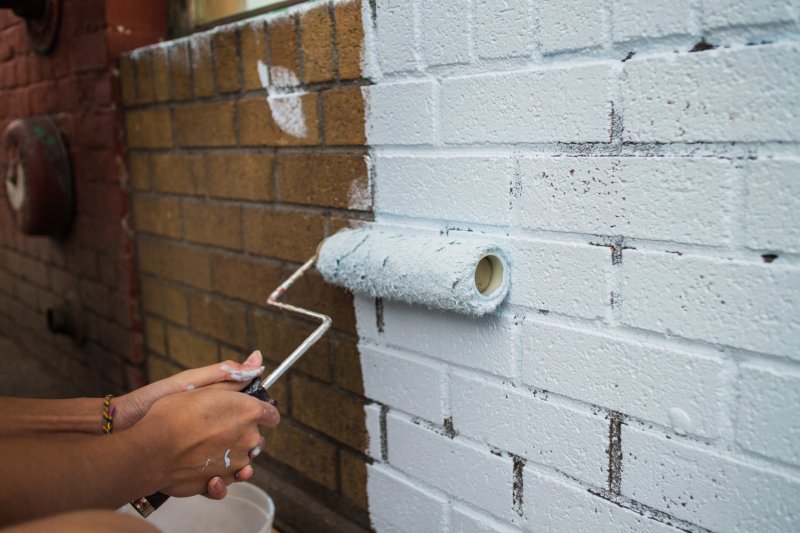
Apply the first coat of masonry paint starting from the top of the wall and working downward. This prevents fresh paint from dripping onto already painted sections below. According to Ohio Painting Company, use a medium-sized brush to cut in along the roofline first, then use the brush to work paint into all mortar lines between bricks. After the mortar lines are covered, switch to a roller to cover the face of the bricks.
Thin coats are better than thick ones on brick. Because brick is heavily textured and porous, thick paint applications sag, pool in mortar joints, and dry unevenly. According to Lowe’s, because brick is uneven and porous, full coverage on a single roll is unlikely. That is expected and is exactly why a second coat is always required.
A paint sprayer can also be used for large brick surfaces. According to Bob Vila, a sprayer is the pro’s preferred method for speed and coverage on brick. If spraying, follow each pass with back-rolling using a thick-nap roller to push paint into the texture and mortar lines. Spray-only application on brick tends to miss the deep recesses unless the paint is worked in immediately after.
Step 6: Apply the Second Coat
Apply the second coat of masonry paint after the first coat has dried for at least 4 hours. According to Sherwin-Williams, two coats are always recommended for brick to achieve complete, maximum coverage. The second coat fills any spots the first missed, evens out the color, and builds the full paint film thickness needed to protect the surface from moisture and UV exposure.
Lowe’s recommends always adding a second coat on brick because the porous, uneven surface makes full single-coat coverage nearly impossible. Even premium masonry paints applied by professionals rarely achieve complete hide on bare or previously unpainted brick in a single application.
Once both coats are complete and fully cured, reinstall all fixtures and hardware that were removed before the project began. Professionally done exterior painting always follows this two-coat standard to give the finish the durability it needs.
What Is the Downside of Painting Brick?
The downside of painting brick is that it is essentially permanent, requires ongoing maintenance every 3 to 15 years depending on the product used, and risks trapping moisture inside the brick if the wrong paint or prep approach is used. According to the Brick Industry Association, painted masonry may only last between 3 and 5 years without proper preparation and the right product. According to the Brick Industry Association, unpainted brick never needs to be painted and will retain its original color for hundreds of years, but once you paint it, you are committing to regular repainting for the life of the home.
Moisture is the biggest concern. Brick is a porous material that naturally absorbs and releases moisture vapor, a property known as breathability. According to the Gobrick resource center, applying impermeable modern paints disrupts this balance by creating a barrier that traps moisture inside the wall. When trapped moisture freezes in cold weather, it expands by approximately 9%, which cracks the brick from the inside out. This process is called spalling, and it causes the outer face of brick to flake, pop off, or crumble.
In a climate like Lexington, SC, where summer humidity is consistently high and the region can experience cold snaps in winter, using the right breathable masonry paint product is critical. According to Networx, painting brick with non-breathable paint can cause bricks to crumble in as short a period as 5 to 10 years. The solution is to use elastomeric or breathable mineral masonry paints specifically designed for this surface, not standard latex exterior paint.
The other major downside is removal. Removing paint from brick is extremely difficult, typically requiring caustic paint strippers or sandblasting, both of which can damage the brick surface and mortar joints. Before committing to painted brick, make sure the decision is one you can live with long term.
Why Do People Say Don’t Paint Brick?
People say don’t paint brick because it converts a virtually maintenance-free exterior into one that needs repainting every few years, it can trap moisture and cause structural damage to the masonry, and removing the paint later is difficult and expensive. According to Acme Brick, unpainted brick never needs to be painted, will not fade, and retains its original appearance for hundreds of years. Once painted, that natural advantage disappears.
Real estate considerations also factor in. According to Real Estate Witch, painting a brick facade turns a maintenance-free feature into one that needs regular upkeep, and many buyers see ongoing repainting as a chore they do not want to inherit. According to House Digest, the average resale value of a brick home is at least 6% higher than homes built with other materials, a premium that is tied in part to brick’s durability and low maintenance reputation.
That said, the argument against painting brick applies most strongly to brick that is in good condition and has natural color that works with the home’s style. Brick that is stained, faded, discolored, or has already been painted is a different story. Painting that brick with the right masonry-grade product and proper preparation is a legitimate and effective way to refresh the home’s exterior and improve curb appeal.
Does Painting Brick Devalue a Home?
Painting brick does not automatically devalue a home, but it can in certain markets and conditions. Whether it adds or subtracts value depends on the quality of the paint job, the color chosen, the condition of the brick, and what buyers in the local area prefer. According to Apartment Therapy, Realtor Farah Sutton notes that in her Arizona market, painting exterior brick adds curb appeal and personalization, and any time curb appeal improves, home value improves. However, Realtor Emily LoPorto on Long Island advises homeowners with attractive, all-brick facades to leave them unpainted because buyers in her area prefer the original look.
Data from HomeGain (2012) and HomeLight (2019), both cited by ImagEworks Painting, found that repainting the exterior of a home yields a 51% to 55% return on the investment overall. That figure is for exterior repaints generally and is not specific to brick. For painted brick specifically, The Stylus reports that a full, high-quality paint job on a brick home can produce home value improvements of 8 to 15% on average, assuming the color chosen is appealing and the job is done properly.
The risk of devaluation comes when the paint is peeling, the color is poor, or buyers see it as a maintenance liability. A well-executed, properly maintained painted brick exterior in a good neutral or trending color is an asset. A peeling, faded, or bold-colored painted brick exterior is a liability. In the Lexington and Lake Murray area, where many homes have traditional red brick exteriors, painting to a clean white, warm gray, or soft sage green tends to modernize the home’s look without chasing away buyers who prefer classic finishes.
How Many Coats of Paint on Exterior Brick?
Exterior brick needs two coats of paint over a masonry primer. The primer coat plus two topcoats is the minimum standard for bare or previously unpainted brick. For brick that has already been painted in good condition, two fresh topcoats over a clean, primed surface is sufficient.
According to Lowe’s, because brick is uneven and porous with small holes, full coverage on the first coat is unlikely. Always add a second coat to get complete, maximum coverage. One coat of even the best masonry paint will leave thin spots, visible mortar lines, and uneven color depth that only a second coat corrects.
In high-humidity environments like the Lake Murray and Lexington areas, the second coat also builds the paint film thickness that helps the surface resist moisture absorption during South Carolina’s rainy seasons. A single coat that is too thin does not provide enough of a barrier to hold up under those conditions.
What Color Makes a House Look Expensive?
The colors that make a house look expensive are clean white, warm off-white, soft gray, and charcoal with contrasting trim. According to Zillow research cited by PPD Painting, specific exterior paint colors consistently boost home value during resale, and buyers respond most positively to colors that photograph well and feel timeless. According to brick and batten design experts, earthy sage green is a dominant exterior paint trend for 2025, while creamy whites like Benjamin Moore White Dove and Simply White remain the most versatile and universally appealing choices for brick homes.
White on painted brick is consistently the most popular choice. According to Nash Painting, white is often seen as the best color to paint a brick house because it naturally reflects sunlight rather than absorbing it, which is a real advantage in warm climates like South Carolina. White also pairs cleanly with nearly any trim color, door color, and roof tone.
For homes in the Lexington area that want something beyond white, light gray, warm taupe, and soft sage all perform well. According to Today’s Homeowner, light gray delivers a modern look without straying from neutrals, pairs well with white trim, and makes green lawns stand out. According to brick design experts at US Brick, a proven approach is to identify the dominant undertone of the existing brick mortar and use that as a guide to choose a paint color that harmonizes rather than clashes.
What Colors Look Good on Painted Brick?
The colors that look best on painted brick are white, warm off-white, soft gray, greige, sage green, navy blue, and charcoal. According to The Stylus, the most popular exterior paint colors for homes are white, gray, blue, black, and red, with white offering the highest potential boost to home value. According to brick and batten design experts, the top exterior color trends for 2025 lean toward earthy, warm neutrals and organic hues that connect the home to its surroundings.
White and off-white are the safest and most popular choices for painted brick. They brighten the exterior, work with any trim and door color, and photograph well in listing photos. Creamy whites like Benjamin Moore White Dove and Simply White photograph especially well and avoid the harsh, sterile look of stark bright white.
For homeowners in the Lake Murray and Lexington areas who want a bolder look, navy blue paired with white or cream trim is striking and timeless. Sage green is gaining fast ground as a popular choice because it connects naturally with South Carolina’s landscape and greenery. Charcoal gray creates a modern, dramatic look that pairs beautifully with copper, gold, or black fixture finishes.
According to North Georgia Brick, a useful rule is the 60/30/10 approach: the brick color covers approximately 60% of the exterior, the secondary surface material covers 30%, and accent colors like the front door and shutters fill the remaining 10%. This proportion keeps the overall exterior from looking chaotic and makes color choices easier to narrow down.
What Exterior Paint Lasts 25 Years?
No standard masonry paint universally guarantees 25 years on brick without maintenance, but elastomeric masonry paints and breathable mineral masonry paints are the longest-lasting options available. According to paintbrushguard.com, elastomeric paints that stretch to seal minor cracks can endure 10 to 15 years on properly prepared brick. Breathable masonry paints that allow moisture to escape often extend painted brick life to 12 to 15 years by avoiding the moisture damage that causes early failure.
The Brick Industry Association notes that painted masonry may only last 3 to 5 years when the wrong product is used or prep is rushed. That dramatic difference, 3 to 5 years versus 12 to 15 years, comes entirely down to product selection and surface preparation. The paint itself is only as good as the foundation it is applied to.
In South Carolina’s climate, where summer UV exposure and humidity are both significant, elastomeric exterior masonry paint is the best choice for brick homes. Its flexibility allows it to expand and contract slightly with temperature cycles without cracking, and its higher film thickness provides better moisture resistance than standard latex exterior paint.
According to House Digest, brick stain is an alternative that typically lasts up to 20 years and does not require the same level of maintenance as paint because it penetrates the surface rather than coating it. Limewash is another option that ages gracefully, is naturally breathable, and can be touched up or reapplied over time without full removal. These alternatives are worth considering for homeowners who want a color change with less long-term maintenance commitment than full paint.
Primer vs. Paint for Exterior Brick: What to Use
| Product Type | Best For | Notes |
|---|---|---|
| Masonry Primer (e.g., LOXON, INSL-X) | All bare or unpainted brick before any topcoat | Required on unpainted brick. Seals pores and bonds topcoat properly |
| Elastomeric Masonry Paint | Older brick, minor surface cracks, high-moisture areas | Flexible film handles expansion/contraction; 10 to 15 year lifespan |
| Breathable Mineral Masonry Paint | Historic brick, high-humidity climates, longevity-focused projects | Allows vapor transmission; 12 to 15 year lifespan; avoids moisture trap |
| Standard 100% Acrylic Exterior Paint | Previously painted brick in good condition | Good adhesion over existing paint; shorter lifespan on bare brick |
| Brick Stain | Color change with low maintenance and breathability | Penetrates surface; does not peel or chip; lasts up to 20 years |
| Limewash | Farmhouse or European aesthetic; adjustable finish | Breathable; ages naturally; can be touched up or reapplied |
Sources: Sherwin-Williams; Nash Painting; paintbrushguard.com; Brick Industry Association; House Digest; gobrick.com
How to Make Brick Look Better Without Painting
The best ways to make brick look better without painting are pressure washing, repointing mortar joints, applying a mortar wash or German smear, using brick stain, or applying limewash. These alternatives refresh the look of brick without the commitment or moisture risks that come with full paint.
Pressure washing alone makes a dramatic difference on brick that has years of dirt and biological growth on it. Clean brick looks significantly newer and brighter after a thorough pressure wash with the right cleaning solution.
Repointing replaces crumbling, cracked, or recessed mortar joints with fresh mortar. New mortar joints tighten up the visual lines of a brick exterior and can dramatically improve the look of aged brick without any color change at all.
A German smear or mortar wash applies a thin layer of wet mortar over the brick face and then partially wipes it away to create a textured, rustic, whitewashed effect. This technique, cited by House Digest, gives brick a character-rich finish that highlights the natural texture while softening the color. It is more permanent than limewash but far more breathable than standard exterior paint.
Brick stain is the most practical no-paint alternative for homeowners who want a genuine color change. According to Brick Imaging, masonry stain penetrates the surface chemically rather than coating it, which means it does not chip or peel and allows the brick to continue breathing naturally. According to their data, painted masonry may last only 3 to 5 years, while masonry stain is permanent and maintenance-free.
For exterior surfaces like porches, decks, and fences that sit alongside brick, proper maintenance of those adjacent wood surfaces also makes the overall exterior look more cohesive. Deck, dock, and fence painting refreshes those elements without touching the brick itself and can make the full exterior look updated and well-maintained.
At What Temperature Should You Not Paint Exterior Paint?
You should not paint exterior paint when temperatures are below 50 degrees Fahrenheit or above 90 degrees Fahrenheit. According to Five Star Painting, paint sticks to surfaces best in temperatures between 50 and 90 degrees Fahrenheit. Below 50 degrees, the water in latex paint does not properly evaporate, which prevents the paint from curing correctly. Above 90 degrees, paint dries too quickly and forms bubbles and blisters because it cannot bond to the surface before the solvent evaporates.
For masonry paint on brick specifically, the temperature of the brick surface itself matters as much as the air temperature. Brick sitting in direct afternoon sun in Lexington, SC during July can reach surface temperatures well above 90 degrees even when the air temperature is only in the mid-80s. Painting hot brick causes the paint to flash dry before it can penetrate and bond.
The best time of day to paint exterior brick in summer in South Carolina is late morning to early afternoon, starting around 10 a.m. after morning dew has dried, and finishing well before the surface gets too hot in direct afternoon sun. According to Angi, painting later in the day avoids harsh sunlight that causes paint to dry too fast, and finishing before dark ensures the paint has enough warmth to begin curing properly before overnight temperatures drop.
South Carolina homeowners in Gilbert and Red Bank planning fall exterior brick projects have a comfortable window from late September through October when daily temperatures stay in the 60s and 70s. This is close to ideal for masonry paint adhesion and cure.
What Is the Best Time of Day to Paint Outside?
The best time of day to paint outside is between 10 a.m. and 2 p.m., when morning moisture has fully evaporated from surfaces and the afternoon heat has not yet pushed brick and masonry surface temperatures above the safe painting range. According to Five Star Painting, painting in the late morning to early afternoon promotes optimal drying and curing, offers the best temperature conditions, and avoids the humidity that lingers in early morning hours.
On brick specifically, checking that morning dew has fully dried from the surface is essential. Brick absorbs and holds moisture far longer than smooth surfaces. A brick wall that appears dry to the eye at 8 a.m. may still have surface moisture in the mortar joints that does not clear until 9:30 or 10:00 a.m.
Afternoon thunderstorms in the Lexington area during summer are another timing consideration. South Carolina’s summer storms often develop by 2 or 3 p.m. Starting a brick painting project in the early morning and aiming to complete at least the first coat before noon reduces the risk of a surprise storm hitting fresh paint before it has had time to dry.
Can You Still Paint Outside in October?
Yes, you can still paint outside in October in Lexington, SC. Lexington’s October temperatures typically stay in the low to mid-70s during the day and the 50s overnight, which falls within the optimal painting range of 50 to 85 degrees Fahrenheit. October is actually one of the better months for exterior brick painting in South Carolina because humidity drops from its summer peak and afternoon thunderstorms become less frequent.
The one consideration for October exterior painting in the Lexington area is overnight temperatures. According to Hirshfield’s, the air and surface temperature must not drop below 35 degrees Fahrenheit for 36 hours after paint application for proper curing. In early and mid-October in South Carolina, overnight lows rarely approach that threshold. In late October and November, they can start to get closer, so checking overnight forecasts before committing to an exterior paint job becomes more important later in the season.
Planning exterior house painting around South Carolina’s seasons is one of the real advantages of working with a local painting crew that knows the climate. Scheduling exterior work in spring or fall, when conditions are consistently right for proper cure, is a big part of why professionally applied paint jobs last significantly longer than DIY projects rushed through in summer heat or finished too late in fall.
Frequently Asked Questions
How to Paint Brick the Right Way in Lexington, SC’s Humid Climate?
Painting brick the right way in Lexington, SC’s humid climate requires allowing a full 48-hour dry time after pressure washing before any primer or paint is applied, choosing a breathable elastomeric masonry paint that allows vapor transmission, and avoiding painting during the hottest and most humid weeks of summer when surface temperatures can exceed safe application ranges. South Carolina’s humidity means that brick retains moisture longer than in drier climates, and using a breathable paint is especially important here to avoid trapping that moisture behind the paint film. The best windows for exterior brick painting in the Lexington area are late April through May and September through mid-October.
Does Painting Brick Devalue a Home in the Lexington, SC Market?
Painting brick does not automatically devalue a home in the Lexington, SC market. Lexington and the greater Columbia area have a mix of traditional brick homes and updated exteriors, and well-executed painted brick in a clean, modern color tends to be received positively by buyers. According to HomeGain and HomeLight surveys, exterior repaints yield a 51% to 55% return on investment overall. The key in the local market is using neutral or trending colors like soft white, warm gray, or sage green, and keeping the paint job well-maintained. Peeling or faded painted brick is a much stronger negative than a fresh, properly painted surface.
How Many Coats of Paint Does Exterior Brick Need?
Exterior brick needs a masonry primer coat followed by two topcoats of masonry paint for a total of three coats. The primer seals the porous surface and gives the topcoat a proper base to bond to. According to Lowe’s, because brick is uneven and porous, complete coverage in a single topcoat is unlikely, which is why two topcoats are always required. For brick that has already been painted and is in good condition, two fresh topcoats over cleaned and spot-primed surfaces are typically sufficient without a full primer coat over the entire surface.
What Is the Best Paint for Exterior Brick in a Hot and Humid Climate?
The best paint for exterior brick in a hot and humid climate like Lexington, SC is a breathable elastomeric masonry paint. Elastomeric paint is flexible enough to handle the expansion and contraction that comes with South Carolina’s temperature cycles, and its breathability allows moisture vapor to escape rather than getting trapped behind the paint film. According to Nash Painting, elastomeric paint is a top choice for older brick with minor surface flaws because it stretches to seal them while remaining flexible. Breathable mineral masonry paints are another excellent option that can extend the life of painted brick to 12 to 15 years when applied correctly.
Should New Brick Be Painted Right Away?
No, new brick should not be painted right away. According to ACP Painting, you should wait at least one year before painting new brick to allow it to properly weather and dry. New mortar needs time to fully cure, and new brick needs time to release the excess moisture from the manufacturing and installation process. According to Benjamin Moore, new plaster and masonry surfaces must be allowed to cure for at least 30 days before priming. Painting too soon traps the curing moisture inside the masonry and causes the paint to bubble, peel, and fail prematurely.
What Are the Alternatives to Painting Exterior Brick?
The best alternatives to painting exterior brick are brick stain, limewash, German smear, and repointing. Brick stain penetrates the surface chemically and is permanent, breathable, and maintenance-free, lasting up to 20 years according to House Digest. Limewash creates a soft, weathered finish from natural limestone that ages beautifully and can be touched up over time. German smear applies a thin mortar wash that gives brick a rustic, European texture while keeping it breathable. Repointing fresh mortar joints can dramatically refresh aged brick without any color change at all. Each of these alternatives avoids the moisture risks and long-term repainting commitment that come with standard exterior paint on brick.
How Long Does Painted Exterior Brick Last in South Carolina?
Painted exterior brick in South Carolina lasts 5 to 15 years depending on the product used and quality of the prep work. Standard latex exterior paint applied without a masonry primer may last only 3 to 5 years in South Carolina’s humid, high-UV climate before peeling and fading. A quality elastomeric masonry paint applied over a proper masonry primer on a fully cleaned and repaired surface can last 10 to 15 years with basic maintenance. According to the Brick Industry Association, the difference in lifespan comes almost entirely from product selection and surface preparation rather than the paint brand name.
Final Thoughts
Painting exterior brick the right way is a project with real rewards and real risks. Done correctly with proper prep, a masonry-specific primer, and two coats of a breathable elastomeric masonry paint, painted brick can look stunning for 10 to 15 years and genuinely improve a home’s curb appeal and value. Done incorrectly, it creates a moisture problem that deteriorates the masonry from the inside and turns a low-maintenance exterior into an ongoing repair job.
For homeowners in Lexington, Red Bank, Gilbert, and the Lake Murray area, the humid South Carolina climate makes product selection especially important. Choose breathable masonry paint, allow full dry time after pressure washing, repair all mortar and surface damage before priming, and never rush the second coat. That process is what separates a paint job that holds from one that peels within a season.
If your home has brick that needs a refresh, the team at Soda City Painting knows exactly how to approach masonry surfaces in South Carolina’s climate. We serve Lexington, Red Bank, Gilbert, Lake Murray, and the surrounding Columbia area. From thorough pressure washing and crack repair to masonry priming and two-coat application, we handle every step of an exterior brick project the right way from start to finish.
Ready to get a free estimate? Reach out today and ask about our exterior painting services for brick, siding, and more. Call us at (803) 221-0771 or contact us online. Let’s make your exterior look great and last for years.