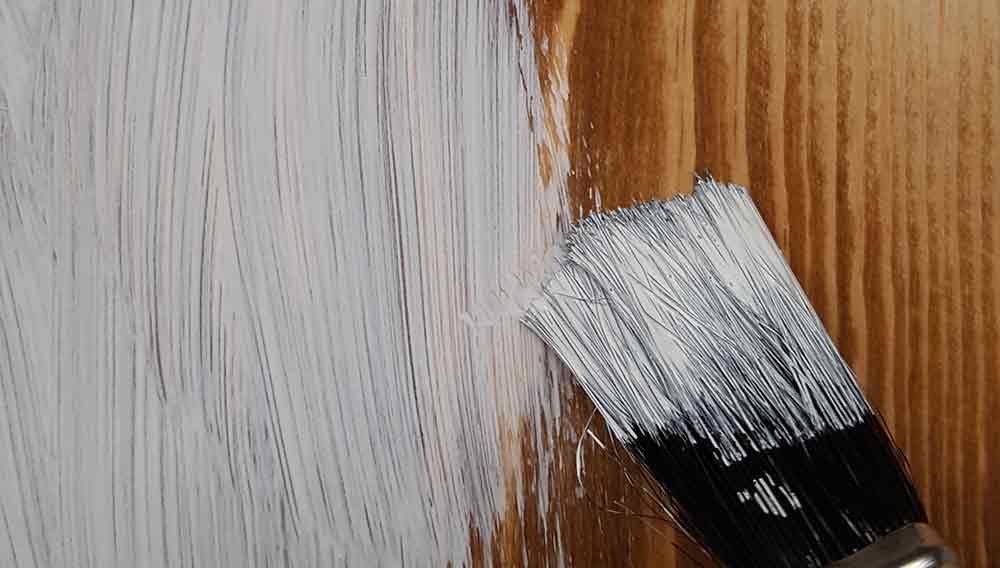
Yes, you can paint over stained wood without bleeding, but only if you use the right primer and prep the surface first. Bleeding happens when tannins or pigments in the wood stain push through the new paint, leaving ugly yellow or brown spots. The fix is simple: clean the wood, lightly sand it, and apply a stain-blocking primer before painting. This article walks through every step, covers the best primers to use, answers common questions homeowners in Lexington, SC have about this project, and explains how to get a smooth, lasting finish on stained wood trim, doors, cabinets, and furniture.
Can You Paint Over Already Stained Wood?
Yes, you can paint over already stained wood. You do not need to strip the old stain down to bare wood. With the right prep work and a quality stain-blocking primer, any type of wood stain can be covered with paint. According to Sherwin-Williams, tannin staining is most common in redwood, cedar, and mahogany, but it can happen with any type of wood. That is why primer choice matters so much.
The key is to treat the stained surface as a sealed surface. Most stained wood also has a clear coat on top, like polyurethane, varnish, or lacquer. That glossy layer stops paint from sticking. You need to break through that barrier with sanding, deglossing, or both. Homeowners across Lexington, SC who tackle this project on their own often skip this step and end up with peeling paint within months.
According to Angi’s 2024 State of Home Spending Report, 22% of homeowners plan interior painting projects in 2025, making it one of the most popular home improvement activities in the country. A lot of those projects involve painting over stained wood trim, doors, and cabinets.
Why Won’t Paint Cover a Stain?
Paint won’t cover a stain because of tannins. Tannins are natural chemicals found inside wood. They give wood its brown color. When moisture from latex paint hits the wood, it pulls those tannins to the surface. The tannins then bleed through the paint and show up as yellow, brown, or pinkish spots.
According to Dunn-Edwards Paints, tannin bleed is especially common during the first year after painting new wood. Woods like oak, walnut, cherry, cedar, and mahogany all have high tannin levels. Even pine can cause problems because of the sap and resin in its knots. Behr Pro notes that the stains are more visible on lighter paint colors, which is exactly why so many people notice the problem when painting white or cream over dark-stained wood.
No matter how many coats of regular paint you put on, the tannins will keep coming through. That is not a paint quality issue. It is a chemistry issue. The only real solution is a stain-blocking primer that creates a barrier between the wood and the paint.
What Is the Best Primer for Painting Over Stained Wood?
The best primer for painting over stained wood is a shellac-based primer like Zinsser BIN. Shellac-based primers block tannins, seal old stains, and stick to almost any surface. According to True Value Hardware, shellac-based primers are possibly the best stain-blocking primers available, working well on severe water damage, smoke damage, and wood tannins.
There are three main types of primers to consider. Shellac-based primers like Zinsser BIN dry in about 15 to 30 minutes, block the toughest stains, and work on both oil-based and water-based stains. Oil-based primers like Kilz Original or Zinsser Cover Stain also block tannins well and penetrate bare wood deeply. Water-based bonding primers like Zinsser 1-2-3 are the easiest to use and clean up, but they are not as strong against heavy tannin bleed.
For most stained wood projects in Lexington, SC homes, a shellac-based primer is the safest bet. Many homeowners near Lake Murray and Red Bank have older homes with stained oak trim and doors. A single coat of shellac primer on those surfaces stops bleed-through cold.
Will Kilz Primer Stick to Stained Wood?
Yes, Kilz primer will stick to stained wood, especially the oil-based Kilz Original formula. It offers strong adhesion and good tannin-blocking power. For light to medium stained surfaces, Kilz works well. For very dark stains or woods with heavy tannin content like cedar, oak, or mahogany, a shellac-based option like Zinsser BIN provides stronger protection.
The important thing is to prep the surface before priming. Kilz will not bond properly to a dirty, glossy, or waxy surface. Clean the wood, sand it lightly with 150-grit sandpaper, and wipe away the dust before applying the primer. Skipping prep is the number one reason primer fails on stained wood. According to Sherwin-Williams, even with the right products, tannin bleed can still happen on new wood if the surface is not properly prepared.
How to Prep to Paint Over Stained Wood?
To prep to paint over stained wood, you need to clean the surface, remove the gloss, and apply a stain-blocking primer. Here is the step-by-step process that professional painters in the Lexington, SC area follow for clean, bleed-free results.
Step 1: Clean the Surface Thoroughly
Start by wiping down the stained wood with a degreasing cleaner or a mix of warm water and dish soap. This removes dust, oils, grease, and any furniture polish or wax. According to Family Handyman, some polishes contain silicone that causes paint to bead and separate. You can test for silicone by spraying water on the surface. If it forms beads, silicone is present and must be cleaned off.
Step 2: Sand the Surface Lightly
Use 150-grit sandpaper and sand in the direction of the wood grain. You are not trying to remove the stain. You just want to scuff the glossy finish so the primer has something to grip. After sanding, wipe the surface with a tack cloth or damp rag to remove all dust. For tight corners and detailed trim, a liquid deglosser can replace sanding, but always wear gloves and work in a ventilated area.
Step 3: Apply a Stain-Blocking Primer
Brush or roll on one coat of shellac-based or oil-based stain-blocking primer. Let it dry fully according to the label instructions. For dark stains or heavy tannin woods, apply a second coat. Sand lightly between coats with 220-grit sandpaper for the smoothest finish. Homeowners near Gilbert, SC who are painting over dark oak or walnut should plan on two coats of primer to be safe.
Step 4: Paint with Two Finish Coats
Once the primer is fully dry, apply two coats of your chosen paint. Use a high-quality acrylic latex paint for the best durability and finish. Let each coat dry completely before applying the next. For doors and cabinets, laying them flat on sawhorses gives you the smoothest result with fewer drips.
Homeowners who want flawless results on large projects like full rooms of stained trim or a set of kitchen cabinets often call in professionals. House painting teams have the sprayers and industrial-grade primers that make a big difference on tough surfaces.
Can You Paint Directly Over Stained Wood Without Sanding?
Yes, you can paint directly over stained wood without sanding, but you must use a bonding primer or a liquid deglosser instead. Sanding is the most reliable method for removing gloss and creating a surface that primer can grip. But modern bonding primers and chemical deglossers have made it possible to skip the sanding step in many cases.
Shellac-based primers like Zinsser BIN and oil-based primers like Kilz Original are strong enough to bond to glossy surfaces with minimal sanding. A liquid deglosser chemically etches the finish and removes the slick layer that prevents adhesion. According to the U.S. paint and coatings industry data from the American Coatings Association, waterborne coatings accounted for the largest market share in 2024, and many of these new formulas are designed to stick better to tough surfaces than older paints.
That said, sanding is still recommended for high-traffic areas, furniture, and exterior painting projects where durability matters most. A quick scuff with 150-grit paper takes just a few minutes and makes a real difference in how long your paint job lasts.
What Are the Common Mistakes When Painting Stained Wood?
The common mistakes when painting stained wood are skipping the primer, not cleaning the surface, using the wrong type of primer, and not sanding. Each of these leads to peeling, chipping, or bleed-through.
The biggest mistake by far is using a regular latex primer on heavily stained wood. Latex primers contain water, and water activates the tannins in the wood. That pulls the stain color right through the primer and into the paint. According to Rust-Oleum, application of latex coatings directly to staining woods may cause discoloration on the finish coat if the product is not designed to trap tannins.
Another common error is painting over wax or furniture polish without cleaning it off first. Wax creates a barrier that stops paint from bonding. Many older homes in Lexington, SC have stained wood that has been polished for years. All of that buildup must come off before you prime.
A third mistake is rushing the dry time between coats. Primer and paint both need full cure time to form a hard, durable film. In the humid summers around Columbia, SC, drying times can be longer than the label suggests. Give each coat extra time to dry before moving on.
What Kind of Paint Will Stick to Stained Wood?
The kind of paint that will stick to stained wood is any high-quality latex, acrylic, or oil-based paint, as long as a proper stain-blocking primer is applied first. The primer does the hard work of bonding and blocking. The paint just needs to stick to the primer, which is the easy part.
For interior trim and cabinets, a semi-gloss or satin acrylic latex enamel gives you a hard, washable finish. For doors and high-touch surfaces, some professionals still prefer oil-based or alkyd enamel paints for extra durability, though modern acrylic formulas have closed the gap. According to Grand View Research, the U.S. paints and coatings market was valued at over $31 billion in 2024, and the waterborne coatings segment held the largest share at 44.4%, showing how far water-based technology has come.
Homeowners doing residential painting projects on stained wood should choose paint with good self-leveling properties. This means the paint flows out smoothly and hides brush marks. Look for words like “enamel,” “cabinet paint,” or “trim paint” on the label.
What Is the Hardest Color to Paint Over?
The hardest color to paint over is red. Red pigments, whether in paint or in wood stain, are extremely difficult to cover. Red tones tend to bleed through multiple coats of primer and paint. Dark reds, burgundy, and cherry stains are the worst offenders.
According to Behr Pro, tannin bleed-through is more visible on lighter paint colors. So when you try to paint white over a dark red or cherry-stained surface, the tannins push through and create a pinkish haze. This is why two coats of shellac-based primer are critical on dark or red-toned wood.
After red, other difficult colors to cover include dark brown, deep orange, and black. These all require extra primer coats and patience. If you are painting over a dark stain with a light color in your home near Lake Murray, plan on at least two coats of a high-hide stain-blocking primer before your first coat of paint.
What Is the 80/20 Rule in Painting?
The 80/20 rule in painting means that 80% of the quality of your paint job comes from the prep work, and only 20% comes from the actual painting. This is a well-known principle among professional painters, and it applies directly to painting over stained wood.
If you spend time cleaning, sanding, filling holes, caulking gaps, and priming correctly, the painting part is fast and easy. If you skip the prep and go straight to painting, you will fight problems like peeling, bleed-through, brush marks, and uneven coverage. According to a 2024 study by Clever Real Estate, 78% of homeowners who completed renovations went over budget on their last project. Much of that overspending comes from having to redo work that was not prepped right the first time.
For homeowners in Lexington, SC, the 80/20 rule is a great reminder. Whether you are painting a shed, a porch, or an entire house, the prep work makes or breaks the final result.
How Long Does It Take to Paint Over Stained Wood?
It takes about 2 to 4 days to paint over stained wood when you include cleaning, sanding, priming, and two finish coats. Each step requires drying time, and rushing through the process leads to poor results.
Here is a rough timeline for a typical stained wood project like trim or a set of cabinets. Cleaning and sanding takes a few hours. The first coat of primer needs at least 1 to 4 hours to dry, depending on the product. Shellac primers dry in about 30 to 45 minutes, while oil-based primers may need up to 24 hours. A second primer coat adds another day. Then two coats of paint need at least 4 to 8 hours of dry time each.
In the humid climate around Columbia, SC, especially during summer months, drying times stretch even longer. Running a fan or dehumidifier in the room helps speed things up.
Primer Type Comparison for Painting Over Stained Wood
| Feature | Shellac-Based Primer | Oil-Based Primer | Water-Based Bonding Primer |
|---|---|---|---|
| Tannin Blocking Power | Excellent | Very Good | Moderate |
| Dry Time | 15 to 45 minutes | 1 to 24 hours | 30 minutes to 1 hour |
| Adhesion to Glossy Surfaces | Excellent | Good | Good (with sanding) |
| Odor Level | Strong (requires ventilation) | Moderate to Strong | Low |
| Cleanup | Denatured alcohol | Mineral spirits | Water |
| Best For | Heavy tannins, dark stains, knots | Bare wood, moderate stains | Light stains, low-traffic areas |
| Interior/Exterior Use | Interior only (spot exterior) | Interior and exterior | Interior and exterior |
Sources: Zinsser product data sheets; Sherwin-Williams primer recommendations; True Value Hardware primer guide; Dunn-Edwards Paints tannin staining guide
Can You Use Chalk Paint Over Stained Wood Without Primer?
You can use chalk paint over stained wood without primer in some cases, but it is risky. Chalk paint is designed to stick to most surfaces without heavy prep. But it does not block tannins. If the wood has high tannin content, the stain will bleed right through the chalk paint, especially with light colors.
For best results with chalk paint on stained wood, apply a coat of shellac-based primer first. This blocks the tannins and gives the chalk paint a clean base. After the chalk paint dries, seal it with a polyurethane topcoat or wax to protect the finish. Without a topcoat, chalk paint scratches easily.
Many homeowners near Chapin, SC use chalk paint for furniture makeovers. It gives a beautiful matte look, but skipping the primer on dark-stained pieces almost always leads to bleed-through within a few weeks.
Does the Type of Wood Stain Affect How You Paint Over It?
Yes, the type of wood stain affects how you paint over it. Oil-based stains and water-based stains require slightly different prep approaches. The clear coat on top of the stain also matters.
Water-based stains are easier to paint over. They clean up simply, and a water-based bonding primer often works well on them. Oil-based stains are more stubborn. They contain deeper pigments and often have a harder, glossier finish. Oil-based stains need either sanding, a liquid deglosser, or both before priming. According to Family Handyman, you can test the stain type by sprinkling water on a small area. If the water beads up, the stain is oil-based.
Gel stains, which sit on top of the wood rather than soaking in, can be especially tricky. They create a thick film that may need extra sanding to give the primer enough tooth to bond. Regardless of stain type, a shellac-based primer covers them all.
What Color Makes a House Look Expensive?
The color that makes a house look expensive is a crisp, clean white, followed closely by soft gray, navy blue, and charcoal. These colors give a home a polished, high-end look. According to a 2024 survey by Clever Real Estate, white (42%), beige (35%), and light gray (32%) were the most popular interior paint colors among homeowners who recently painted.
When painting over stained wood trim, switching from dark brown or honey oak to a bright white or soft gray instantly modernizes a room. This is one of the biggest bang-for-your-buck updates homeowners in Lexington, SC can make. A fresh coat of white paint on stained trim can make a dated room feel brand new.
For porch painting projects, classic navy or slate gray paired with white trim creates a look that stands out in any neighborhood around Lake Murray or Gilbert.
What Color House Sells the Fastest?
The color house that sells the fastest is white or light gray on the exterior, paired with neutral interior tones. According to the National Association of Realtors (NAR), nearly half of real estate agents recommend painting the entire interior of a home before listing it for sale. Light, neutral colors appeal to the widest range of buyers.
Painting over dark-stained trim and doors with a clean white or soft gray is one of the fastest ways to prepare a home for sale. This single update can make rooms feel bigger, brighter, and more modern. Homeowners near Red Bank, SC and Columbia who are getting ready to list often schedule commercial interior painting or residential painting to cover all the stained wood in one shot.
How Do You Fix Bleed-Through After Painting?
You fix bleed-through after painting by applying a coat of shellac-based stain-blocking primer directly over the affected area, letting it dry, and then repainting. You do not need to strip the paint off. The primer goes right over the existing paint.
According to Family Handyman, if you have already painted and the stain is bleeding through, apply the stain-blocking primer directly over the dried paint. When the primer dries, put a fresh coat of paint on top. For stubborn spots, especially on knots or dark red-toned stains, two coats of shellac primer may be needed before repainting.
This fix works on walls, trim, doors, cabinets, and furniture. Many homeowners across the Lexington, SC area have found this out the hard way after painting stained trim with latex paint and no primer. The good news is the fix is straightforward and does not require starting over.
Is It Better to Hire a Professional to Paint Over Stained Wood?
Yes, it is often better to hire a professional to paint over stained wood, especially for large projects like full rooms of stained trim, kitchen cabinets, or exterior wood. Professionals have access to industrial-grade sprayers, commercial primers, and the experience to handle tricky surfaces without bleed-through or peeling.
According to the Home Improvement Research Institute, painting projects are by far the most planned home improvement activity. But according to Clever Real Estate’s 2024 data, 78% of homeowners who completed renovations went over budget. Hiring a pro from the start can actually save money by avoiding costly redo work.
For homeowners in Lexington, SC and the surrounding Lake Murray area, professional painting crews understand how the local humidity affects drying times and product performance. They know which primers work best on the oak, pine, and cedar commonly found in homes throughout Columbia, SC. If you need drywall repair alongside your painting project, a professional team handles both in a single visit.
Frequently Asked Questions
Do I Need to Sand Stained Wood Before Painting in Lexington, SC?
You do not always need to sand stained wood before painting, but light sanding with 150-grit sandpaper gives the best results. Sanding removes the glossy finish and lets the primer bond tightly. For homeowners in Lexington, SC dealing with older stained trim or doors, a quick scuff sand and a coat of shellac primer is the most reliable method.
How Many Coats of Primer Do I Need Over Dark Stained Wood?
You need one to two coats of stain-blocking primer over dark stained wood. One coat is usually enough for light to medium stains. For dark stains like walnut, cherry, or mahogany, two coats of shellac-based primer prevent any bleed-through. Sand lightly with 220-grit between coats for the smoothest finish.
Can I Paint Over Stained Kitchen Cabinets in My Columbia, SC Home?
Yes, you can paint over stained kitchen cabinets in your Columbia, SC home. Clean the cabinets with a degreaser, sand lightly, apply one to two coats of shellac or oil-based primer, and finish with two coats of cabinet-grade acrylic enamel paint. According to Angi’s 2024 report, white-painted cabinets remain a popular and affordable way to refresh kitchens.
What Happens If I Skip Primer on Stained Wood?
If you skip primer on stained wood, the tannins in the wood will bleed through the paint. You will see yellow, brown, or pink spots showing through your new paint, no matter how many coats you apply. According to Sherwin-Williams, products not specifically designed to trap tannins will allow stains to migrate through to the surface of the finish coat.
How Long Does Paint Last on Previously Stained Wood?
Paint lasts 5 to 10 years on previously stained wood when properly prepped and primed. Interior trim and cabinets with a quality primer and two coats of acrylic enamel hold up very well to daily use. High-traffic areas like decks, docks, and fences need repainting sooner due to weather exposure and foot traffic.
Is It Safe to Paint Over Stained Wood in a Home With Kids?
Yes, it is safe to paint over stained wood in a home with kids as long as you use low-VOC or zero-VOC paint and allow proper ventilation during the project. Shellac primers have a strong odor and require good airflow, so plan to work in a well-ventilated room or when the family is out. Water-based paints and primers have very low odor and are safe once dry. Homeowners in Lexington, SC with young children should schedule painting during mild weather when windows can stay open.
Where Can I Get Help Painting Over Stained Wood in Lexington, SC?
You can get help painting over stained wood in Lexington, SC by contacting a local painting company that specializes in interior and exterior residential work. A professional team handles all the prep, priming, and painting so the job is done right the first time, with no bleed-through and no mess.
Final Thoughts
Painting over stained wood without bleeding comes down to three things: clean the surface, use a stain-blocking primer, and apply two coats of quality paint. Skip any of those steps and you will end up with tannin bleed, peeling, or a finish that does not hold up. The most reliable primer for the job is a shellac-based product like Zinsser BIN, which blocks even the toughest stains and tannins from showing through.
If you are a homeowner in Lexington, SC, the Lake Murray area, Red Bank, Gilbert, or anywhere around Columbia, and you have stained wood trim, doors, or cabinets that need a fresh look, Soda City Painting is ready to help. Their experienced team handles everything from surface prep and priming to the final coat of paint, so your results look clean and last for years. Call them at (803) 221-0771 or visit their interior painting page to schedule your free estimate today.