
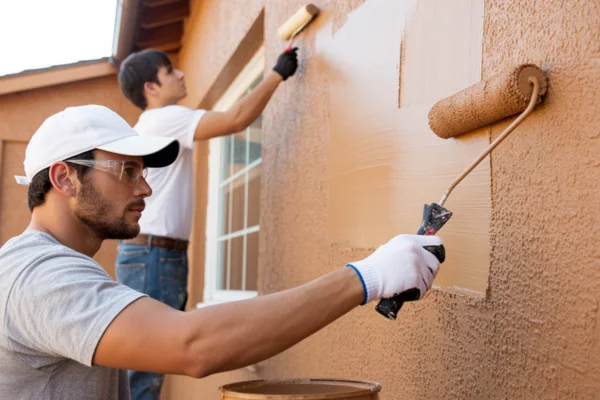
To paint stucco exterior walls properly, you need to pressure wash the surface, repair all cracks and damage, apply a masonry primer, and then roll or spray two coats of high-quality acrylic latex exterior paint. The key to a lasting stucco paint job is thorough prep work. Stucco is textured and porous, so it absorbs more paint than smooth surfaces and requires special tools and techniques. A properly painted stucco exterior can last 7 to 12 years before it needs repainting. This guide covers every step, from cleaning and crack repair to primer selection and paint application, plus answers to the most common questions homeowners in Lexington, SC ask about painting stucco.
Is There a Trick to Painting Stucco?
Yes, there is a trick to painting stucco, and it comes down to two things: use more paint than you think you need, and always back-brush or back-roll after spraying. Stucco has a rough, textured surface with deep grooves, ridges, and crevices. A flat wall might need one gallon of paint per 400 square feet, but stucco can require 30 to 50% more paint than that. According to Benjamin Moore, stucco surfaces may need upwards of 30 to 50% more paint than usual, depending on the texture. According to Bob Vila, if a gallon of paint says it covers 400 square feet of flat wall, assume it will cover about 200 square feet of stucco.
The second trick is back-rolling. Whether you spray or roll your stucco, you need to go back over the surface with a thick-nap roller (at least 1 inch) to push the paint into all the nooks, crannies, and crevices of the texture. According to Behr Pro, if you are spraying stucco, always back-roll using a roller with a minimum 1-inch nap. Without back-rolling, the paint sits on the high points of the texture and misses the valleys, leaving the stucco partially exposed and vulnerable to moisture.
Homeowners in Lexington, SC who are painting their stucco homes for the first time are often surprised by how much extra paint the texture absorbs. Planning for that extra material from the start saves trips to the store and keeps the project on track. Professional exterior painting teams already factor this into their estimates.
How Do You Prep Exterior Stucco for Painting?
To prep exterior stucco for painting, you need to clean the surface, repair all cracks and damage, and apply a coat of masonry primer. Prep work is the most important part of any stucco painting project. According to professional painters, stucco prep takes more time than actually applying the paint, but skipping any step leads to peeling, flaking, and early failure.
Step 1: Clean the Stucco Thoroughly
Start by pressure washing the entire surface to remove dirt, dust, mildew, algae, and loose material. According to This Old House, keep the pressure below 1,500 PSI and stay at least 24 inches away from the surface to avoid damaging the stucco. Use a stucco cleaner or a mix of dish soap and water for stubborn stains. If you see mold or mildew, use a cleaner designed to kill it. Let the stucco dry completely for at least 24 to 48 hours before moving to the next step.
Stucco in the Lexington, SC area can develop mold and mildew buildup during humid summer months. A thorough wash before painting removes these contaminants and gives the primer a clean surface to bond to.
Step 2: Repair All Cracks and Damage
Inspect the entire stucco surface for cracks, chips, holes, and soft spots. Small hairline cracks can be filled with a paintable acrylic latex caulk rated for exterior masonry use. Larger cracks and missing sections need a stucco patching compound or hydraulic cement. According to Benjamin Moore, stucco is rigid and prone to cracks, so you will likely have to do a good deal of patching before getting started.
After patching, let the repair material cure fully before priming. Some stucco repair products need 5 to 10 days to cure. Check the product label for the recommended wait time. If your stucco has extensive cracking or structural damage, a professional assessment is a good idea before painting. Teams that handle sheetrock installation and repair often work with exterior stucco as well.
Step 3: Prime the Stucco
Apply one coat of exterior masonry primer over the entire surface. Primer seals the porous stucco, evens out the absorption rate, and gives the paint a solid base to grip. According to True Value Hardware, prime the surface with an exterior primer/sealer before painting stucco, brick, or concrete. If the stucco has stains, use a stain-blocking primer to prevent them from bleeding through the finish coat.
For new stucco that has never been painted, priming is especially important. According to Dunn-Edwards Paints, new stucco can have a very high pH level that can burn paint if it is applied too soon. Most manufacturers recommend waiting until the pH drops to 10 or below before painting. Proper hydration and curing of new stucco takes at least 30 to 60 days.
Is It Better to Spray or Roll Exterior Paint on Stucco?
It is better to spray exterior paint on stucco for speed and coverage, and then back-roll it for adhesion and penetration. Spraying alone does not push the paint deep enough into the stucco texture. Back-rolling with a 1-inch or 1-1/4-inch nap roller forces the paint into every groove and crevice, giving you full coverage and a uniform finish.
According to Behr Pro, always back-roll stucco after spraying, even on the first coat. A professional painter who has painted hundreds of stucco structures shared that stucco by nature needs to be back-rolled on the first coat in all texture styles. If you are rolling by hand without a sprayer, use a heavy-duty roller frame with a thick nap cover and an extension pole. Cut in edges and corners with a stiff synthetic brush before rolling the large wall sections.
Rolling without a sprayer works fine for smaller stucco areas like porches or accent walls. For a full house exterior in Lexington, SC, spraying with back-rolling is the fastest and most effective method. Professional house painting crews use this approach to cover large stucco surfaces efficiently.
What Is the Best Color to Paint Stucco Exterior?
The best color to paint stucco exterior depends on your home’s style, the surrounding landscape, and personal preference. The most popular stucco colors in 2025 and 2026 are warm whites, soft beiges, light grays, warm tans, and muted earth tones. According to a 2024 survey by Clever Real Estate, white (42%), beige (35%), and light gray (32%) were the most popular paint colors among homeowners who recently painted.
Lighter colors tend to last longer on stucco because they absorb less heat from the sun. Darker colors can fade faster, especially on south-facing and west-facing walls that get the most direct sunlight. According to multiple paint longevity sources, darker exterior colors absorb more UV radiation and degrade faster than lighter tones.
For homes in Lexington, SC and the Lake Murray area, warm tans, soft grays, and creamy whites are popular choices that complement the Southern landscape. A navy or charcoal accent on trim, shutters, or a front door adds contrast without fading issues on the main stucco body.
What Color Makes a House Look Expensive?
The color that makes a house look expensive is a clean, crisp white, followed closely by soft warm gray, charcoal, and classic navy. These colors give a home a polished, high-end appearance that stands out in any neighborhood. White stucco with dark trim is one of the most timeless and elegant exterior combinations.
According to the National Association of Realtors, nearly half of real estate agents recommend painting the entire interior of a home before selling, and exterior curb appeal is just as important. A fresh coat of paint on a stucco exterior is one of the highest-return investments a homeowner can make before listing their home. Homeowners near Red Bank, SC and Columbia who want their stucco to look sharp and modern choose these classic tones most often.
What Exterior Paint Lasts 25 Years?
No standard exterior paint is guaranteed to last 25 years. However, high-quality acrylic latex exterior paints from top brands like Sherwin-Williams, Benjamin Moore, and Behr can last 10 to 15 years on stucco when properly applied over a primed surface. Elastomeric coatings, which are thicker and more flexible than regular paint, can last 10 to 20 years on stucco and masonry.
According to multiple industry sources, paint on stucco surfaces typically lasts 5 to 12 years, depending on climate, paint quality, and surface preparation. A high-quality paint job on stucco with proper prep, primer, and two finish coats can push that lifespan to the upper end of the range. According to Nolan Painting, a company with over 40 years of experience, a good paint job on stucco using high-quality exterior paints can last 5 to 10 years or more before requiring repainting.
For the longest-lasting finish on stucco in Lexington, SC, use a premium acrylic latex exterior paint, apply it over a masonry primer, and plan to repaint every 7 to 10 years. Annual inspections and light pressure washing extend the life of the paint job even further.
What Is the Toughest Exterior Paint?
The toughest exterior paint is an elastomeric coating. Elastomeric paint is a thick, flexible coating that stretches with the stucco as it expands and contracts with temperature changes. It bridges hairline cracks, blocks moisture, and resists UV damage better than standard exterior paint. According to industry data, elastomeric paint typically lasts 10 to 20 years when applied correctly.
For standard exterior paint, high-quality 100% acrylic latex paints are the toughest and most durable option for stucco. They resist fading, chalking, cracking, and peeling better than cheaper vinyl-acrylic formulas. Benjamin Moore Aura Exterior, Sherwin-Williams Duration, and Behr Marquee are all top-performing exterior paints recommended for stucco.
According to the American Coatings Association, the U.S. paint and coatings industry produced approximately 1.36 billion gallons of coatings valued at $34.5 billion in 2024, with architectural and decorative coatings making up the largest segment. The best-performing products in that segment are the premium acrylic formulas designed to withstand years of sun, rain, and temperature swings. Homeowners doing residential painting in Lexington, SC should invest in a premium exterior paint for the longest-lasting results on stucco.
What Are the Disadvantages of Painting Stucco?
The disadvantages of painting stucco are higher paint usage, the need for frequent repainting compared to the stucco’s natural lifespan, the potential for moisture trapping, and the difficulty of removing paint from stucco once it is applied.
Stucco itself can last 50 to 80 years when properly installed and maintained, according to stucco industry experts. But once you paint stucco, you commit to repainting it every 5 to 10 years. If the paint cracks or peels, moisture can get trapped behind it, leading to mold and structural damage. Unpainted stucco, on the other hand, breathes freely and allows moisture to escape.
Painting stucco also uses significantly more paint than painting smooth siding. The deep texture absorbs more product, which raises the material cost. And if you ever want to go back to bare stucco, removing the paint is extremely difficult and expensive. For homeowners in Lexington, SC, the decision to paint stucco should be made with the long-term maintenance commitment in mind.
Is Kilz a Good Primer for Stucco?
Yes, Kilz is a good primer for stucco, especially the Kilz Premium and Kilz 2 All-Purpose Primer formulas. These products seal the porous stucco surface, block light stains, and provide a solid base for exterior paint. For stucco with heavy stains, water damage, or efflorescence, Kilz Original Oil-Based Primer provides the strongest stain blocking.
For new, unpainted stucco, a dedicated masonry primer or an alkali-resistant primer is the best choice. New stucco has a high pH level that can damage standard primers. Products labeled “masonry primer” or “alkali-resistant” are formulated to handle the alkalinity of fresh stucco. For previously painted stucco in good condition, Kilz 2 or Zinsser Bulls Eye 1-2-3 works well as a general-purpose primer before repainting.
What Time of Year Is Best to Paint the Exterior of a House?
The best time of year to paint the exterior of a house is late spring or early fall, when temperatures are moderate and humidity is lower. The ideal conditions for exterior painting are temperatures between 50 and 85 degrees Fahrenheit, low humidity, no rain in the forecast for at least 24 to 48 hours, and no direct hot sunlight on the surface being painted.
According to Angi’s 2024 State of Home Spending Report, 22% of homeowners plan interior painting projects in 2025, but exterior painting is also a top priority, especially for homes with aging stucco. In Lexington, SC, spring (March through May) and early fall (September through November) offer the most favorable painting weather. Summer in South Carolina brings extreme heat and afternoon thunderstorms that can ruin a fresh paint job.
Painting stucco in direct midday sun during a South Carolina summer causes the paint to dry too fast, which prevents proper bonding and leads to cracking and peeling. Early morning or late afternoon application works best during warmer months. If you are planning commercial painting or a full residential exterior, scheduling the project for a mild-weather window gives the best results.
Is October Too Late to Paint Outside?
No, October is not too late to paint outside in most parts of the country, including Lexington, SC. October typically offers mild temperatures, lower humidity, and stable weather, making it one of the best months for exterior painting in the Southeast. As long as daytime temperatures stay above 50 degrees Fahrenheit and there is no rain in the forecast for 24 to 48 hours, stucco can be painted successfully in October.
Check the paint manufacturer’s label for minimum application temperature. Most acrylic latex exterior paints require temperatures of at least 50 degrees during application and for several hours afterward while the paint cures. Overnight temperatures that drop near or below freezing can prevent the paint from curing properly.
What Color Is Replacing Gray?
The color replacing gray on home exteriors in 2025 and 2026 is warm white, followed by creamy beige, soft greige (a mix of gray and beige), and warm earth tones like taupe and clay. The cool gray trend that dominated the last decade is shifting toward warmer, more natural tones that feel inviting and timeless.
According to Angi’s 2024 State of Home Spending Report, homeowners are favoring simpler palettes and monochromatic designs with varying finishes. Warm whites and soft neutrals pair well with stucco’s natural texture and are the top choices for homeowners around Lexington, SC who want a modern yet classic exterior look. For help choosing the right color, professional painters who handle interior painting and exterior projects can offer color consultations based on your home’s architecture and surroundings.
Exterior Paint Lifespan by Surface Type
| Surface Material | Average Paint Lifespan | Notes |
|---|---|---|
| Stucco | 5 to 12 years | Holds paint well due to porous texture; requires 30-50% more paint |
| Wood Siding | 3 to 7 years | Needs more frequent repainting; prone to moisture damage |
| Brick | 8 to 17 years | Excellent paint retention; rarely needs repainting |
| Aluminum Siding | 5 years | Paint fades but surface stays durable for decades |
| Cement Fiberboard | 10 to 15 years | Engineered to hold paint longer than traditional materials |
| Elastomeric on Stucco | 10 to 20 years | Thicker, flexible coating; bridges cracks and blocks moisture |
Sources: Nolan Painting (40+ years experience); Bob Vila exterior paint guide; Groovy Hues exterior paint longevity data; VanDerKolk Painting elastomeric coating guide; Arizona Painting Company surface lifespan data
Frequently Asked Questions
How Long Does It Take to Paint a Stucco House in Lexington, SC?
It takes 3 to 7 days to paint a stucco house in Lexington, SC, depending on the size of the home, the condition of the stucco, and the weather. Prep work, including pressure washing, drying, crack repair, and priming, typically takes 1 to 3 days. Applying two coats of paint takes another 1 to 3 days, with drying time between coats. Larger homes or homes with heavy texture and extensive repairs take longer.
Can You Paint Stucco in Humid Weather Near Columbia, SC?
You can paint stucco in humid weather near Columbia, SC, but high humidity slows drying time and can affect adhesion. Aim for humidity below 70% for the best results. If you must paint during humid conditions, start early in the morning when humidity is lower and allow extra drying time between coats. Running fans or waiting for a drier day gives better results.
Do I Need to Prime Stucco Before Painting in Lexington, SC?
Yes, you need to prime stucco before painting in Lexington, SC. Primer seals the porous surface, blocks stains and efflorescence, and gives the paint a uniform base. On new stucco, use an alkali-resistant masonry primer. On previously painted stucco, an acrylic primer-sealer works well. Skipping primer leads to uneven coverage, poor adhesion, and a shorter paint lifespan.
What Roller Nap Should I Use on Stucco?
The roller nap you should use on stucco is at least 1 inch, and up to 1-1/4 inches for very heavy textures. A thick nap roller holds more paint and pushes it deep into the grooves and ridges of the stucco. A thin nap roller made for smooth walls will skip over the texture and leave bare spots. Use a heavy-duty, 5-wire roller frame and a metal extension pole for the best control on large wall sections.
How Often Should Stucco Be Repainted in the Lake Murray Area?
Stucco should be repainted every 5 to 10 years in the Lake Murray area, depending on the paint quality, sun exposure, and weather conditions. South-facing walls that get heavy sun may fade faster and need repainting sooner. Annual inspections and pressure washing help extend the life of the paint. Watch for peeling, chalking, cracking, or fading as signs that it is time for a fresh coat.
Is It Worth Hiring a Professional to Paint Stucco?
Yes, it is often worth hiring a professional to paint stucco. According to Clever Real Estate’s 2024 data, 78% of homeowners who completed renovations went over budget. Stucco painting is considered an advanced paint job because of the extra prep work, higher paint usage, and special application techniques required. A professional crew has the sprayers, scaffolding, thick-nap rollers, and experience to cover stucco efficiently and correctly. For homeowners in Lexington, SC, hiring a pro saves time and avoids costly mistakes.
Can I Paint Over Old Stucco Paint That Is Peeling?
You should not paint over old stucco paint that is peeling without first removing the loose paint. Scrape away all peeling, flaking, and bubbling paint with a paint scraper or stiff wire brush. Power wash the surface to remove remaining debris. Prime any bare or patched areas with a masonry primer, then apply two coats of exterior acrylic latex paint. Painting over peeling paint without proper prep guarantees the new paint will peel too. Professional teams that handle decks, docks, and fences as well as stucco know how to prep failing surfaces for a lasting finish.
Final Thoughts
Painting stucco exterior walls properly comes down to three things: thorough prep, the right primer, and quality paint applied with the right tools. Pressure wash the surface, repair every crack, prime with a masonry primer, and apply two coats of high-quality acrylic latex exterior paint using a thick-nap roller or a sprayer with back-rolling. Plan for 30 to 50% more paint than you would use on a smooth surface, and choose a mild-weather day with no rain in the forecast.
If you are a homeowner in Lexington, SC, the Lake Murray area, Red Bank, Gilbert, or anywhere around Columbia, and your stucco exterior needs a fresh coat of paint, Soda City Painting is ready to help. Their experienced team handles full exterior painting projects on stucco, siding, trim, and more, with the right prep, products, and techniques to deliver a finish that lasts for years. Call (803) 221-0771 or visit their website to request your free estimate today.