
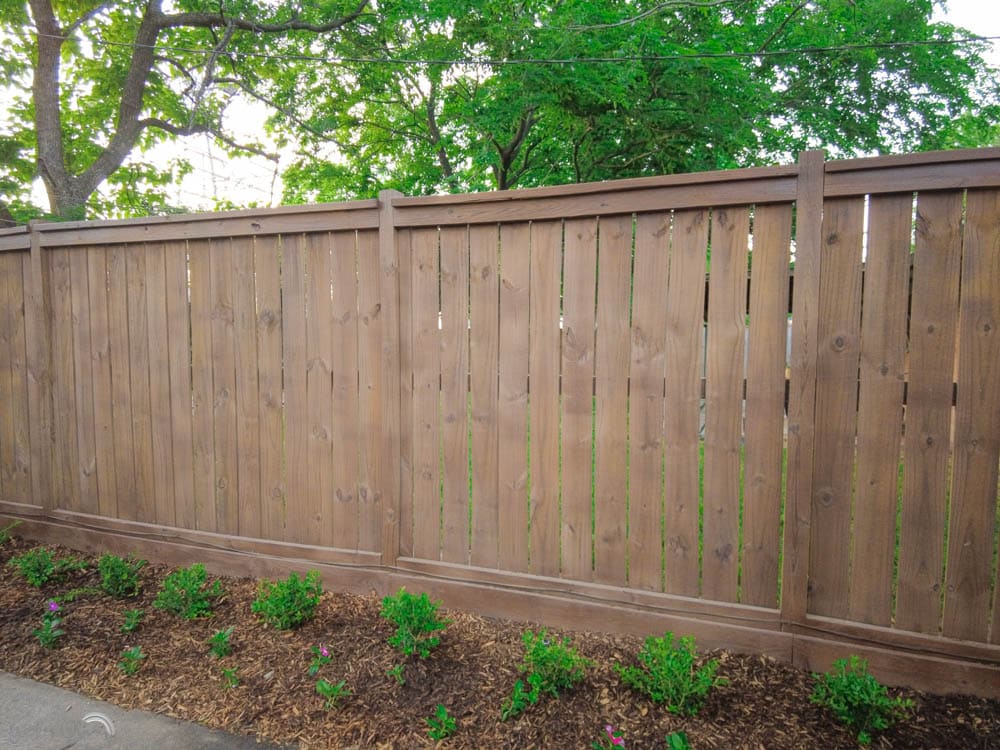
To stain a fence that has never been stained, you need to clean the wood, let it dry completely, and then apply one to two coats of a quality exterior wood stain using a brush, roller, or sprayer. The most important step is making sure the bare wood is clean, dry, and ready to absorb the stain before you start. Staining a new or unstained fence protects it from moisture, UV damage, mold, and insects, and it can add 5 to 10 extra years to the life of the wood. This guide covers every step of the process, the best products to use, the right weather conditions, common mistakes to avoid, and answers to the most searched questions homeowners in Lexington, SC have about fence staining.
How to Stain a Wood Fence for the First Time
To stain a wood fence for the first time, follow these five steps: check the weather, prep the area around the fence, clean and prep the wood, apply the stain, and let it dry. Each step matters, and skipping any of them can lead to uneven color, poor absorption, or early peeling.
According to Grand View Research, the U.S. fencing market was estimated at $9.33 billion in 2024, with the residential segment holding 63.7% of that total. That means millions of homeowners across the country are investing in fences, and protecting that investment with stain is one of the smartest things you can do. Many homeowners in Lexington, SC install wood fences for privacy and curb appeal, and staining is the first step in keeping that wood looking great for years.
Step 1: Check the Weather Forecast
Always check the weather before you start. You need at least 2 to 3 dry days in a row for the stain to absorb and cure properly. According to Sherwin-Williams, the ideal temperature for staining wood is between 40 and 90 degrees Fahrenheit. According to Angi, the best time of year to stain a fence is spring or fall, when conditions are dry and mild. High humidity slows drying time and can cause blotchy results, so aim for a day with humidity below 70%.
In Lexington, SC, spring (March through May) and fall (September through November) typically offer the best staining weather. Summer in South Carolina brings heat and afternoon thunderstorms, which can ruin a fresh coat of stain if it has not had time to dry.
Step 2: Prep the Area Around the Fence
Clear everything away from the fence. Move patio furniture, planters, grills, and toys. Trim back any grass, weeds, bushes, or tree branches that touch the fence boards. Lay down drop cloths or plastic sheeting along the base of the fence to protect your lawn, sidewalks, and any nearby plants from stain drips and overspray.
Step 3: Clean and Prep the Wood
Even if your fence has never been stained, it still needs to be cleaned. Dust, pollen, dirt, cobwebs, and mildew can all prevent stain from soaking into the wood properly. For a fence less than a year old, a simple wipe-down and rinse with a garden hose may be enough. For an older unstained fence that has started to turn gray, you will need to do more work.
According to Behr Pro, you should remove any tannin stains with oxalic acid or a commercial wood cleaner and then allow the surface to dry for at least 48 hours. A wood brightener restores the wood’s natural color and opens up the pores so the stain can penetrate. If your fence near Lake Murray has been sitting bare for a few years, a cleaning and brightening step is critical for good results.
Homeowners who need help with wood surface prep and repair before staining can count on professionals who handle decks, docks, and fences as part of their regular services.
Step 4: Apply the Stain
Once the wood is clean and completely dry, it is time to stain. You can apply stain with a brush, roller, or sprayer. A sprayer is the fastest method and covers large fence sections quickly, but you should always back-brush with a staining brush to work the product into the wood grain. According to Benjamin Moore, the preferred method for staining a wood fence is by brush, and you should always start at the top and work your way down.
Apply the stain in thin, even coats. Work one board at a time, moving in the direction of the wood grain. Never stop in the middle of a board, as this creates lap marks. Most stain manufacturers recommend two thin coats for bare wood that has never been stained. Let the first coat dry according to the label directions before applying the second.
Step 5: Let the Stain Dry and Cure
After the final coat, let the stain dry for at least 24 to 48 hours before touching the fence or leaning anything against it. Drying time depends on the product, temperature, and humidity. According to Sherwin-Williams, some stains may need a separate sealant applied once the stain is fully dry to lock in the color and block moisture.
How Long Can a Fence Go Without Being Stained?
A fence can go without being stained indefinitely, but the wood will degrade much faster. According to Ridgeline Fence and Deck, an unstained cedar fence may last around 10 to 15 years, while a well-maintained, stained cedar fence can last 15 to 25 years or more. The difference comes from protection against UV rays, moisture, and freeze-thaw cycles.
Wood that is left bare starts turning gray within just a few months. According to Fence Outlet, spores that cause wood rot do not infect wood unless the moisture content rises above 28%. Stain creates a moisture barrier that keeps water from soaking into the wood fibers. Without that barrier, homeowners in Lexington, SC will see their fences gray out, crack, warp, and develop mold and mildew much sooner.
Staining within the first 3 to 12 months of installation gives the best results and longest-lasting protection. If your fence is already a few years old and has never been stained, it is not too late. It just takes a bit more prep work, like cleaning, brightening, and possibly light sanding.
Can You Stain a Fence Without Washing It First?
No, you should not stain a fence without washing it first. Even a brand-new fence has sawdust, dirt, and mill glaze on the surface that can prevent stain from absorbing evenly. A dirty fence will produce a blotchy, uneven finish that peels or fades quickly.
For new fences, a rinse with a garden hose is often enough. For older, weathered fences, a dedicated wood cleaner or a low-pressure power wash is necessary. According to multiple stain manufacturers, any gray areas on the wood that are not cleaned before staining will be visible after the stain is applied. That is why cleaning is not optional.
Homeowners throughout the Columbia, SC area who want a clean, professional finish on exterior surfaces know that prep work makes or breaks the final result.
Is It Ever Too Late to Stain a Fence?
No, it is almost never too late to stain a fence, as long as the wood is still structurally sound. Even a fence that has been bare for 5, 10, or even 15 years can be cleaned, brightened, and stained successfully. The key is that the boards must be solid, not rotted, and the posts must be stable.
According to Wallace and Wallace Fences, most wood fences are suitable for painting or staining for 10 to 20 years. If more than 25 to 30% of the fence is rotted, warped, or unstable, staining may not be worth the effort. But if the structure is still sound, a thorough cleaning and a fresh coat of stain can give your fence several more years of life.
Many older homes around the Red Bank, SC area have wood fences that have been sitting bare for years. A proper cleaning, brightening, and staining brings those fences back to life without the expense of a full replacement.
What Are Common Staining Mistakes?
The common staining mistakes are staining too soon after installation, skipping the cleaning step, applying stain in the wrong weather, using too much stain, and not back-brushing after spraying.
Staining a brand-new pressure-treated fence too soon is the number one mistake. Pressure-treated wood is saturated with chemicals and moisture from the treatment process. It needs time to dry out before it can absorb stain. Most experts recommend waiting at least 3 to 6 months for pressure-treated lumber to dry. Cedar and other untreated woods can typically be stained sooner, within 4 to 8 weeks after installation, depending on weather conditions.
Another common mistake is applying too much stain in a single coat. Thick coats of stain sit on the surface instead of soaking into the wood. Surface stain peels, flakes, and looks patchy. Two thin coats always outperform one thick coat. According to Sherwin-Williams, always work the stain into the wood with a brush to make sure it fully absorbs.
Skipping the cleaning step, especially on older bare wood, leads to stain that sits on top of dirt and oxidation rather than penetrating the wood. Staining in direct sunlight or extreme heat causes the stain to dry too fast, which prevents proper penetration and creates lap marks. Homeowners in Lexington, SC should plan to stain in the early morning or late afternoon to avoid the hottest part of the day.
What Time of Year Is Best to Stain a Fence?
The best time of year to stain a fence is spring or fall. These seasons offer the moderate temperatures, lower humidity, and stable weather patterns that stain needs to dry and cure properly. According to Fence Armor, the ideal conditions for staining include temperatures between 50 and 80 degrees Fahrenheit.
In Lexington, SC and the surrounding Columbia area, early spring (March and April) and early fall (September and October) provide the best staining windows. Summer in South Carolina is hot and humid, with frequent afternoon storms. While summer staining is possible if you start early in the morning, the heat can cause stain to flash-dry before it soaks into the wood.
Winter staining is not ideal in most parts of the country, but South Carolina’s mild winters sometimes allow for it. If daytime temperatures stay above 50 degrees and the wood is dry, you can stain in the winter months. Always check the stain manufacturer’s label for minimum temperature requirements.
What Temperature Is Too Cold to Stain a Fence?
The temperature that is too cold to stain a fence is below 50 degrees Fahrenheit for most water-based stains and below 40 degrees for most oil-based stains. When temperatures drop below these thresholds, the stain will not dry or cure properly. It may become sticky, fail to penetrate the wood, or peel off within weeks.
According to Sherwin-Williams, the optimal temperature for staining wood is between 40 and 90 degrees Fahrenheit. Always check the specific product label for the manufacturer’s recommended range. Some specialty oil-based stains are formulated to work in colder temperatures, but these are the exception.
Overnight temperatures matter too. If it drops below freezing at night, the stain may not cure even if daytime temperatures are warm enough. The Gilbert, SC area occasionally sees cold snaps in winter that can catch homeowners off guard, so always check the extended forecast before starting a staining project.
Is It Better to Spray or Roll Stains on a Fence?
It is better to spray stain on a fence for speed and then back-brush it for penetration. Spraying is the fastest way to cover a large fence, but the stain needs to be worked into the wood with a brush to soak in properly. Rolling is a good middle ground, but it is slower than spraying and can miss gaps between boards.
According to Benjamin Moore, a brush is the preferred application method for fence staining. A brush pushes the stain into the wood grain and ensures complete coverage in cracks and crevices. If you spray, always go back with a brush immediately to work the stain in before it dries on the surface.
For homeowners in Lexington, SC with large fence lines, the spray-and-back-brush method is the most efficient. A pump sprayer or backpack sprayer paired with a quality staining brush gets the job done quickly without sacrificing quality. Professional residential painting teams use this same method on large fence and deck projects.
What Color Fence Makes a Yard Look Bigger?
The color fence that makes a yard look bigger is a light, natural tone like honey, light cedar, or a semi-transparent stain that lets the wood grain show through. Light colors reflect more light and create an open, airy feeling. Dark fences, on the other hand, can make a yard feel smaller and more enclosed.
According to a 2024 survey by Clever Real Estate, white (42%), beige (35%), and light gray (32%) were the most popular paint colors among homeowners. For fence stains specifically, natural wood tones and soft grays are the most popular choices in 2025. Semi-transparent stains in warm tones are a great fit for the Southern homes found throughout Lexington, SC and the Lake Murray area.
If your yard is on the smaller side, choose a lighter stain. If you have a large, open yard and want the fence to stand out as a design feature, a richer brown or darker tone can add warmth and contrast against green landscaping.
How to Make a Bad Side of a Fence Look Good?
To make a bad side of a fence look good, stain both sides of the fence evenly. Most fences have a “good side” that faces out and a “rough side” that faces in. Staining both sides gives a uniform look and, more importantly, protects the wood from moisture on all surfaces.
If you only stain one side, moisture can still soak into the bare side and cause warping, cracking, and rot from the inside out. According to Behr Pro, applying stain to all six sides of the wood, including the end grain, provides the most complete protection. While you cannot stain the hidden parts of fence boards once they are installed, covering both exposed faces and the tops of the boards goes a long way.
Homeowners in the Columbia, SC area with shared fence lines should talk to their neighbors before staining. A quick conversation prevents overspray issues and gives both parties a chance to agree on the look. If your fence also needs structural repairs before staining, a team that handles sheetrock installation and repair as well as outdoor wood work can address everything in one project.
What Is the Color Trend for Fences in 2026?
The color trend for fences in 2026 is warm, natural wood tones, soft grays, and dark charcoal. Homeowners are moving away from bright or bold fence colors and leaning toward tones that complement the natural landscape. Semi-transparent stains in warm cedar, honey, and driftwood gray are among the most popular choices this year.
According to Angi’s 2024 State of Home Spending Report, homeowners are favoring simpler palettes and monochromatic designs with varying finishes to create modern exteriors. This trend extends to fences. A natural-toned semi-transparent stain that lets the wood grain show through fits right in with the 2026 design direction.
For homes in Lexington, SC and along the Lake Murray shoreline, warm cedar tones and medium browns pair well with the natural surroundings. A charcoal or slate gray stain is a great modern choice for homeowners who want a bolder contrast against white or light-colored siding. Professionals who specialize in house painting can help you choose a stain color that complements your home’s exterior palette.
When Should You Not Stain a Fence?
You should not stain a fence when the wood is wet, when rain is expected within 24 to 48 hours, when temperatures are below 50 degrees Fahrenheit, or when it is extremely hot and sunny. You should also not stain a fence that was just installed with pressure-treated lumber. That wood needs to dry for 3 to 6 months first.
According to Lowe’s, you can test whether the wood is ready by spraying a small section with water. If the water soaks in, the wood is ready to accept stain. If the water beads up on the surface, the wood is still too wet or has a mill glaze that needs to be removed by sanding or cleaning.
Staining in direct midday sun during a South Carolina summer is another bad idea. The heat causes the stain to flash-dry on the surface before it can penetrate. This leads to a weak finish that peels quickly. Plan your staining sessions for early morning or late afternoon, especially during the hotter months near Lexington, SC.
How Often Should You Restain a Fence?
You should restain a fence every 2 to 5 years, depending on the type of stain, the climate, and how much sun and moisture the fence is exposed to. According to Sherwin-Williams, restaining every 2 to 3 years is recommended for optimal longevity. A good quality oil-based stain can last 3 to 5 years or longer, while transparent stains typically need reapplication every 1 to 3 years.
According to Angi, a properly applied coat of stain lasts between 3 and 8 years depending on climate conditions. Homeowners in Lexington, SC should lean toward the shorter end of that range due to the hot summers, high humidity, and frequent rain that South Carolina experiences.
A simple water test tells you when it is time to restain. Pour a small amount of water on a flat section of the fence. If the water beads up, the stain is still working. If the water soaks right into the wood, it is time for a fresh coat. Regular interior painting keeps the inside of your home looking sharp, and regular fence staining does the same for your outdoor spaces.
Fence Stain Type Comparison
| Feature | Transparent Stain | Semi-Transparent Stain | Semi-Solid Stain | Solid Stain |
|---|---|---|---|---|
| Wood Grain Visibility | Full grain visible | Most grain visible | Some grain visible | No grain visible |
| Typical Lifespan | 1 to 3 years | 2 to 5 years | 3 to 6 years | 5 to 8 years |
| UV Protection | Low | Moderate | Good | Excellent |
| Hides Imperfections | No | Slightly | Moderately | Completely |
| Prep for Restaining | Minimal cleaning | Cleaning and light prep | Moderate prep | Full stripping may be needed |
| Best For | New, high-quality wood | New or lightly weathered wood | Older wood with some wear | Old or imperfect wood |
Sources: Sherwin-Williams fence staining guide; Benjamin Moore Woodluxe product line; Fence Outlet wood fence lifespan data; Angi fence staining cost guide
Oil-Based vs. Water-Based Fence Stain: Which Is Better?
Oil-based fence stain is generally better for bare wood that has never been stained. Oil-based stains penetrate deeper into the wood fibers, provide stronger moisture protection, and last longer than water-based stains on most exterior wood surfaces. According to Benjamin Moore, water-based stains perform well on most types of wood, while oil-based stains are best for woods prone to bleeding, like cedar and redwood.
Water-based stains are easier to clean up, dry faster, and produce fewer odors. They are also lower in VOCs (volatile organic compounds), which matters for homeowners concerned about environmental impact. According to the U.S. EPA, national VOC emission standards for architectural coatings require manufacturers to limit VOC content, and many water-based stain products now meet or exceed those standards.
For most fence staining projects around Lexington, SC, an oil-based penetrating stain delivers the best long-term value on bare wood. If you prefer a lower-odor, easy-cleanup option and your fence is in good condition, a high-quality water-based stain from a reputable brand works well too.
How Much Does It Cost to Stain a Fence Yourself?
The cost to stain a fence yourself runs about $0.50 to $0.55 per square foot for materials. For a typical 150-linear-foot privacy fence stained on both sides (approximately 1,800 square feet of surface area), you can expect to spend around $700 to $900 on stain, cleaning supplies, brushes, drop cloths, and a pump sprayer. According to Angi, staining a fence costs between $2 and $10 per linear foot when hiring a professional, or between $750 and $4,250 total.
DIY staining saves around 60% compared to hiring a pro, according to Angi’s cost estimates. But it takes significant time and effort. A 150-foot fence takes the average homeowner 6 to 8 hours to clean and stain when using the right tools. Professional commercial painting and staining crews with sprayers and experienced teams can finish the same project in a fraction of that time.
Frequently Asked Questions
How Long Should a New Fence Dry Before Staining in Lexington, SC?
A new fence should dry for 4 to 8 weeks before staining if it is made from cedar or untreated wood. Pressure-treated wood needs 3 to 6 months to dry because it is saturated with chemicals during the treatment process. In the humid climate around Lexington, SC, drying times can run longer than in drier regions. Test the wood with a moisture meter or the water-drop test before staining.
Can You Stain a Fence in October in South Carolina?
Yes, you can stain a fence in October in South Carolina. October is actually one of the best months for fence staining in the Lexington, SC area. Temperatures are typically between 55 and 75 degrees, humidity drops from the summer highs, and rain is less frequent. Just check the forecast for 2 to 3 dry days in a row before you start.
What Is the Best Stain for a Cedar Fence Near Lake Murray?
The best stain for a cedar fence near Lake Murray is an oil-based, semi-transparent penetrating stain. Oil-based stains soak deep into cedar’s naturally oily wood and provide strong protection against moisture and UV rays. Semi-transparent stains let the beautiful cedar grain show through while adding a rich tone and lasting protection. Sherwin-Williams and Benjamin Moore both offer high-quality exterior wood stains that perform well in South Carolina’s climate.
Do I Need to Seal My Fence After Staining?
You may need to seal your fence after staining, depending on the product you use. Many modern stains include a built-in sealant that blocks moisture and UV damage. If your stain does not include a sealer, apply a separate clear sealant once the stain is fully dry. According to Sherwin-Williams, applying a sealant keeps the stain even and prevents warping caused by moisture.
How Do I Know If My Unstained Fence Is Ready for Stain?
You know your unstained fence is ready for stain by doing a simple water test. Sprinkle a small amount of water on a dry section of the fence. If the water soaks into the wood within 10 to 15 seconds, the fence is ready. If the water beads up and sits on the surface, the wood still has too much moisture or mill glaze and needs more drying time or a light sanding. According to Lowe’s, this is the quickest way to check.
What Happens If It Rains Right After I Stain My Fence in Lexington, SC?
If it rains right after you stain your fence, the rain can wash away or dilute the stain before it cures. This leaves the fence unprotected and creates a blotchy, uneven appearance. Most stains need at least 24 to 48 hours of dry weather to cure fully. If rain hits within that window, you may need to let the fence dry, clean it, and apply a fresh coat. Always check the Lexington, SC forecast before starting your project.
Should I Stain Both Sides of My Fence?
Yes, you should stain both sides of your fence. Staining only one side allows moisture to enter from the bare side, which causes warping, cracking, and rot. According to Behr Pro, staining all exposed surfaces provides the best long-term protection. Homeowners around Lexington, SC who stain both sides of the fence get more years of service from the wood and a more consistent appearance.
Final Thoughts
Staining a fence that has never been stained is one of the best things you can do to protect your investment and boost your property’s curb appeal. The process is straightforward: check the weather, clean the wood, let it dry, apply two thin coats of a quality penetrating stain, and let it cure. Doing this right the first time can add 5 to 10 years to the life of your fence and save you from costly repairs or a full replacement down the road.
If you are a homeowner in Lexington, SC, the Lake Murray area, Red Bank, Gilbert, or anywhere around Columbia, and you want your fence stained the right way, Soda City Painting can help. Their team handles fence staining, deck and dock staining, and every kind of exterior and interior painting project. They bring the right products, the right tools, and the experience to get it done fast and get it done right. Call (803) 221-0771 or visit their website to request your free estimate today.