
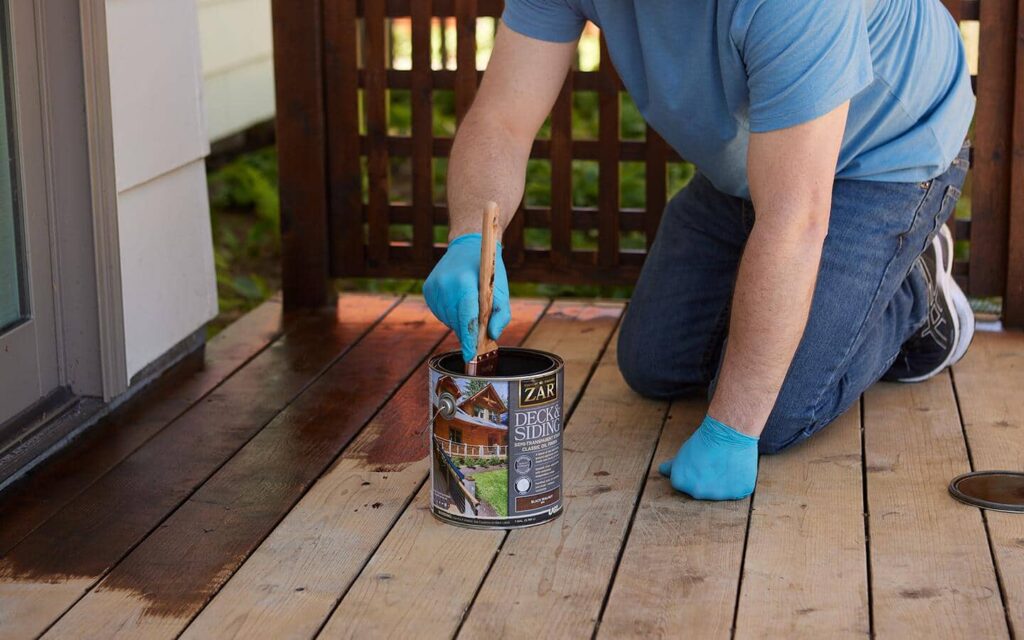
To stain a deck for the first time, you need to inspect and repair the wood, clean the surface thoroughly, let it dry completely, choose the right stain, and apply it in thin, even coats with the grain on a dry day between 50 and 90 degrees Fahrenheit. Staining protects your deck from sun damage, moisture, mold, and foot traffic, extending its life by years. According to industry data, the U.S. house painting market was valued at $24.4 billion in 2024, and a growing share of that goes toward exterior wood care like deck staining. This guide covers every step so homeowners in Lexington, SC can get professional results on their very first deck staining project.
What Is the Easiest Way to Apply Deck Stain?
The easiest way to apply deck stain is with a stain pad applicator attached to an extension pole. A stain pad covers large areas quickly, pushes stain into the wood grain and between boards, and produces a smooth, even finish without the drips and splatters that come with brushes or rollers. For railings, spindles, and tight areas, use a 3 to 4 inch synthetic brush.
Another easy method is to use a pump sprayer to apply the stain and then immediately back-brush with a brush or stain pad to work it into the wood. The sprayer speeds up application while the back-brushing ensures even penetration. According to Cabot Stain, brushing produces the best results because it works the stain deep into the wood fibers for maximum protection and color consistency.
For homeowners across Lexington, SC tackling a deck stain project for the first time, the stain pad on a pole is the best tool to start with. It is forgiving, fast, and delivers results that look professional. Deck, dock, and fence staining requires the right tools and technique, and a stain pad makes the learning curve much easier.
What Not to Do When Staining a Deck
When staining a deck, do not stain in direct sunlight, do not stain wet or damp wood, do not apply too much stain, do not skip cleaning and prep, do not stain when rain is forecast within 24 to 48 hours, and do not let the stain puddle or pool on the wood surface. Each of these mistakes causes problems that are hard to fix.
Over-applying stain is one of the most common first-timer mistakes. More stain is not better. If you apply more stain than the wood can absorb, the excess sits on the surface and becomes sticky, tacky, and eventually peels. According to Cabot, you should only apply as much finish as the wood can easily absorb. Wipe away any excess stain that has not soaked in within 10 to 15 minutes.
Do not break in the middle of a board. Always stain from one end of a board to the other in a single pass. Stopping in the middle of a board creates a visible lap mark where the wet and dry stain overlap. Work in sections of two to three boards at a time, keeping a wet edge so the stain blends seamlessly from one board to the next.
What Are Common Staining Mistakes?
Common staining mistakes are skipping the cleaning step, staining wood that is too wet, applying stain in direct sunlight, over-applying stain, using the wrong type of stain for the wood, not stirring the stain thoroughly before and during application, and staining when temperatures are too hot or too cold. According to professional contractors, skipping surface preparation is the single most common staining error.
Another frequent mistake is staining new pressure-treated wood too soon. New pressure-treated lumber needs to dry and weather for four to eight weeks before it will accept stain properly. According to Sherwin-Williams, you should perform a “water drop test” on new wood. Sprinkle a few drops of water on the surface. If the water soaks in, the wood is ready for stain. If the water beads up, the wood is still too wet and needs more time to dry. Just like interior surfaces need proper preparation before painting, outdoor wood needs the right conditions before staining.
Not testing the stain color on an inconspicuous area before committing to the whole deck is another mistake. Stain color looks different on different wood species, and the final result depends on the age, porosity, and condition of the wood. A test patch lets you confirm the color before you cover 300 or more square feet. Homeowners in the Lexington area should test on a hidden corner or the underside of a step first.
Is October Too Late to Stain a Deck?
No, October is not too late to stain a deck in Lexington, SC. October temperatures in central South Carolina typically fall within the ideal 50 to 90 degree range for deck staining. Lower humidity and less intense sunlight actually make fall one of the best seasons for staining because the stain dries at a steady, even rate without flash-drying in the heat.
The key concern in October is nighttime temperatures. If temperatures drop below 50 degrees at night before the stain has cured, the curing process can be disrupted. Check the forecast and make sure you have at least 48 hours of temperatures above 50 degrees after application. In the Lexington and Columbia area, October usually provides several good windows for deck staining.
What Is the Best Month to Stain a Deck?
The best months to stain a deck are late spring (April and May) and early fall (September and October). These seasons offer moderate temperatures, lower humidity, and more stable weather, which creates the ideal conditions for stain to penetrate the wood and cure evenly. According to Mr. Handyman, late spring and early fall are consistently recommended as the optimal staining seasons.
Summer staining is possible but challenging. Temperatures above 90 degrees cause stain to flash-dry on the surface before it can soak into the wood, leaving a blotchy, uneven finish. If you stain in summer in Lexington, SC, work in the early morning or late afternoon when the deck is in shade. Avoid staining between 11 a.m. and 3 p.m. when the sun is most intense.
Can I Use Dawn Dish Soap to Clean My Wooden Deck?
Yes, you can use Dawn dish soap to clean your wooden deck before staining. Mix a few tablespoons of Dawn into a bucket of warm water and scrub the deck with a stiff-bristle brush. Dawn is a mild degreaser that removes dirt, grime, and light mildew without damaging the wood. Rinse thoroughly with a garden hose and let the deck dry completely before staining.
For heavier cleaning, a dedicated deck cleaner or a solution of oxygen bleach (like OxiClean) is more effective at removing deep-set mildew, algae, and gray weathering. Avoid using chlorine bleach on wood decks because it can damage the wood fibers and leave the surface too rough for an even stain application. After cleaning with any product, let the deck dry for at least 24 to 48 hours before staining.
How Many Coats of Stain Do I Need to Put on My Deck?
Most deck stains need one to two coats depending on the product type and the porosity of the wood. Transparent and semi-transparent oil-based stains typically need only one coat on new wood. Solid stains may need two coats for full, even coverage. For pressure-treated and other porous woods, two coats are recommended.
According to Benjamin Moore, their Woodluxe translucent, semi-transparent, and semi-solid stains require only one coat. Solid stains may need one or two coats. Over-applying is worse than under-applying. Excess stain that the wood cannot absorb will sit on the surface, dry sticky, and eventually peel. Always follow the manufacturer’s directions for your specific product.
If applying two coats, the timing between coats is critical. Many stain manufacturers recommend applying the second coat while the first is still slightly tacky, often called “wet on wet.” Do not let the first coat dry completely before applying the second, as this can cause peeling. Check the product label for exact recoat windows, which vary by brand.
Is It Better to Roll or Brush Stains on a Deck?
It is better to brush stains on a deck for the best penetration and most even finish. Brushing works the stain deep into the wood grain and crevices, which provides better protection and longer-lasting color. According to Cabot Stain, brushing in long, smooth strokes from one end of a board to the other produces the most professional results.
Rolling is faster for covering large flat areas, but it does not push the stain into the wood as effectively as a brush. If you roll, always back-brush immediately to work the stain into the grain. A stain pad applicator on a pole is a good middle ground. It covers large areas quickly like a roller but pushes stain into the wood more effectively.
For railings, spindles, and edges, a brush is the only practical tool. Use a 3 to 4 inch brush for flat surfaces and a 2 inch angled brush for tight areas. The team at Soda City Painting uses a combination of application methods to get the fastest, most even coverage on every deck project.
What Are the Four Staining Procedures?
The four staining procedures are cleaning, sanding, staining, and sealing. Each step serves a specific purpose in protecting and beautifying your deck. Cleaning removes dirt, mildew, and contaminants. Sanding smooths the surface and opens the wood pores. Staining adds color and UV protection. Sealing locks in the stain and adds a moisture barrier.
Many modern deck stains combine staining and sealing into a single product, which simplifies the process. These stain-and-sealer combos save a full step and are the most popular choice for first-time deck stainers. If you use a separate stain and sealer, always apply the stain first, let it cure completely, and then apply the sealer according to the manufacturer’s directions.
What Is the Coldest Temperature You Can Stain a Deck At?
The coldest temperature you can stain a deck at is 50 degrees Fahrenheit for most stain products. Below 50 degrees, the stain cannot penetrate the wood properly and will not cure correctly. The result is poor adhesion, uneven color, and a finish that peels or wears off prematurely.
According to Sherwin-Williams, most deck stains perform best between 50 and 90 degrees. Some advanced formulas can be applied in temperatures as low as 45 degrees, but even these products need the temperature to stay above freezing for several days after application to allow proper curing. In Lexington, SC, winter temperatures occasionally drop below these thresholds, so plan your staining project for spring, summer, or fall.
How Many Days Does Deck Stain Need to Dry Before Rain?
Deck stain needs at least 24 to 48 hours of dry weather after application before it is safe from rain. Water-based stains may be dry to the touch in 1 to 4 hours but need 24 to 48 hours to fully cure. Oil-based stains can take 4 to 24 hours to dry to the touch and 48 to 72 hours to cure completely.
According to Ready Seal, their product is rain-resistant within 2 to 4 hours, but full curing still takes 24 to 48 hours. Most other stain brands recommend a minimum of 24 hours of dry weather after application. Light rain after 12 hours may not cause significant damage, but a heavy downpour within the first day can wash away pigment, create blotchy spots, and require sanding and reapplication.
Always check the weather forecast before starting a deck staining project. Plan for at least 48 hours of dry weather, with no rain expected for at least 24 hours after you finish. For homeowners in the Lexington, SC area, South Carolina’s afternoon thunderstorms in summer can sneak up quickly. Fall months typically offer more predictable dry stretches.
How Long Should You Stay Off a Deck After Staining It?
You should stay off a deck for at least 24 to 48 hours after staining it. Water-based stains may feel dry to the touch in a few hours, but walking on them too soon can leave footprints. Oil-based stains need longer, typically 24 hours before light foot traffic and 48 to 72 hours before placing furniture back on the deck.
“Drying time” and “curing time” are different. Drying time is when the surface feels dry to the touch. Curing time is when the stain has fully hardened and bonded with the wood. Even if the deck feels dry after 6 hours, the stain may not be fully cured for 2 to 3 days. Placing heavy furniture on an uncured deck can leave permanent impressions in the finish.
Should I Wash My Deck Before Staining?
Yes, you must wash your deck before staining. Dirt, mold, mildew, pollen, and other contaminants prevent stain from penetrating the wood evenly. A dirty deck will produce a blotchy, uneven stain job that fails prematurely. Cleaning is the single most important prep step for any deck staining project.
Use a dedicated deck cleaner, a solution of oxygen bleach and water, or a mild dish soap solution. Scrub with a stiff brush and rinse thoroughly. A pressure washer set to medium pressure (around 1,500 to 2,000 PSI with a wide fan tip) speeds up the cleaning process but must be used carefully to avoid gouging the wood. Let the deck dry for at least 48 hours after pressure washing before applying stain.
What Is the Best Longest Lasting Deck Stain?
The best longest lasting deck stains are oil-based penetrating stains from brands like TWP, Cabot, and Ready Seal. Oil-based stains soak deeper into the wood than water-based products, which provides longer-lasting protection and richer color. According to industry sources, a quality oil-based deck stain can last 2 to 4 years before needing reapplication, depending on sun exposure and foot traffic.
Water-based stains are easier to clean up and have lower VOC levels, but they typically do not last as long as oil-based formulas. Solid-color stains last the longest of all types (3 to 5 years) because they contain more pigment, but they also hide the natural wood grain completely. Semi-transparent stains show the grain beautifully but need reapplication every 2 to 3 years.
For homes in the Lexington, SC area, where hot summers and humidity accelerate stain breakdown, an oil-based semi-transparent stain offers the best balance of appearance and durability. Proper exterior maintenance including regular cleaning and timely reapplication keeps your deck looking great year after year.
Should a Deck Be Darker or Lighter Than a House?
A deck should typically be slightly darker than the house exterior for the best visual contrast and curb appeal. A darker deck grounds the outdoor space and creates a clear distinction between the home’s siding and the outdoor living area. However, very dark stains absorb more heat from the sun, which can make the deck uncomfortably hot to walk on barefoot in the summer.
Light stains show dirt and foot traffic more quickly but keep the deck surface cooler. The best approach is to choose a mid-tone stain that complements your home’s exterior color. Covered areas like porches can handle lighter stain colors because they are protected from direct sun and rain.
According to Zillow’s paint color analysis, homes with cohesive exterior color schemes sell for more than homes with clashing or random color choices. A house painting and deck staining project done together creates the most unified, attractive look.
Deck Stain Types: Comparison Table
| Stain Type | Lifespan | Wood Grain Visibility | Best For |
|---|---|---|---|
| Transparent / Clear | 1 to 2 years | Full grain visible | New wood with beautiful natural grain |
| Semi-Transparent | 2 to 3 years | Most grain visible | Good condition wood, natural look with color |
| Semi-Solid | 3 to 4 years | Some grain visible | Older wood with some wear, more color coverage |
| Solid | 3 to 5 years | No grain visible | Weathered wood, consistent color desired |
Sources: Cabot Stain, Benjamin Moore, Sherwin-Williams, Ready Seal. Lifespans assume proper application on clean, dry wood with normal exposure.
How to Fix a Poorly Stained Deck
To fix a poorly stained deck, first identify the problem. If the stain is blotchy or uneven, you may be able to apply another thin coat to even out the color. If the stain is peeling or flaking, you need to strip the old stain completely with a deck stain stripper, clean the wood, sand the surface, and start over.
For sticky or tacky stain that never fully dried, the cause is usually over-application. Wipe off as much excess as possible with rags, then apply a wood cleaner to remove the remaining buildup. In severe cases, mineral spirits (for oil-based stain) can help dissolve the sticky residue. Once the surface is clean and dry, apply a single thin coat of stain.
Rain damage within the first 24 hours creates white spots or blotchy discoloration. Let the deck dry completely, then lightly sand the affected areas with 80-grit sandpaper and reapply a thin coat of stain. Just like fixing drywall damage inside your home, catching and repairing deck stain problems early saves time and money.For minor rain damage, a full second coat often evens things out. For severe damage, stripping and starting over may be the only option.
When Staining a Deck, Where Do You Start?
When staining a deck, start with the railings, spindles, and stairs first. These areas are the most time-consuming and require brushwork. After the detail work is done, move to the deck floor. Start the floor at the farthest point from your exit (usually against the house) and work toward the stairs so you do not paint yourself into a corner.
Stain the end grain of each board first because end grain absorbs more stain and needs extra attention. Then work your way along the board from one end to the other, always maintaining a wet edge. Complete two to three full-length boards at a time before moving to the next section. This system ensures even coverage and prevents lap marks.
Can You Mess Up Staining a Deck?
Yes, you can mess up staining a deck, but most mistakes are fixable. The most common errors are over-applying stain, staining wet wood, staining in direct sunlight, and not cleaning the deck first. Over-application causes peeling and sticky spots. Wet wood prevents absorption. Sunlight causes flash-drying and blotchiness. Dirty wood blocks penetration.
The good news is that unlike paint, most penetrating stains can be recoated or stripped if something goes wrong. If you catch problems early while the stain is still wet, you can often wipe away excess or re-brush areas for a better result. Hiring a professional for your first deck staining project eliminates the risk entirely. The residential painting team at Soda City Painting handles deck staining projects of every size across the Lexington area.
What Are Common Decking Mistakes?
Common decking mistakes include staining new pressure-treated wood before it has dried (four to eight weeks minimum), not using a deck cleaner before staining, applying stain in direct sunlight or before rain, using interior paint instead of deck stain, choosing the wrong opacity for the wood’s condition, and not reapplying stain on the manufacturer’s recommended schedule.
Another common mistake is ignoring the underside and end grain of deck boards. These areas are the most vulnerable to moisture damage because they are hidden and often untreated. Commercial properties with public-facing decks and patios need even more attention to these details because of the higher foot traffic they receive.
Applying stain to the end grain and underside of boards before installation provides all-around protection that prevents warping, splitting, and rot. Outbuildings like sheds with exposed wood decking or ramps benefit from the same end-grain treatment. For existing decks, coating the end grain of exposed board ends helps extend the life of the stain and the wood.
Frequently Asked Questions
How Long Should a New Deck Dry Before Staining in Lexington, SC?
A new deck should dry for four to eight weeks before staining in Lexington, SC. New pressure-treated wood contains high levels of moisture from the treatment process. The wood needs time to dry out before it will absorb stain properly. Perform the water drop test to check readiness. If water droplets soak into the wood within 10 minutes, the deck is ready for stain. If the water beads on the surface, wait longer.
What If It Rains 3 Hours After I Stain My Deck?
If it rains 3 hours after you stain your deck, the damage depends on the type of stain and the intensity of the rain. A light sprinkle may cause only minor spotting. A heavy downpour can wash away pigment and create blotchy, uneven areas. Let the deck dry completely, then inspect for damage. Minor spots can be fixed with a light recoat. Severe damage may require sanding and reapplication of the affected areas.
Can I Stain a Deck in 30 Degree Weather?
No, you should not stain a deck in 30 degree weather. Most deck stains require a minimum temperature of 50 degrees Fahrenheit for proper application and curing. Below that temperature, the stain cannot penetrate the wood or cure correctly. Wait for warmer weather. In Lexington, SC, spring and fall offer the best temperature ranges for deck staining.
Is It Better to Apply Stains With a Rag or a Brush?
A brush is better than a rag for applying deck stain. A brush works the stain into the wood grain for deeper penetration and more even coverage. Rags are better suited for wiping away excess stain after application or for small touch-up areas. For large deck surfaces, a stain pad applicator on an extension pole is the fastest and easiest option.
Is It Worth Sanding Down Wood Before Staining?
Yes, it is worth sanding down wood before staining, especially if the surface is rough, splintered, or has raised grain from pressure washing. Light sanding with 60 to 80 grit sandpaper smooths the surface and opens the wood pores, which helps the stain absorb evenly. Do not over-sand, as an overly smooth surface can actually prevent stain from soaking in properly.
How Often Should I Restain My Deck in the Columbia Area?
You should restain your deck every 2 to 3 years in the Columbia and Lexington area. The combination of intense summer sun, high humidity, and frequent rain in central South Carolina breaks down deck stain faster than in cooler, drier climates. Perform a water test annually. If water soaks into the wood instead of beading on the surface, it is time to restain.
Regular interior painting and exterior maintenance keeps your entire home protected and looking its best.
Should I Power Wash My Deck Before Staining?
Yes, you should power wash your deck before staining if the surface has heavy dirt, mildew, or old stain that needs to be removed. Use a medium-pressure setting (1,500 to 2,000 PSI) with a wide fan tip to avoid gouging the wood. Keep the nozzle at least 12 inches from the surface and move in smooth, even passes. Let the deck dry for at least 48 hours after power washing before applying stain.
Final Thoughts
Staining your deck for the first time is one of the best things you can do to protect your investment and keep your outdoor living space looking beautiful. The key steps are simple: clean the deck, let it dry, choose the right stain, apply it in thin even coats with the grain, and give it time to cure before use. Avoid the common mistakes of over-applying, staining in bad weather, and skipping prep work, and your deck will reward you with years of protection and beauty.
For homeowners in Lexington, SC, Red Bank, Gilbert, Lake Murray, and the greater Columbia area, Soda City Painting offers professional deck, dock, and fence staining services that take the guesswork out of your project. Our experienced team handles every step from prep to final coat, using premium products and proven techniques. Call us today at (803) 221-0771 or visit our website to schedule your free estimate. Your deck deserves the best, and so do you.