
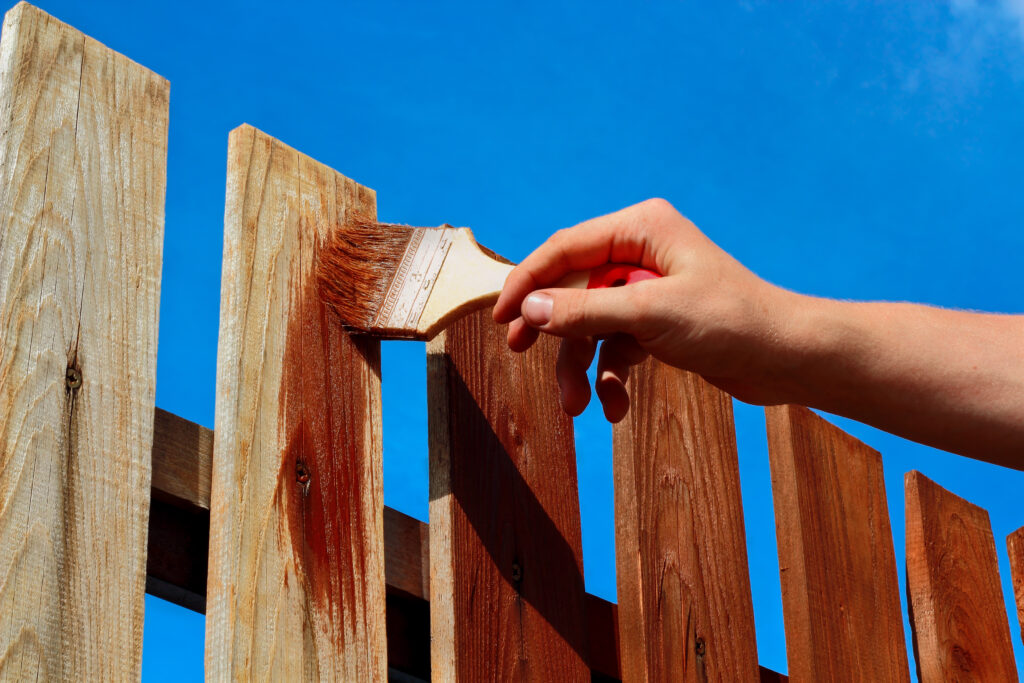
For most wood fences, stain is the better choice. Stain soaks deep into the wood fibers, protects from the inside out, does not peel or chip, and requires far less maintenance over time. Paint, on the other hand, sits on the surface, looks bold and fresh when new, but chips and peels as the wood moves with seasonal temperature and humidity changes. That said, there are real situations where paint makes sense, and the right answer depends on your wood type, your climate, and what look you want your yard to have. This guide covers everything you need to know before you pick up a brush in Lexington, SC, from how long each option lasts to the color trends leading into 2026.
Is It Better to Paint or Stain a Wood Fence?
Stain is better than paint for most wood fences. Stain penetrates the wood grain rather than sitting on top of the surface, which means it fades gradually and evenly over time instead of cracking, blistering, or peeling. When stain fades, you simply clean the fence and apply a fresh coat with no scraping or sanding required. When paint starts to fail, you have to scrape off the loose material, sand down the rough spots, prime the bare wood, and then repaint, a process that takes significantly more time and effort.
According to professionals at Five Star Painting, stain needs to be reapplied about every three years, while paint lasts five to six years before it needs full maintenance. Paint seems to win on longevity at first glance, but the maintenance cycle changes the math. Stain maintenance takes one afternoon. Paint maintenance can take a full weekend for a large fence. Over the life of the fence, stain is easier and less expensive to maintain.
Paint does win in one important area: color variety. If you want a bold, specific color that matches your home’s exterior trim exactly, paint gives you far more options. Stain manufacturers have expanded their color lines significantly in recent years, including solid-color stains that look similar to paint from a distance, but if you want bright white, navy blue, or a color that does not exist in the natural wood spectrum, paint is still the way to go.
The wood type matters too. Cedar, which is one of the most common fence materials in South Carolina, takes stain extremely well and does not respond favorably to paint. According to fence experts at Five Star Painting, paint can actually reduce the lifespan of a cedar fence by trapping moisture that cedar needs to release naturally. Pressure-treated pine is more accommodating of either finish, but even here, stain remains the lower-maintenance choice for long-term protection. Keeping all outdoor wood surfaces looking consistent adds to the overall effect. Residential painting services that cover the home’s siding, trim, and outdoor wood structures in one coordinated project deliver the most polished finished result for the whole property.
Homeowners throughout Lexington who want both a freshly finished fence and well-maintained outdoor spaces often schedule fence staining at the same time as other outdoor painting projects. Deck, dock, and fence services that cover all of your outdoor wood surfaces in one visit keep your property looking sharp and your schedule manageable.
What Lasts Longer on a Fence, Stain or Paint?
Paint lasts longer before it needs reapplication, typically five to ten years compared to three to eight years for stain. However, paint also fails more dramatically when it does wear out. It cracks, chips, and peels, leaving exposed bare wood that is vulnerable to moisture, mold, and UV damage. Stain fades gradually and evenly, which means it is always providing some level of protection even as it ages past its ideal appearance.
According to design and painting resource Designing Idea, paint lasts five to ten years on a fence under normal conditions. Stain lasts one to eight years depending on the product quality, the wood type, and how much weather exposure the fence gets. High-quality oil-based stains, according to professionals at Hancock Fence, can last three to five years or more with proper application and basic care.
The humid climate in and around Lexington, SC plays a real role here. Wood expands and contracts more dramatically in a climate with hot, wet summers and cooler, drier winters than it does in a more consistent environment. That expansion and contraction is what causes painted surfaces to crack at the grain lines. Stain, because it lives inside the wood rather than on top of it, moves with the wood and does not crack under those same conditions.
Pressure-treated pine, the most common fence wood in South Carolina, requires a waiting period before staining. According to fence industry sources, new pressure-treated wood should be allowed to dry and cure for at least ten to twelve weeks before any stain or paint is applied. Applying stain too soon means it cannot absorb properly because the wood is still releasing the moisture from the treatment process.
Why Use Stains Instead of Paint?
Use stain instead of paint on a wood fence because stain penetrates the wood fibers and protects from the inside out, does not peel or crack when the wood moves with temperature changes, requires no primer, needs only one coat in most cases, and is significantly easier to maintain when it fades. According to That 1 Painter, a stain refresh requires cleaning the fence and reapplying with a garden pump sprayer. A paint refresh requires scraping, sanding, priming, and two coats of paint.
Stain also preserves the visual character of the wood. The natural grain and texture of cedar or pine are part of what makes a wood fence beautiful. A semi-transparent stain enhances that grain with a warm color while leaving it fully visible. Paint covers it completely. Many homeowners in Lexington neighborhoods near Lake Murray invest in cedar fencing specifically for its appearance and find that painting over it removes the quality they paid for.
From a cost standpoint, stain wins over time as well. According to Designing Idea, paint averages around $36 per gallon while stain averages around $24 per gallon. Paint also requires primer and more total coats, which adds cost. Stain typically needs only one coat and no primer. The upfront savings combined with the easier maintenance cycle make stain the more economical choice for most homeowners over the life of the fence.
When Should You Not Paint a Fence?
You should not paint a fence when the fence is made of cedar or natural redwood, when the wood is newly installed and still wet or freshly treated, when temperatures are below 50 degrees Fahrenheit or rain is forecast within 24 hours, or when the existing stained finish has not been fully stripped and the surfaces are not sanded and primed.
Cedar is the clearest case where paint should be avoided. Cedar contains natural oils that resist decay and moisture, which is exactly what makes it such a good fence material. Those same oils prevent paint from bonding properly to the surface. Paint applied to oily cedar will begin to peel within a few years no matter how well it was applied, because the bond between the paint film and the oily wood surface is simply too weak to hold under seasonal movement and UV exposure.
Newly installed pressure-treated pine is another situation where you should wait before applying any finish. The chemical treatment process leaves the wood saturated with moisture-retaining compounds. Painting or staining before that moisture releases results in a finish that cannot fully bond. The wood surface appears to absorb the finish but then pushes it back out as it dries, leading to bubbling, poor adhesion, and premature failure.
Weather conditions also determine when not to paint. According to Buzz Custom Fence, stain requires temperatures of at least 50 degrees and no rain forecast for at least two days. Paint has similar requirements, though it is slightly more forgiving. In Lexington’s humid climate, applying any finish during very humid conditions, even if it is not raining, can cause adhesion problems because the wood surface itself holds too much ambient moisture for the finish to bond properly.
When Not to Stain a Fence?
Do not stain a fence when the wood is too new and still curing, when the surface is wet or damp from recent rain, when temperatures are below 50 degrees Fahrenheit, when the forecast shows rain within two to three days, or when an existing paint finish covers the wood because stain cannot penetrate through paint. You should also avoid staining over a previously stained fence that is a darker color than the new stain you want to apply without first stripping the old finish, because the lighter stain will not cover a darker base.
For new fences in Lexington, the waiting period before staining is important. The combination of South Carolina’s humidity and the moisture content in fresh lumber means the wood needs adequate time to breathe and stabilize before accepting a finish. Applying stain too early is one of the most common mistakes homeowners make, and it results in uneven absorption, patchy appearance, and a finish that fades much faster than it should.
What Is the Color Trend for Fences in 2026?
The color trend for fences in 2026 is matte black and dark charcoal, followed by warm cedar tones and natural wood looks. According to research by Accio market analysis, matte black and charcoal finishes are leading the color palette for 2026, providing bold contrast against light home exteriors. According to fence trend reports by Greenhill Fencing, homeowners are also embracing darker, bolder colors that make outdoor spaces feel more intentional and design-forward.
Google search trend data cited by Accio shows that “black fence paint” has shown consistently higher search interest throughout 2025 and into early 2026 compared to both “white fence paint” and “gray fence paint.” This shift reflects a broader movement in exterior home design toward darker, more dramatic curb appeal that makes landscaping pop against a bold backdrop.
For wood fences specifically, natural cedar tones and warm brown stains remain highly popular because they enhance the wood’s natural character rather than covering it. Solid-color stains in matte black and deep charcoal are also gaining traction for homeowners who want the dark, modern look without fully committing to paint. These solid stains provide the color depth of paint with the maintenance ease and penetrating protection of stain, which makes them well suited to Lexington’s climate.
White picket fences remain the most recognizable and classic choice for front yard applications, and that will not change in 2026. According to fence industry reports from Best Fence of Florida, white remains the most popular single color choice overall. But for privacy fences and backyard applications, darker tones are quickly gaining ground as homeowners invest more in their outdoor living areas as extensions of the home.
What Is the Most Popular Fence Color?
White is the most popular fence color overall, especially for front yard picket-style fences and vinyl privacy fencing. However, natural cedar brown and warm wood tones are the most popular colors for stained wood fences specifically. Among painted wood fences, classic white is followed by warm grays, charcoal, and now matte black as the second and third most common choices heading into 2026, according to fence trend analysis from multiple regional fence contractors.
For homeowners in Lexington’s neighborhoods near Red Bank and Gilbert, where yards tend to have lush green lawns and mature landscaping, darker fence stain colors like cordovan brown, forest oak, and deep walnut create beautiful contrast with the greenery. Light brown and cedar-toned stains are also excellent choices because they blend naturally with the South Carolina landscape without competing visually with the home’s exterior. When a home’s interior color palette is being refreshed at the same time as the exterior and outdoor spaces, interior painting services keep all the color choices coordinated from the inside out.
What Color Fence Makes a Yard Look Bigger?
A dark fence color, particularly charcoal, matte black, or deep brown, makes a yard look bigger. Dark colors recede visually, which means the eye reads the fence as part of the background rather than as a prominent boundary. This effect makes the yard feel more open and spacious. A white or bright-colored fence does the opposite: it draws the eye to the boundary line, which makes the yard feel more enclosed and defined.
Darker fence stains like deep espresso and forest oak work especially well for this purpose because they blend into tree trunks, mulch beds, and evening shadows, making the backyard feel like it extends naturally into its surroundings. According to Ergeon’s guide to fence colors, green-toned paint and stain are another option for this effect, since a fence that matches the greenery in a yard appears to disappear into the landscape.
What Type of Fence Increases Property Value?
Wood and vinyl privacy fences increase property value most consistently among all fence types. According to Angi, the average return on investment for fence installation is about 50%, which translates to $950 to $2,400 in added resale value depending on location, size, and materials. Quality wood fencing, particularly cedar and redwood, ranks alongside vinyl as a high-ROI material because buyers value its appearance and its signal that the home has been well maintained.
According to data from Remodeling Magazine’s 2024 Cost vs. Value Report cited by Angi, 90% of the home improvement projects with the highest ROI were exterior improvements. A well-maintained wood fence in good condition contributes to that exterior curb appeal directly. According to Redfin, the average U.S. homeowner spends about $3,223 to install a fence, and the resulting added value ranges from 30% to 70% of that cost depending on neighborhood norms, fence condition, and buyer demand in the area.
A fence that is freshly stained or painted adds more value than one that looks aged, weathered, or neglected. According to a property appraisal guide by KW Appraisal Group, a fence in good condition is an asset that can nudge a buyer toward choosing your home over a comparable one without a fence. An aging, peeling, or poorly maintained fence can actually work against the home’s value by suggesting to buyers that other maintenance has also been deferred.
For homeowners in Lexington getting ready to sell, refreshing an existing fence with a clean stain coat is one of the lowest-cost, highest-impact exterior improvements available. A fence that looks sharp and freshly finished strengthens the overall curb appeal package, especially when paired with fresh exterior paint on the home itself. Exterior painting services that cover the home, trim, and fence as a complete package deliver the strongest curb appeal result before listing.
What Is the Best Time of Year to Stain a Fence?
The best time of year to stain a fence is late spring through early fall, when temperatures stay consistently above 50 degrees Fahrenheit and dry weather is most predictable. In Lexington, SC, that window is wide. Temperatures from April through October are generally warm and dry enough for stain to apply and cure properly, though mid-summer staining should be done in the morning or evening to avoid applying stain in direct afternoon heat above 90 degrees.
The reason temperature matters is that stain cures through a combination of absorption and evaporation. If it is too cold, the stain stays liquid too long and can run or pool in the wood grain. If it is too hot and sunny, the stain dries on the surface before it can penetrate, which leads to a surface film that wears off quickly rather than a deep, bonded finish. Early fall, from September through mid-October, is often the ideal window in South Carolina because temperatures are cooler, humidity starts to drop, and storm frequency decreases compared to summer.
Always check the weather forecast for a full two to three days after you plan to stain. Rain within 48 hours of application can wash uncured stain off the wood or cause uneven drying that leaves a patchy finish. According to multiple fence finishing resources, this is one of the most common reasons a fresh stain job fails early.
Why Wait a Year to Stain a Fence?
Waiting a year to stain a new fence allows the wood to fully dry, release construction moisture, and stabilize so the stain can penetrate properly. New pressure-treated lumber, which is the most common fence material, is chemically saturated and retains significant moisture after installation. Stain applied before the wood has dried will not absorb evenly and will fail much faster than stain applied to properly cured wood.
Some fence contractors recommend waiting a full year, while others suggest a minimum of ten to twelve weeks for pressure-treated pine in a warm climate like Lexington’s. The test is simple: sprinkle water on the fence boards. If the water beads on the surface, the wood is still too wet to stain properly. If the water soaks in immediately, the wood is ready.
Cedar fences can often be stained within four to eight weeks because cedar does not require chemical pressure treatment and its natural oils dry at a faster, more predictable rate. This is one more reason cedar is such a popular choice for homeowners who want a stained fence sooner rather than waiting a full season after installation.
Do You Wash a Fence Before Staining?
Yes, you must wash a fence before staining. A clean surface is one of the most important factors in how well any stain or paint adheres to wood. Dirt, mildew, pollen, algae, and weathered gray oxidation on the wood surface all prevent stain from absorbing evenly and deeply into the grain. According to professional fence finishing guides, pressure washing the fence and allowing it to dry fully is the standard first step before any staining project.
For older fences with significant gray weathering or green algae growth, a commercial wood cleaner or brightener applied after pressure washing helps restore the wood’s natural color and open the grain for better stain absorption. Wood brighteners contain mild acids that neutralize the alkaline residue left by pressure washing and break down the surface oxidation that develops on exposed wood over time.
After washing, the fence must be allowed to dry completely before staining. In Lexington’s humid climate, giving the fence at least 48 to 72 hours of dry weather after washing is a safe standard. Staining over damp wood is one of the most reliable ways to produce a finish that fails prematurely, either through uneven absorption, surface bubbling, or early peeling.
When the fence has significant mildew staining, algae patches, or deep weathering, a thorough cleaning often reveals additional surface issues like checking, splitting, and raised grain that should be lightly sanded before staining. Taking that extra prep step makes the finished stain look more even and professional across the full surface of the fence.
A clean, well-prepped outdoor surface holds finish paint and stain longer and looks better throughout its life. The same preparation principles apply to decks and porches. Porch painting services that include thorough surface cleaning and preparation before any product is applied produce results that hold up through multiple South Carolina summers.
What Is the Best Color to Stain a Wood Fence?
The best color to stain a wood fence depends on your home’s exterior, your landscaping, and the look you want. For most homes in the Lexington, SC area, natural cedar tones, warm cordovan brown, and deep walnut are the most versatile and enduring stain colors because they complement a wide range of home styles, blend beautifully with green lawns and mature trees, and age gracefully over time.
Natural cedar and honey-toned stains are the top choices for homeowners who want to preserve the wood’s warmth and organic character. These semi-transparent stains allow the grain to show through while adding UV protection and moisture resistance. According to Cool Cat Fence’s 2025 fence stain color trends, natural cedar tones remain a perennial favorite because they amplify what makes wood beautiful rather than covering it up.
For homeowners who want a bolder look that coordinates with dark home exteriors or modern landscaping, solid-color stains in espresso, slate gray, or matte black deliver the depth and drama of paint with the practical benefits of stain technology. These solid stains cover the grain like paint but still penetrate the wood surface rather than forming a film on top, which means they do not crack or peel the way paint does when the wood moves seasonally.
Lighter colors like cream, light tan, and off-white work well for traditional or cottage-style homes in Lexington where a classic white fence look is desired but the homeowner wants a finish that is easier to maintain than full exterior paint. A solid-color white or linen stain gives you that bright, clean appearance with a maintenance cycle that is far less demanding than painted white wood.
What Is the Best Exterior Paint That Lasts 25 Years?
No exterior paint realistically lasts 25 years on a wood fence specifically, but some premium exterior paints and solid-color stains come close on protected surfaces like siding and trim. On a wood fence, which is fully exposed to ground moisture, UV radiation, and seasonal temperature swings, even the best exterior paints and coatings typically need reapplication or maintenance within five to ten years.
Products from Sherwin-Williams (Duration, Emerald), Benjamin Moore (Aura Exterior), and Behr (Marquee Exterior) are among the highest-rated exterior paints and are designed to last seven to twelve years on properly prepared surfaces. These products contain higher concentrations of acrylic resins and UV-blocking pigments that resist fading and surface film breakdown longer than standard exterior paints.
For a wood fence specifically, the best long-term protection strategy is a high-quality oil-based or water-based penetrating stain from a premium brand, maintained on a three to five year schedule. Consistent maintenance is what produces a fence that looks great for twenty years or more, not any single product that claims to last forever. The condition of the wood surface and the quality of the prep work before application matter more than the brand name on the can.
How to Make a Bad Side of a Fence Look Good?
To make a bad side of a fence look good, start with a thorough cleaning, then do any needed structural repairs, fill cracks and check marks with exterior wood filler, sand rough areas lightly, and apply a solid-color stain or exterior primer followed by two coats of exterior paint. A solid finish hides surface imperfections far better than a semi-transparent stain, which will highlight uneven weathering, discoloration, and grain damage.
For a fence with significant weathering, gray oxidation, and rough texture, an exterior wood conditioner or gray-tone wood cleaner applied before the finish coat helps even out the color variation across the boards so the final stain or paint looks consistent from one end of the fence to the other. On boards with deep checking or minor splitting, a flexible exterior wood filler pressed into the cracks and sanded flush fills those lines so they are not visible through the finish coat.
Choosing a darker finish color is also a practical approach for a fence that has surface imperfections. Darker stains and paints mask weathering variations and grain inconsistencies far better than lighter colors, which tend to highlight every surface difference. A deep brown, espresso, or charcoal solid stain applied over a cleaned and lightly sanded weathered fence can make even an older fence look dramatically better without replacing any boards.
When a fence has boards that are rotted, severely split, or warped beyond cosmetic help, replacing those boards before applying any finish is the right call. Paint and stain can improve the appearance of a fence but cannot structurally restore damaged wood. Replacing problem boards first and then finishing the whole fence as a unit gives you a result that looks and performs as if the fence were new.
Homeowners dealing with damaged or aged outdoor wood surfaces often find that a complete refresh including repairs and fresh finish is more cost-effective than ongoing patch work. Shed painting services that include surface prep and repair alongside the finish application get older wood structures looking clean and protected without the cost of replacement.
What Are Common Fencing Mistakes to Avoid?
The most common fencing mistakes to avoid are staining or painting too soon after installation, skipping the cleaning and prep step before applying finish, applying finish in wet or cold weather, using the wrong finish type for the wood species, and applying only one coat when two are needed for full protection.
Applying finish too soon is the number one mistake. Pressure-treated lumber retains enough moisture at installation that stain and paint cannot bond correctly to the surface. Waiting at least ten to twelve weeks, and testing with the water bead test before proceeding, prevents this common failure. According to drywall and fence finishing experts, most finish failures on new fences can be traced directly back to premature application.
Skipping pressure washing before staining is a close second. Dirt, pollen, and surface oxidation act as barriers between the wood and the finish. Stain applied over a dirty fence may look acceptable when wet but will flake and peel within the first season as the bond fails between the contaminated surface and the finish coat.
Using paint on cedar is another mistake. Cedar’s natural oils are incompatible with standard exterior paint adhesion, which leads to early peeling and more frequent repairs than if stain had been used from the start. For cedar fences in the Lexington area, a quality penetrating oil-based stain is always the right product choice.
Forgetting to address the bottom of the fence boards is also a common oversight. The bottom few inches of wood fence boards are most vulnerable to moisture because they sit close to soil, mulch, and grass. Making sure stain coverage is complete all the way down to the base of each board, and using a product with good mildew resistance, dramatically extends the life of the fence in South Carolina’s climate.
Do You Have to Give Your Neighbors the Good Side of the Fence?
No, there is no law requiring you to give your neighbors the good side of the fence, but it is a widely observed courtesy in most neighborhoods. The “good side rule” refers to the practice of facing the finished, more attractive side of a fence toward the neighbor or the street rather than toward your own yard. Most residential fence installations follow this convention because it maintains positive neighbor relationships and supports the overall appearance of the neighborhood.
In Lexington and the surrounding Lexington County area, some neighborhoods governed by homeowners associations may have specific guidelines about fence appearance that address this directly. Always check your HOA rules before installation to confirm what finish standards are required on both sides of the fence. Some HOA guidelines specifically require that both sides of a fence present a consistent, finished appearance rather than exposing the structural frame on the neighbor-facing side. Commercial properties benefit from the same attention to exterior fence and boundary appearance. A well-finished fence around a business in Lexington or the Lake Murray corridor signals professionalism and good property stewardship. Commercial painting services that include exterior fencing and boundary surfaces keep the full perimeter of a business looking sharp and well maintained.
Regardless of what the rules say, both sides of a wood fence benefit from stain or paint protection. The unfinished or back side of a fence, if left bare, is just as exposed to weather as the front side. Applying stain to both sides extends the life of the wood significantly and prevents the kind of moisture-driven deterioration that starts from the unfinished side and works its way through the board.
What Are Fences That Annoy Neighbors?
Fences that annoy neighbors are those that block light or views without warning, are installed on incorrect property lines, have the structural side facing the neighbor’s yard, lean or sag visibly from the neighbor’s side, or are left with peeling paint and obvious maintenance neglect that affects the visual character of the shared boundary.
A fence in obviously poor condition, with peeling paint, weathered boards, and leaning posts, sends a message that the homeowner does not take care of their property. That impression affects neighbors and potential buyers alike. According to KW Appraisal Group, an aging fence with visible wear can actually detract from a home’s value, while a fence in good condition is an asset. Keeping a fence properly stained or painted is both a courtesy to neighbors and a protection of your own property value.
In Lexington neighborhoods where homes are close together and shared boundaries are visible from multiple properties, a freshly finished fence makes a meaningful difference to the shared visual environment. A fence that is well-stained, structurally sound, and consistent in color from post to post reflects positively on the whole property.
| Factor | Stain | Paint | Winner |
|---|---|---|---|
| Maintenance ease | Clean and reapply; no scraping | Scrape, sand, prime, then repaint | Stain |
| Lifespan before reapplication | 3–8 years depending on product | 5–10 years with proper prep | Paint (marginally) |
| Failure type | Fades gradually and evenly | Cracks, chips, and peels | Stain |
| Color options | Moderate; clear to solid colors | Unlimited; any color possible | Paint |
| Application ease | One coat; no primer; sprayer works | Primer plus two coats required | Stain |
| Cedar compatibility | Excellent; works with natural oils | Poor; oils prevent bonding | Stain |
| Natural wood appearance | Preserves grain and texture | Covers grain completely | Stain |
| Upfront cost per gallon | ~$24 per gallon (average) | ~$36 per gallon plus primer | Stain |
Cost data sourced from Designing Idea fence stain vs. paint analysis. Lifespan data sourced from That 1 Painter, Five Star Painting, and Buzz Custom Fence professional guides. Cedar compatibility from Five Star Painting and Mossy Oak Fences.
Frequently Asked Questions
Should you paint or stain a wood fence in Lexington, SC’s climate?
Stain is the better choice for most wood fences in Lexington, SC. South Carolina’s combination of hot, humid summers and cooler, drier winters causes wood to expand and contract significantly with the seasons. That movement is exactly what causes painted fences to crack and peel. Stain penetrates the wood fibers and moves with the wood, so it fades gradually instead of failing dramatically. For cedar fences, which are common in Lexington and the Lake Murray area, stain is especially important because cedar’s natural oils are incompatible with standard exterior paint adhesion. A quality penetrating stain applied in the spring or fall, when temperatures are between 55 and 85 degrees and no rain is forecast for 48 hours, gives you the best result in the Lowcountry climate.
How often do you need to restain a wood fence in South Carolina?
A wood fence in South Carolina needs to be restained approximately every three to five years, depending on the stain quality, the wood type, and how much direct sun and moisture the fence receives. High-quality oil-based stains last closer to five years. Budget stains or water-based stains on fences with full sun exposure may need reapplication in two to three years. The simple test is to sprinkle water on the fence boards. If the water beads, the stain is still doing its job. If the water soaks in immediately, the protective barrier has broken down and it is time to clean and restain.
Can you stain over a painted fence in the Lexington area?
No, you cannot stain over a painted fence without first removing all the paint. Stain works by absorbing into wood fibers, and paint creates a solid film barrier over the surface that blocks that absorption. Stain applied over an existing paint film will sit on top, dry unevenly, and peel off quickly. To switch from paint to stain, you would need to strip all the existing paint, sand the surface down to bare wood, and then apply stain to the fresh wood. In most cases, if a fence has been painted, continuing with paint for future maintenance coats is the more practical approach.
What is the best stain for pressure-treated pine fences in Lexington?
A penetrating oil-based or water-based semi-transparent stain designed specifically for pressure-treated wood is the best choice for pine fences in Lexington. Products from Cabot, TWP (Total Wood Preservative), and Ready Seal are consistently rated highly by fence professionals for their penetration depth, UV resistance, and mold inhibitors. The most important factor is waiting at least ten to twelve weeks after installation before applying any stain, which gives the pressure-treated lumber time to dry fully. A clean, dry surface and the right product give pressure-treated pine fences in South Carolina’s climate the best possible protection.
Does staining a fence add value to a home in Lexington, SC?
Yes, a properly stained wood fence adds value to a home in Lexington, SC by improving curb appeal and signaling to buyers that the property has been well maintained. According to Angi, the average ROI for fence installation is about 50%, and a fence in good condition supports that return far better than an aging, weathered fence does. According to KW Appraisal Group, a quality fence in good condition can be an asset that moves a buyer toward choosing your home over a comparable one nearby. A fresh stain coat costs a fraction of full fence replacement and delivers a result that looks close to new, which is one of the best value-to-cost improvements available for the exterior of a home.
How do you prepare a fence for staining in the Gilbert, SC area?
Preparing a fence for staining in the Gilbert, SC area starts with a thorough pressure wash to remove dirt, mildew, pollen, and surface oxidation. After washing, apply a wood brightener or cleaner if the boards show significant gray weathering or green algae growth, as these products open the wood grain and improve stain absorption. Allow the fence to dry completely for at least 48 to 72 hours before applying any stain. Lightly sand any rough raised grain, fill deep cracks with exterior wood filler if needed, and then apply your stain in the early morning or evening to avoid direct midday sun, which can cause the stain to dry too quickly on the surface before penetrating properly.
What color fence paint or stain looks best with a brick home in South Carolina?
Warm brown and cordovan stain tones look best with brick homes in South Carolina because they complement the warm red and tan tones in most South Carolina brick. Natural cedar, walnut, and deep espresso stains create a cohesive, intentional look that ties the fence to the home’s color story without competing with it. For painted wood fences alongside brick homes, warm white and warm cream tones work better than bright white, which can look harsh in contrast with the warm tones of red brick. If the brick has cool gray tones, a charcoal or slate gray stain or paint can work beautifully and gives the property a modern, polished exterior appearance.
Final Thoughts
For most wood fences in Lexington, SC, stain is the right choice. It protects the wood from the inside out, does not crack or peel when the wood moves with the seasons, is easier and less expensive to maintain, and preserves the natural beauty of the wood grain. Paint makes sense when you need a specific bold color, want to cover an older fence with significant surface imperfections, or when the fence is made of wood that takes paint better than stain. Whatever finish you choose, surface prep determines how well it performs. A clean, dry, properly cured surface with no contamination or loose material is what makes a fence finish last through years of South Carolina summers and winters.
A fence that is freshly stained and well maintained increases your property’s curb appeal, improves your home’s attractiveness to buyers, and signals that the property has been cared for properly. According to Angi, the average ROI for a well-maintained fence is about 50% of the installation cost in added resale value. That number improves when the fence is in visually excellent condition, which a fresh stain coat delivers at a fraction of full replacement cost. Start with good prep, choose the right product for your wood type, and apply in the right weather conditions, and your fence will look sharp and stay protected for years to come.
Want a fence that looks freshly finished and stays protected through every season?
The team at Soda City Painting serves homeowners across Lexington, Red Bank, Gilbert, and the Lake Murray area. We handle fence staining and painting with full surface prep, the right product for your wood type, and clean, even application that holds up. Call us at (803) 221-0771 or reach out online for a free estimate today.
See everything we do for outdoor wood surfaces on our decks, docks, and fences page and find out why Soda City Painting is the trusted choice for exterior wood finishing throughout Lexington County.