
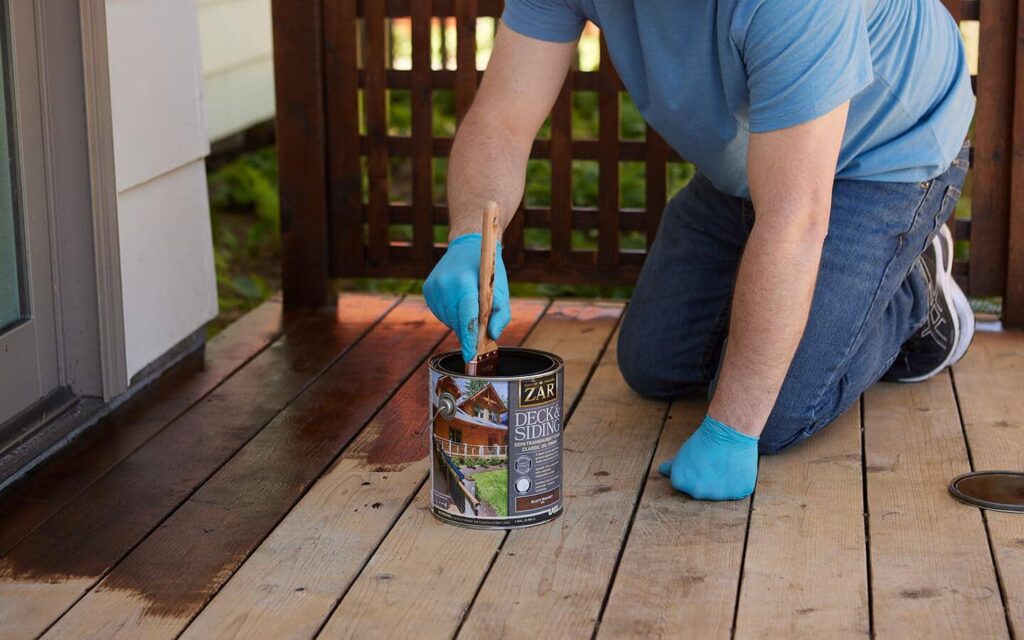
To prep a deck for staining or painting, you need to clean it, strip any old finish, make repairs, sand the wood, and let it dry completely before applying anything. Skipping even one of these steps is the number one reason deck finishes fail early. According to Family Handyman, thorough prep work is critical because stain needs to penetrate into the wood to protect it, and without proper preparation, new finishes can fail in as little as one season. This guide walks you through every step, from clearing the deck all the way to choosing the right day to apply your stain or paint.
Do I Need to Prep My Deck Before Staining?
Yes, you absolutely need to prep your deck before staining. Stain does not sit on top of wood the way paint does. It soaks into the wood fibers. If the wood is dirty, wet, or covered in old finish, the stain cannot penetrate. You end up with a blotchy, peeling mess in just a year or two.
According to Benjamin Moore, preparation is the most critical step when staining a deck. Without it, even the most expensive stain will fail before its time. Homeowners across Lexington, SC know this all too well. The South Carolina climate brings high humidity, heavy summer rains, and intense UV exposure. All of that means your deck takes a beating, and proper prep is what makes a finish hold up.
How to Restore a Badly Weathered Deck
To restore a badly weathered deck, you need to strip the old finish down to bare wood, clean it with a deck cleaner, apply a wood brightener, sand rough spots, repair damaged boards, and let it dry before recoating. Family Handyman experts put it plainly: bring the wood down to bare wood for the best results.
Many decks around the Lake Murray area show signs of heavy weathering. Wood turns gray, boards split, and old stain peels. This is not just a cosmetic issue. The U.S. Forest Products Laboratory has documented that unprotected wood exposed to moisture and sunlight begins breaking down at the surface level, which reduces a coating’s ability to bond. The earlier you catch weathering and restore the surface, the less work it takes.
Here is what the restoration process looks like from start to finish.
Step 1: Clear the Deck Completely
The first step to prep a deck for staining or painting is to remove everything from the surface. That means patio furniture, planters, rugs, grills, string lights, and anything else sitting on or hanging from the deck. You need full access to every board and every railing.
Protect nearby shrubs and flower beds with fabric drop cloths before you start any cleaning or stripping. Deck cleaners and strippers contain chemicals that can harm plants. Homeowners in Lexington and the Gilbert area often have mature landscaping right up against their decks, so this step is worth the extra few minutes.
Step 2: Inspect and Repair Before You Clean
Once the deck is cleared, look closely at every board, every fastener, and every railing post. Press your thumb into boards and poke with a screwdriver in corners. Soft spots mean rot. Boards that flex or bounce underfoot need replacing.
Set any nails or screws that are sticking up above the surface. Protruding fasteners will tear rollers and brushes during application and leave exposed metal that rusts and stains the wood. Fill small holes and cracks with exterior wood filler and let it cure before moving on. According to the experts at Family Handyman, securing loose fasteners and replacing large areas of rotted wood should happen before any cleaning begins. Trying to paint or stain over structural damage only traps moisture and speeds up decay.
Many homeowners in the Red Bank area call the team at Soda City Painting’s decks, docks, and fences service at this stage because they find more damage than they expected once they start looking closely.
Step 3: Strip Old Finish Down to Bare Wood
If your deck has an existing coat of paint or stain, you need to remove it before applying anything new. This is especially true if the old finish is peeling, cracking, or flaking. Applying a new coat over failing old finish is like painting over rust. It looks fine for a short while and then fails even faster.
Use a deck stain remover or stripper product, applied with a roller or pump sprayer. Work in small sections of about 20 to 30 square feet at a time. Let the stripper sit for 15 to 45 minutes, keeping the wood wet throughout. Then scrub with a stiff brush and rinse. For stubborn or heavily discolored areas, a coarse stripping pad on a drill will do the job faster.
Pro Tip: To test whether old stain is water-based or oil-based, apply a small amount of deck stripper with a towel. After 15 minutes, wipe it away. If you see color on your towel, the stain is water-based. Oil-based products need a stronger solvent stripper.
Step 4: Can I Use Dawn Dish Soap to Clean My Wood Deck?
Yes, you can use Dawn dish soap to clean a wood deck, but it is not the best choice for a deep clean before staining. Dawn works fine for removing surface grease and food spills, but it does not kill mold or mildew, and it may leave a residue that interferes with stain penetration.
A dedicated deck cleaner is a much better choice. Sherwin-Williams recommends applying a wood cleaner liberally with a pump sprayer, letting it sit for 15 minutes to penetrate the wood, then scrubbing with a stiff synthetic-bristle brush in the direction of the grain. For mold and mildew stains, use a cleaner that contains a mildewcide. After scrubbing, rinse completely with a garden hose or a pressure washer set to a 45-degree tip at 1,200 to 1,400 psi. Keep the wand 8 to 12 inches from the wood surface to avoid gouging.
Can You Use Murphy’s Oil Soap on a Wood Deck?
Yes, you can use Murphy’s Oil Soap on a wood deck for routine surface cleaning, but it is not recommended as a pre-stain prep cleaner. Murphy’s Oil Soap leaves an oily residue that can clog wood pores and block stain from absorbing properly. For full deck prep before staining or painting, stick to a purpose-made wood deck cleaner.
Step 5: Apply a Wood Brightener After Cleaning
After cleaning, apply a wood brightener before staining. This step is one that many DIYers skip, and it is a mistake. Deck cleaners raise the pH of the wood, which can actually make stain adhesion worse. A brightener neutralizes that pH, restores the natural color of gray or weathered wood, and opens the wood pores for better stain penetration.
According to Trex Protect, a brightener application before staining helps the stain bond to the wood more effectively and can extend the life of the finish. Sherwin-Williams SuperDeck Revive Deck and Siding Brightener, for example, specifically restores the natural appearance of cedar and redwood and removes factory finish from new wood. Apply it with a pump sprayer, let it sit for the recommended time, and rinse.
Step 6: Sand the Deck Surface
After the deck is clean and dry, sand the entire surface. Use 60- to 80-grit sandpaper for weathered or stripped wood. For decks that just need a light scuff before restaining with the same product type, 80- to 100-grit is fine.
Sanding smooths raised grain, removes any remaining residue, and opens the wood surface to absorb stain more evenly. Benjamin Moore recommends always sanding with 80-grit sandpaper as part of the deck preparation process. For large deck surfaces, an orbital floor sander saves enormous time and effort. Professional painters who service homes in the Lexington area often bring in orbital floor sanders that can cover four deck boards at once.
One note: do not over-sand. Sanding too aggressively can close the wood’s pores, which reduces how well the stain penetrates. Aim for light, even passes across the grain.
Do You Need to Prep My Deck Before Staining If It Is Brand New?
Yes, you still need to prep a brand-new deck before staining it, though the process is simpler than restoring a weathered one. New pressure-treated lumber often has a high moisture content right after installation and may have a phenomenon called mill glaze, which is a shiny film from the milling process that blocks stain from soaking in.
According to DeckStainHelp.com, most stain manufacturers recommend that wood moisture content be 12 to 15 percent or less before staining. New pressure-treated wood can take 60 to 90 days or longer to dry down to that level, depending on weather and sun exposure. Wood Defender recommends waiting at least 90 days before staining a new pressure-treated deck. A quick test is to sprinkle water on the wood surface. If the water beads up and does not absorb within a few moments, the wood is still too wet to stain.
Proper prep for new wood includes removing mill glaze with a wood brightener, light sanding with 80-grit paper, and confirming the moisture content before applying any product.
How Do You Know When the Deck Is Dry Enough to Stain?
You know a deck is dry enough to stain when its moisture content reads 15 percent or less on a moisture meter, and when water sprinkled on the surface absorbs quickly rather than beading up. According to DeckStainHelp.com, applying stain over wood with moisture content higher than 15 percent risks trapping moisture inside the wood, leading to mold, mildew, and premature coating failure.
If you do not own a moisture meter, use the paper towel test. Tape a paper towel securely to the deck surface for 24 hours. If the towel is damp when you remove it, the wood is still releasing moisture. Wait another day or two and test again.
After power washing or rain, most professional painters recommend waiting at least 48 hours before staining in warm, sunny weather. In cooler or more humid conditions like many spring days in Lexington, SC, give it 72 hours to be safe.
What Is the Best Weather to Stain a Deck?
The best weather to stain a deck is a dry stretch with temperatures between 50 and 85 degrees Fahrenheit and humidity between 40 and 70 percent. Trex Protect identifies late spring, summer, and early autumn as the best seasons for deck staining projects.
Staining in direct hot sun is a problem. When the surface heats up, stain dries too fast, which prevents it from fully penetrating the wood and can leave splotchy patches. Plan to stain when the surface is in shade or during the cooler parts of the morning. According to Cool Cat Fence, temperatures above 85 degrees can cause flash drying that prevents full stain absorption.
Check the forecast carefully before starting. Oil-based stains need 24 to 48 hours of dry weather after application to cure properly. Water-based stains dry faster, often in 1 to 6 hours to the touch, but still benefit from 24 hours of rain-free weather. A full 72 hours before heavy foot traffic is the standard recommendation across most stain manufacturers.
Homeowners near the Lake Murray waterfront deal with higher ambient humidity than other parts of the Lexington area, which can add extra drying time. Always factor local conditions into your schedule.
Is October Too Late to Stain a Deck?
Yes, October can be too late to stain a deck in many parts of the country, including the Lexington, SC area. Stain requires temperatures above 50 degrees Fahrenheit to bond properly with wood. By mid-to-late October in South Carolina, nighttime temperatures can drop close to or below that threshold, especially in higher elevation areas or during cold snaps.
The bigger risk in October is that drying times slow dramatically as temperatures cool. Oil-based stains that normally cure in 48 to 72 hours can take significantly longer in cool weather. If the temperature drops below 50 degrees before the stain fully cures, the finish can fail to set correctly. According to Trex Protect, winter is not an adequate time to stain, as cold temperatures affect the ability of stain to penetrate or adhere to wood pores.
If you need to stain in the fall, aim for late September or early October and check the 72-hour forecast carefully. Early spring, once temperatures consistently stay above 50 degrees, is generally the better option if you have missed the fall window.
Can I Just Paint Over Old Deck Paint?
You can paint over old deck paint if the existing finish is in good condition, firmly adhered, and free of peeling or cracking. But if the old paint is failing at all, you cannot just paint over it. Paint over peeling paint will peel faster than the original coat did.
The tape test tells you fast. Press a piece of strong tape firmly over a section of the old paint. Pull it off quickly. If any paint comes up with the tape, the finish is not bonded well enough for a new coat to adhere. You need to strip, sand, and reprime before painting.
One important warning: once you paint a deck, it is very hard to go back to stain. According to Bob Vila, converting from paint to stain requires completely stripping all old paint first, which is an effort-intensive process. Stain cannot penetrate through a paint film. So if you are on the fence, think carefully about which direction you want to commit to long-term.
Can You Paint Directly Over Stained Wood Without Sanding?
You can paint directly over stained wood without sanding only if the stain is in fully solid, stable condition with no peeling or rough spots. In most real-world situations, however, sanding is strongly recommended before painting over stained wood.
Sanding does two things. It dulls the old finish so the primer and paint have something to grip. It also removes any raised grain or rough texture left from weathering. Without sanding, paint adhesion is weaker and the finish will not last as long. For stained decks that are in particularly rough shape, stripping the old stain first before painting gives the best long-term result.
Proper exterior surface preparation is one of the most important factors in how long any exterior finish lasts, whether on a deck, a fence, or the body of a house.
Paint vs. Stain: Which Is Right for Your Deck?
The right choice between paint and stain for your deck depends on the condition of the wood, how much maintenance you want to do, and the look you prefer. Here is a straightforward breakdown.
| Factor | Deck Stain | Deck Paint |
|---|---|---|
| How it works | Penetrates into wood fibers | Forms a film on top of wood |
| Lifespan (semi-transparent) | 2 to 3 years | 5 to 10 years |
| Lifespan (solid/opaque) | 3 to 5 years | 5 to 10 years |
| Maintenance effort | Low – clean and recoat | High – scrape, sand, and prime when peeling |
| Appearance | Enhances natural wood grain | Hides grain, solid color |
| Best for | New or structurally sound wood | Older wood with imperfections to hide |
| Peeling risk | Low – wears and fades gradually | High if moisture gets underneath |
| Moisture breathability | High – wood can breathe | Low – can trap moisture and cause rot |
| Color options | Limited, mostly wood tones | Wide range of colors |
Sources: Bob Vila, Olsen Stain Company, Woodrich Brand, Angi, Family Handyman
For most decks in the Lexington, SC area, stain is the better long-term choice. The South Carolina humidity means moisture breathability matters. Paint that traps moisture leads to bubbling and rot faster in humid climates. Stain lets the wood breathe, which extends the life of the boards themselves.
Older decks with significant surface damage and lots of cracks or discoloration are candidates for solid stain or paint, since both can hide imperfections. For structurally solid decks that just need protection and refreshed color, semi-transparent or semi-solid stain is the better choice.
How Many Years Does Deck Paint Last?
Deck paint lasts 5 to 10 years when properly applied to a well-prepared surface. According to Bob Vila, paint is generally the more durable and colorfast finish, lasting 10 years or longer before requiring re-application in ideal conditions. Oil-based paints offer the best moisture protection, while latex or acrylic paints resist UV fading better.
The catch is maintenance. Once paint begins to peel or crack, refinishing it requires scraping, sanding, and priming before you can apply a new coat. In the humid conditions common to Red Bank and the Lake Murray area, paint on horizontal deck surfaces is particularly vulnerable to moisture trapping and premature peeling.
What Are Common Staining Mistakes?
The most common staining mistakes are applying stain to wet or dirty wood, skipping the wood brightener, staining in direct sunlight, applying too thick a coat, and not back-brushing to work the stain into the wood.
Applying stain on wood with more than 15 percent moisture content is the single biggest mistake, because stain will lock that moisture in and cause mold, mildew, and wood rot beneath the surface. According to DeckStainHelp.com, moisture content above 15 percent during staining can jeopardize the structural integrity of the deck over time.
Other mistakes to avoid include staining in weather below 50 degrees Fahrenheit, applying the second coat before the first is absorbed (watch for the sheen on the first coat to start fading before adding the second), and using a roller only without back-brushing. Back-brushing, which means working the stain into the wood with a brush after rolling, is essential for even penetration and preventing lap marks.
What Not to Do When Staining Wood
What not to do when staining wood includes applying stain in rain or high humidity, working in direct sunlight on hot days, skipping the prep steps, applying thick coats, and painting yourself into a corner by starting at the wrong end of the deck.
Always start staining at the end closest to the house and work outward so you never have to step on freshly stained boards. Start with railings first, then move to the deck surface, and finish with the stairs. This is the professional sequence that prevents footprints and drips from ruining your work.
Is It Better to Stain Wood with a Brush or Rag?
It is better to stain wood with a brush for deck applications. A brush works the stain deep into the wood grain and crevices between boards, which a rag or roller alone cannot reach as effectively. According to Benjamin Moore, the best practice is to apply stain with a roller for large flat surfaces, then follow immediately with a brush to back-brush the stain into the wood, a technique sometimes called wet-coating.
For railings, spindles, and detailed areas, a brush is the only practical tool. For large deck floor surfaces, the roller-plus-brush method is fastest and gives the most consistent penetration. A staining pad on a long handle is another option that many professionals in the Lexington area use because it allows you to stand up for most of the work and delivers even coverage.
What Is the Most Popular Wood Stain Color?
The most popular wood stain colors for decks are natural cedar tones, medium brown tones like canyon brown or teak, and warm honey-gold shades. These colors enhance the natural look of the wood while adding warmth to an outdoor space. Darker stains like espresso and dark walnut have grown in popularity in recent years for modern or contemporary home styles.
Darker stains carry a practical advantage beyond looks. According to painting contractor Klappenberger and Son, stains with more pigment provide more UV protection and last longer. A darker brown like Canyon Brown can last up to five years, while clear or very light toners may only last one to two years before they need refreshing.
Homeowners around the Lake Murray area and throughout Lexington, SC often choose warm, natural wood tones that complement the natural setting and complement wood-sided homes or cedar shake accents. Residential painting professionals can help you match deck stain color to your home’s exterior palette.
What Are the Four Staining Procedures?
The four staining procedures are clean, prepare the surface, apply the stain, and maintain the finish. These four steps apply whether you are staining a new deck, restaining a weathered one, or refreshing a previously stained surface. Each step builds on the last, and skipping any one of them reduces how long the finish will look good and protect the wood.
Within each of these four procedures, there are several sub-steps. Cleaning includes sweeping, stripping old finish, washing with a deck cleaner, and brightening. Surface preparation includes drying to under 15 percent moisture, sanding, and making repairs. Application includes choosing the right product, applying in the right weather, back-brushing for penetration, and letting it cure fully. Maintenance includes annual cleaning and spot checks for areas that show wear before the next full recoating cycle.
Can You Paint Over Old Stain, or Do You Have to Strip It First?
You can paint over old stain without stripping it if the stain is a solid stain that is firmly adhered and in good condition. But you cannot paint over a penetrating or semi-transparent stain without stripping first. Semi-transparent stains leave the pores of the wood partially open. A paint film will not bond securely to that surface.
For the cleanest and longest-lasting result, stripping down to bare wood before painting is always the best approach. If stripping is not practical, sand thoroughly with 60-grit paper to abrade the surface, clean off all dust, apply a quality exterior primer rated for wood, and then paint. This sequence gives the paint a much better foundation to bond to.
For help with house painting projects that include both deck work and exterior surfaces, having a professional team assess the condition of your surfaces first saves time and money in the long run.
Frequently Asked Questions
How do I prep a deck for staining in Lexington, SC with the hot, humid summers?
To prep a deck for staining in Lexington, SC, plan your project for spring or early fall when temperatures are consistently between 50 and 85 degrees and humidity is more manageable. South Carolina’s summer heat and humidity are the two biggest enemies of a fresh stain job. Staining in direct afternoon sun can cause flash drying that prevents proper penetration, and high humidity slows curing. Schedule your staining for morning hours and check the 72-hour forecast for rain-free weather before you start.
How long should I wait after power washing my deck before staining it near Lake Murray?
After power washing, you should wait at least 48 to 72 hours before staining a deck near Lake Murray or anywhere else in the Lexington area. Lake Murray’s proximity means ambient humidity can be higher than inland areas, which slows drying time. Use the water-drop test: sprinkle water on the surface. If it absorbs quickly, the wood is ready. If it beads up, give it more time. According to most stain manufacturers, wood moisture content should be 15 percent or less before staining, and a moisture meter is the most reliable way to confirm.
Is it worth hiring a professional to prep and stain a deck in the Lexington, SC area?
Yes, hiring a professional to prep and stain a deck in the Lexington area is worth it for most homeowners. Proper deck prep, including stripping, brightening, sanding, and moisture testing, is time-consuming and requires the right tools. According to Family Handyman, thorough prep work is the most critical factor in how long a deck finish lasts. A professional team brings commercial-grade equipment, product knowledge, and experience reading South Carolina’s weather windows to get the job done right the first time.
What type of stain works best on pressure-treated decks in Gilbert and Red Bank?
For pressure-treated decks in Gilbert and Red Bank, a semi-transparent or semi-solid penetrating oil-based or alkyd stain works best. Pressure-treated wood is porous and benefits from a stain that penetrates deeply rather than forming a film on the surface. Solid stains and paints are better suited to older pressure-treated wood that has surface imperfections to hide. According to Klappenberger and Son, Olympic Wood Preservative is a good choice for pressure-treated decks under eight years of age.
How often does a deck in South Carolina need to be restained?
A deck in South Carolina typically needs restaining every 2 to 3 years for semi-transparent stains and every 3 to 5 years for semi-solid or solid stains. South Carolina’s intense UV exposure, high humidity, and frequent summer storms accelerate wear faster than in milder climates. Annual cleaning extends the life of each stain application. Watch for signs that the finish is due for renewal, including fading color, wood that feels rough or splinters easily, and water that no longer beads on the surface.
Can I stain my deck in the fall in Lexington?
Yes, you can stain your deck in the fall in Lexington if temperatures are consistently above 50 degrees Fahrenheit during the day and night and the 72-hour forecast shows no rain. Early October is typically still suitable in Lexington, SC. By mid-to-late October, nighttime temperatures can drop close to or below the 50-degree minimum that stain requires to cure correctly. If you miss the fall window, waiting until spring when temperatures reliably stay above 50 degrees is the safer option.
Does Soda City Painting prep decks before staining them?
Yes, Soda City Painting prepares deck surfaces before staining as part of their outdoor services in Lexington, Red Bank, Gilbert, and the Lake Murray area. Their process includes surface evaluation, cleaning, and prep work designed to ensure the stain or coating bonds properly and lasts as long as possible. The team works with quality products from brands like Sherwin-Williams and Benjamin Moore to deliver results that hold up against South Carolina’s weather.
Ready to Bring Your Deck Back to Life?
Deck prep is the hardest part, and it is also the most important. If the thought of stripping, cleaning, brightening, sanding, and moisture-testing your deck before ever opening a can of stain sounds like a full weekend of work, it is because it is. Getting it right makes the difference between a finish that lasts years and one that starts peeling before winter.
The team at Soda City Painting serves homeowners throughout Lexington, Red Bank, Gilbert, and the Lake Murray area with professional deck staining, painting, and outdoor surface prep. We use premium products, we know South Carolina’s climate, and we do the prep right the first time so your finish holds up season after season.
Call us today at (803) 221-0771 or contact us online to schedule a free estimate. Your deck deserves more than a quick coat. It deserves a finish that lasts. Learn more about our full range of decks, docks, and fences services and see what we can do for your outdoor space.